
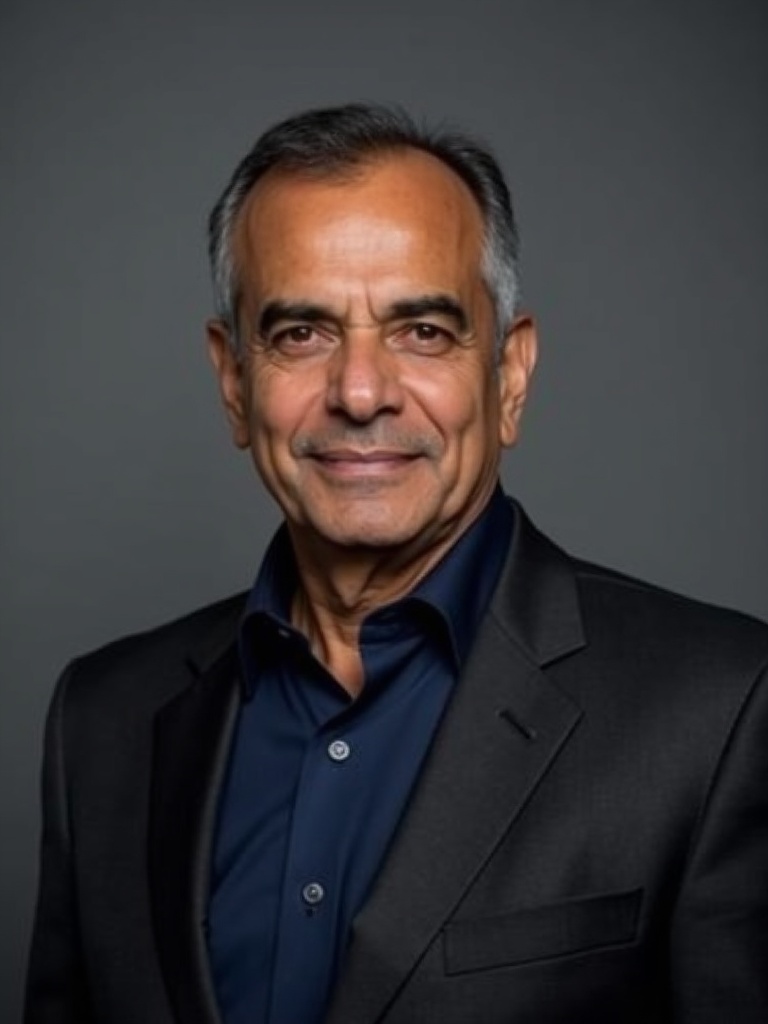
Deepak Raina covers Kashmir — the politics, the displacement, the security landscape, and the long memory of communities shaped by conflict. His reporting draws on first-person testimony and archival detail, and he writes from the conviction that the Kashmiri Pandit story is not a footnote in India's modern history but a central chapter in how the republic navigates identity, territory, and belonging.
Recent work
Mamata Banerjee Challenges Election Commission Freeze on Trinamool Symbol in Supreme Court
Mamata Banerjee's faction moved the Supreme Court on Friday against the Election Commission's September 17 freeze on the Trinamool Congress name and symbols. The order applies to the October 6 Nandigram and Rejinagar bypolls, where neither faction can use the party's identity. The legal challenge, alongside a candidate's withdrawal in Nandigram, exposes the factional fault line inside West Bengal's ruling party.
Gurugram Road Rage Accused Kalyan Bainsla Arrested, Attempt-to-Murder Charge Added
Gurugram Police arrested Kalyan Bainsla from Rajasthan after a viral video showed a car hitting biker Sia on Golf Course Road. Bainsla, who claims to be an international kabaddi player and Indian rugby team member, now faces an attempt-to-murder charge. His lawyer calls it negligence, while the police case centres on intent and evidence gathering.
Rawat Quits Congress Posts After ED Seizes Cash, Gold From Aide
Harish Rawat resigned from the Uttarakhand Pradesh Congress Committee executive and as a CWC permanent invitee after Enforcement Directorate searches recovered cash, gold, and luxury watches from his aide's home. Rawat framed the move as protection for the party ahead of the 2027 assembly election. The episode sharpens the national contest over PMLA enforcement and leaves the Congress with an organisational gap in a poll-bound state.
Apple Launches iPhone 18 Pro Series; India Prices Start at Rs 1,64,900
Apple has launched the iPhone 18 Pro and iPhone 18 Pro Max in India at Rs 1,64,900 and Rs 1,79,900 respectively. Pre-bookings open September 12, with sales from September 18. The launch sharpens Apple's premium push in a market where local assembly has deepened.
Bangladesh Border Guard Builds Drone School Near Indian Frontier; Delhi Reads a Capability Shift
Bangladesh's Border Guard has established a surveillance and drone school near the Indian border. The announcement, reported by NDTV, signals Dhaka's intent to field more sensors and unmanned aerial systems along the shared frontier. India's response remains calibrated: accelerate eastern counter-drone upgrades and raise drone protocols at the next BSF-BGB director-general conference.
Subhash Chandra Says His Borrowing Is Zero; Personal Guarantees, Not Loans, Behind Rs 22,000-Crore Claim
Subhash Chandra has clarified that the Rs 22,000-crore figure in his personal insolvency case represents personal guarantees, not personal borrowing. The Essel Group chairman said lenders' admitted claims exceed the actual outstanding borrowing, as an NCLT-approved plan is contested.
Modi and Vance Keep the Strategic Channel Warm as Washington's Bandwidth Narrows
Prime Minister Narendra Modi received a call from US Vice President JD Vance on August 8, 2026, with both leaders discussing the India-US Comprehensive Global Strategic Partnership. The conversation comes as the US Senate passed sweeping Russia sanctions legislation that could impose tariffs on Indian imports, and as Vance separately flagged Washington's efforts to manage oil flows through the Strait of Hormuz. The call sustains high-level diplomatic momentum at a moment when the bilateral relationship faces its sharpest structural tests.
Thirteen Years, One Hotel Lift, and the Limits of Indian Justice
The Bombay High Court has convicted former Tehelka editor-in-chief Tarun Tejpal of sexual assault, overturning his 2021 acquittal by a Goa sessions court. The verdict, arriving thirteen years after the alleged incidents at a Goa journalism festival, is a landmark in India's appellate jurisprudence on sexual violence — and a damning commentary on the pace at which that jurisprudence moves. Tejpal faces a minimum of ten years and up to life imprisonment under multiple IPC sections.
Assam Floods Again: When Six Wooden Boats Carry the Weight of a Nation's Unfinished Business
Floods have swept across five districts of Assam, killing three people and affecting more than 1.36 lakh residents as 335 villages and over 15,000 hectares of cropland go under water. The annual disaster follows a familiar script — state relief operations, ministerial visits, corporate donations — while a deeper structural vulnerability, India's inability to secure binding hydrological data from China on Brahmaputra flows, goes unresolved. This year's flood season in Assam is not just a humanitarian event; it is a test of whether India can convert its diplomatic standing into concrete water security.
India Widens the Door for Diaspora Scientists — But Who Will Walk Through?
The PM Research Chair Scheme has extended its 2026 application deadline to August 15, aiming to bring Indian-origin scientists and academics settled abroad into premier institutions such as IITs, IISc, and national laboratories. The extension signals active effort to widen the applicant pool — but the scheme's deeper test lies not in attracting applications but in whether India's public research environment can absorb and retain the talent it courts. Administrative inertia, autonomy deficits, and bureaucratic friction remain the real obstacles between policy ambition and research output.
The Taj Mahal in Court: ASI's Custodial Authority Meets a Persistent Legal Claim
The Allahabad High Court has directed the Centre and the Archaeological Survey of India to file counter-affidavits in a writ petition asserting that a Hindu temple called the Agreshwar Mahadev Nagnatheswar Virajman Tejo Mahalaya exists within the Taj Mahal complex. The petition, filed on July 3, challenges district court orders that had twice refused to appoint an advocate commissioner to survey the premises. The case deepens a broader juridification of India's heritage disputes and carries implications for ASI's statutory authority, India's binding UNESCO obligations, and the international standing of its most recognisable monument.
Putin's 'Difficult Period' and the Supply Chain India Cannot Afford to Ignore
Russian President Vladimir Putin acknowledged a 'difficult period' at a United Russia party congress as Ukrainian drones struck oil refineries deep inside Russian territory, including the Slavyansk facility in Krasnodar. For India, the acknowledgment is more than a diplomatic signal — it lands directly on two pressure points: a defence supply chain built over decades on Russian hardware, and an energy import flow that re-oriented toward discounted Urals crude after 2022. The question New Delhi must answer is whether it treats this moment as leverage or merely absorbs the risk.
TMC Parliamentary Split Strengthens NDA Coalition as Constitutional Crisis Tests Anti-Defection Laws
TMC faces its biggest parliamentary crisis as rebel MP Kakoli Ghosh Dastidar claims 20 MPs are merging with the Nationalist Citizens Party to collaborate with NDA. The move tests India's anti-defection laws while potentially strengthening the ruling coalition's parliamentary position.
India Reinforces Strategic Foothold in Afghanistan Through Humanitarian Diplomacy
India's Ministry of External Affairs reaffirmed its commitment to Afghanistan's welfare through humanitarian assistance and development projects, with spokesperson Randhir Jaiswal emphasizing support for food security, healthcare, and education. The approach maintains India's strategic presence while avoiding formal recognition of Taliban governance.
India Reinforces Energy Security Strategy as Middle East Tensions Reshape Regional Dynamics
The US House passed a resolution restricting Trump's military authority in Iran while Israel and Lebanon pursue ceasefire negotiations. These developments create new parameters for India's energy security planning and regional diplomatic strategy.
India-Japan Economic Security Dialogue Deepens Strategic Partnership Beyond Defense
The second India-Japan Economic Security Dialogue brought together senior officials from both governments to advance industrial collaboration across five strategic sectors. The dialogue reinforces Japan's role as a trusted technology partner in India's quest for supply chain diversification and economic sovereignty.
India's Indian Ocean Dialogue Charts Maritime Leadership Against Chinese Encroachment
India hosted the 10th Indian Ocean Dialogue with officials from IORA member states, emphasizing maritime security and blue economy cooperation. The forum reflects India's strategic bid to counter Chinese influence while establishing itself as the region's primary security provider.
India's 2047 Diplomatic Blueprint Takes Shape at Annual Strategic Coordination
The 11th Heads of Mission Conference brought together India's top diplomats to coordinate strategic messaging and operational priorities under the theme 'Reforming Indian Diplomacy for 2047'. Prime Minister Modi and EAM Jaishankar provided guidance on advancing India's national interests through future-ready diplomatic approaches.