Three people were killed and two injured when a car fell into a gorge near Rampur in Himachal Pradesh at about 3 am on Monday, according to NDTV. Police said the driver lost control of the vehicle, causing it to plunge off the road.
The incident occurred on a stretch of hill road where such crashes are routine. The Himachal Pradesh Police are treating loss of control as the preliminary cause, with no immediate word on whether speed, weather, or a mechanical fault contributed. The injured were taken to a nearby hospital, though their condition has not been specified.
A Pattern Across the Himalayan Belt
Monday's crash was not isolated. Hours earlier, a bus plunged 300 feet into a gorge in Uttarakhand's Tehri Garhwal district, killing six and injuring twenty, as NDTV reported. Another accident in Punjab's Fazilka district killed five people when a car collided with a truck, also on Monday. These crashes form a pattern of high-fatality accidents on India's roads, with the Himalayan states bearing a disproportionate share of single-vehicle rollovers and falls into ravines.
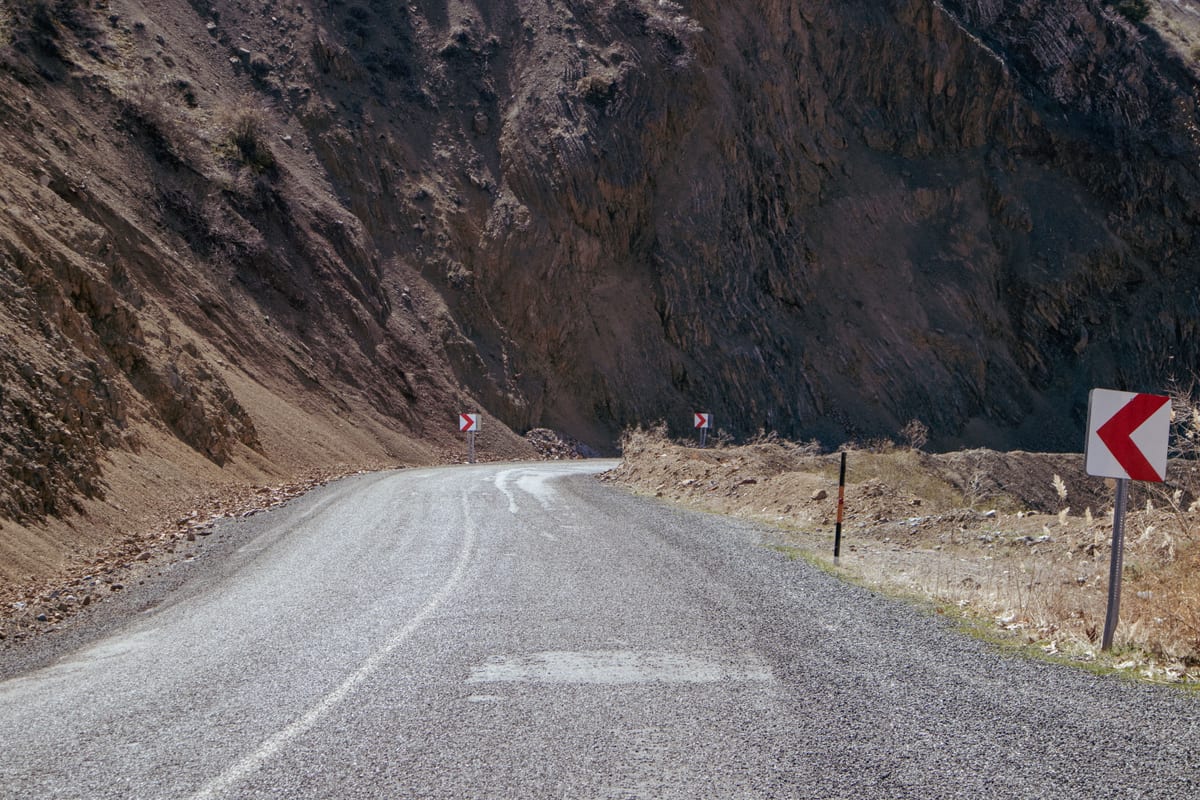
The geography is unforgiving. The Rampur–Kinnaur corridor and similar stretches in Himachal Pradesh wind along cliff edges with little margin for error. At night, the absence of edge markings and reflectors turns a momentary lapse into a fatal plunge. A driver who loses control has no shoulder, no barrier, no second chance.
What the Terrain Demands
Himachal Pradesh's roads serve residents, apple growers, and a heavy tourist influx. The state depends on these routes for economic life, yet the infrastructure has not kept pace with traffic volume. Crash barriers are intermittent. Road-edge markings fade within a season. Speed-calming measures are sparse on downhill grades where momentum builds quickly.
This is not a matter of blaming drivers alone. The Motor Vehicles (Amendment) Act strengthened penalties and pushed for better road engineering, but its provisions mean little if the physical road remains a cliff-edge without a guardrail. The Himachal Pradesh Public Works Department has the authority to audit dangerous stretches, yet such audits are not routine on every gorge-adjacent curve. A single barrier might have turned Monday's crash from a fatality into a close call.
The same week's Uttarakhand bus crash, where a vehicle fell 300 feet, raises the same question: why do buses and cars continue to fall into gorges on routes that have been dangerous for decades? The answer is straightforward: a failure of continuous infrastructure investment. Guardrails, reflectors, and night-time speed limits enforced with the same seriousness as highway tolls would address the problem.
Emergency Response and the Injured
Rescue operations in Himachal Pradesh depend on the State Disaster Response Force and local police, but gorge rescues require specialised equipment: winches, rope lines, and medical teams trained to extract victims from wreckage hundreds of feet below the road. The two injured passengers in Monday's crash had to be brought up from a gorge in the pre-dawn dark; that operation takes time, and time is the difference between life and death in trauma cases.
Himachal Pradesh has improved its emergency response in recent years, but the terrain remains the enemy. A vehicle that leaves the road at 3 am may not be spotted for hours unless a passerby calls it in. The state's ambulance network is thin in the upper reaches, and helicopters are rarely used for routine accident evacuation. The Ministry of Road Transport and Highways has funded hill-road safety pilots, but those projects need to extend to every high-fatality corridor, including the Rampur–Kinnaur stretch.
A Question of Public Trust
Tourism in Himachal Pradesh rests on the assumption that the journey is safe. Families drive from Delhi, Chandigarh, and Punjab to Shimla, Manali, and Kinnaur, often at night to avoid daytime traffic. When a car falls into a gorge, that assumption breaks. Word spreads through social media; hotel bookings dip; local businesses feel it. Road safety is the foundation of the state's visitor economy.
That is why the repeated crashes matter beyond the immediate grief. Every unguarded curve is a potential economic wound. The state government cannot claim to promote tourism while ignoring the barriers that keep tourists alive. The same applies to apple transportation, which moves on these roads during the harvest season. A truck that loses brakes on a downhill grade can take out a family car behind it.
The National Crime Records Bureau and the Ministry of Road Transport and Highways have long flagged hill roads as high-risk, but enforcement of crash barriers and night-driving restrictions remains inconsistent. SaveLIFE Foundation, a Delhi-based road safety organisation, has repeatedly pointed to inadequate guardrails and poor visibility on Himalayan highways as primary factors in single-vehicle rollovers. Its surveys, conducted over several years, show that most fatal gorge crashes occur between midnight and 5 am, when drivers contend with fatigue and unlit roads.
This is not a matter of geopolitical strategy or foreign policy. It is about Indian citizens dying on Indian roads because the infrastructure does not match the terrain. The fix is not glamorous: crash barriers, edge markings, night-time speed enforcement, and emergency extraction protocols would save hundreds of lives each year in Himachal Pradesh alone. The question is whether the state and central governments will treat road safety as seriously as they treat road construction.
For now, the families of the three dead in Rampur will bury their loved ones, and the two injured will recover in a hospital that may itself be an hour from the crash site. That distance, that delay, is the silent killer in every gorge accident. India has the engineering capacity to close it. What is lacking is the administrative will to treat every cliff-edge road as a site of potential mass casualty.
The Motor Vehicles Act gives the state the tools. The Public Works Department has the mandate. The money exists in road budgets that run into thousands of crores. What is missing is a deadline, an audit, and a refusal to accept that a car falling into a gorge is just an accident. It is a failure of design, and design failures can be fixed.