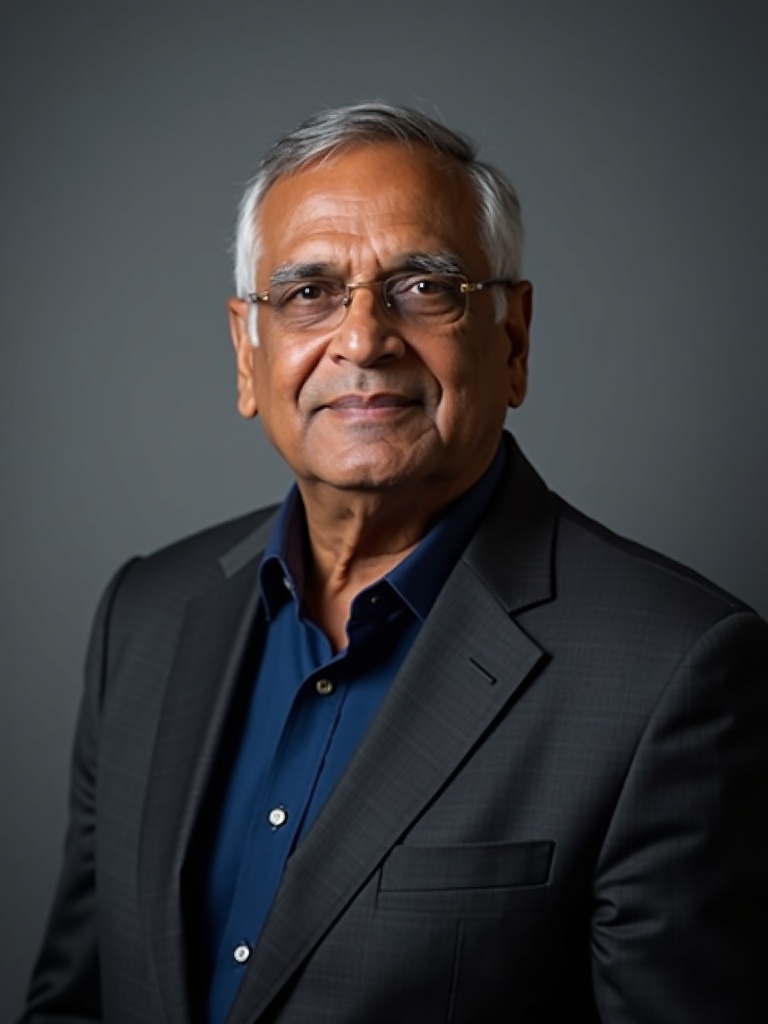
The suicide of first-year IIT Bombay student Sahil Wakode has put the institute's grievance-redressal machinery under scrutiny, after the faculty forum chief publicly dismissed the family's caste-discrimination allegations and insisted the professor at the centre "did his job". Professor Pant, the faculty forum president, rejected the allegations levelled by Wakode's family and pointed out that Wakode never approached the SC/ST cell.
The defence drew immediate criticism from Dalit student groups and Ambedkarite organisations, who argue that the absence of a formal complaint reflects the silence many marginalised students maintain out of fear. India Today reported that Pant said there was no proof of casteist remarks by Prof Doolla, the professor named in the allegations.
Wakode's family has alleged that caste-based discrimination and harassment contributed to his death and questioned the institute's response. No central ministry has issued a formal statement on this specific incident, even as the official policy framework for IITs expects each institute to maintain SC/ST cells, anti-discrimination committees, and counselling services.
The logic of 'no complaint'
Pant's reasoning runs: the student never went to the SC/ST cell, therefore no discrimination occurred, therefore the professor did nothing wrong. The argument falters when one considers what the SC/ST cell is designed for. It exists because students from Scheduled Caste and Scheduled Tribe backgrounds face patterns of exclusion that rarely produce neat, documented complaints. A first-year student, weeks into campus, may not know whom to trust or what counts as actionable. The cost of filing a complaint can feel far greater than the cost of silence.
Wakode's family says caste-based harassment contributed to his death. That claim deserves an independent investigation, not a rebuttal in the press. When the faculty forum chief dismisses discrimination because the student never approached the cell, he converts the cell's inaccessibility into the professor's defence. That is a category error. A cell that no student dares approach is not proof of a healthy campus; it is evidence of its failure.
The fact that the student did not approach the SC/ST cell should itself become the subject of inquiry. Was the cell visible in the first weeks of admission? Did the student receive orientation about how to use it? Were there trusted intermediaries? These questions remain unasked. Instead, the institute's institutional voice has been used to close the matter before it opens.
The larger arc: caste equity in elite institutions
IITs occupy a strange position in Indian public life. They are celebrated as engines of merit and national ambition, funded by public money, yet their internal social climates rarely receive the scrutiny applied to their placement records. Caste discrimination in IITs is not new. Student groups and Ambedkarite organisations have demanded caste audits and stronger SC/ST cell functioning for years. The pattern recurs: a student from a marginalised community dies by suicide, the family alleges discrimination, the institute denies or says the student never complained, and the cycle resets.
The reputational cost is real. IITs are among the few Indian institutions with global standing. When a caste-discrimination allegation surfaces and the faculty's first response is dismissal, it feeds a narrative that the institute is less interested in justice than in protecting its own. That perception damages not only the specific campus but the entire ecosystem of Indian technical education. Foreign students, diaspora families, and research collaborators watch how the institute handles its own.
The Ministry of Education's framework for IITs expects each institute to maintain SC/ST cells, anti-discrimination committees, and counselling services. The official position is one of structured institutional redress. But structures on paper do not equal access in practice. The first test of an SC/ST cell is whether a student in distress will walk through its door. Wakode did not, and that fact is being used against his family's claim instead of prompting the question: why not?
Mental health and the pressure cooker
Wakode's death has reignited concern about mental health on high-pressure campuses. Mental-health professionals who work with IIT students describe a campus atmosphere where academic failure is treated as moral failure. The pressure begins before admission, continues through the entrance-exam cycle, and intensifies in the first year, when the relative rank of a top JEE performer collapses among thousands of equally driven peers. For a student already carrying the weight of family expectation and social marginalisation, the classroom can become a place of isolation rather than learning.
No student's death should be reduced to a single cause. Caste, academic pressure, isolation, and personal despair can all operate together. That is why the family's allegation cannot be waved away with a procedural observation. It needs to be examined alongside the full record: the student's academic history, his interactions with faculty, his access to counselling, and any warning signs the institute missed.
What an institutional response should look like
If IIT Bombay's leadership wants to restore trust, defending the professor or pointing out that the SC/ST cell exists will not suffice. The institute should order a time-bound independent inquiry into Wakode's death, with representation from the National Commission for Scheduled Castes, and make the findings public. It should review every caste-discrimination complaint from the past three years, not only those that formally reached the cell, and interview students who withdrew or were flagged as at risk. It should mandate exit interviews for every student who leaves.
Beyond the inquiry, each IIT should ask a harder question: does the SC/ST cell actually function as a safe first point of contact, or is it a compliance box? The answer depends on who staffs it, how visible it is, and whether students who file complaints are protected from retaliation. A cell that no student uses is a failure, not a vindication.
India's premier technical institutions cannot claim excellence while leaving marginalised students to navigate discrimination alone. The constitutional promise of equality does not pause at the IIT gate. It is tested there, sometimes most sharply, in the gap between what the institution says it offers and what a first-year student feels safe enough to ask for.