New Delhi: Members of the BRICS grouping issued a unanimous joint statement on Saturday at the Bharat Mandapam, calling for de-escalation in West Asia, condemning the 2025 Pahalgam terrorist attack, and expressing concern over unilateral trade measures. The document, produced on the first day of the two-day BRICS Leadership Summit under India's presidency, is a diplomatic win for New Delhi after the grouping's foreign ministers' meeting in May ended without a joint statement because of divergent positions on the West Asia conflict.
The declaration called for efforts through dialogue and diplomacy toward a long-term understanding for peace, security and stability in West Asia, according to the LiveMint report. It stressed the need to maintain the smooth flow of global trade and supply chains and urged adherence to World Trade Organization rules in the face of unilateral tariffs and trade-restrictive actions.
From May deadlock to Saturday consensus
India led extensive consultations and negotiations to bridge differences, particularly over Middle East tensions. The May foreign ministers' meeting had ended with India issuing a Chair's statement and outcome document after members failed to agree. That failure exposed how the West Asia question can splinter the grouping; Saturday's text closes that fissure, at least for the summit's first day.
Terrorism language goes beyond boilerplate
The statement condemned the 2025 Pahalgam attack in the strongest terms and reaffirmed a commitment to combating terrorism in all its forms with collective accountability. India has repeatedly insisted that BRICS communiques on the region address cross-border terror, and a text that names the Pahalgam attack gives New Delhi the language it has sought without making the document hostage to any single member's bilateral disputes. For Delhi, the credibility of BRICS as a non-Western platform depends partly on its willingness to name attacks that strike Indian territory.
Trade language and the Gulf economic corridor
The declaration's concern over unilateral tariffs and trade-restrictive actions connects directly to India's macroeconomic exposure. West Asia hosts a large Indian workforce whose remittances support household consumption across Kerala, Uttar Pradesh, Bihar and other states; the region also supplies a significant share of the crude oil India refines. A BRICS consensus in favour of diplomatic restraint thus protects Indian energy importers and families that depend on Gulf salaries. The statement's call for WTO-consistent trade rules also protects the sea lanes and payment channels through which Indian goods and energy transactions flow. India's use of national currency settlement in portions of its energy trade serves the same purpose: protection from the spillover of unilateral measures.
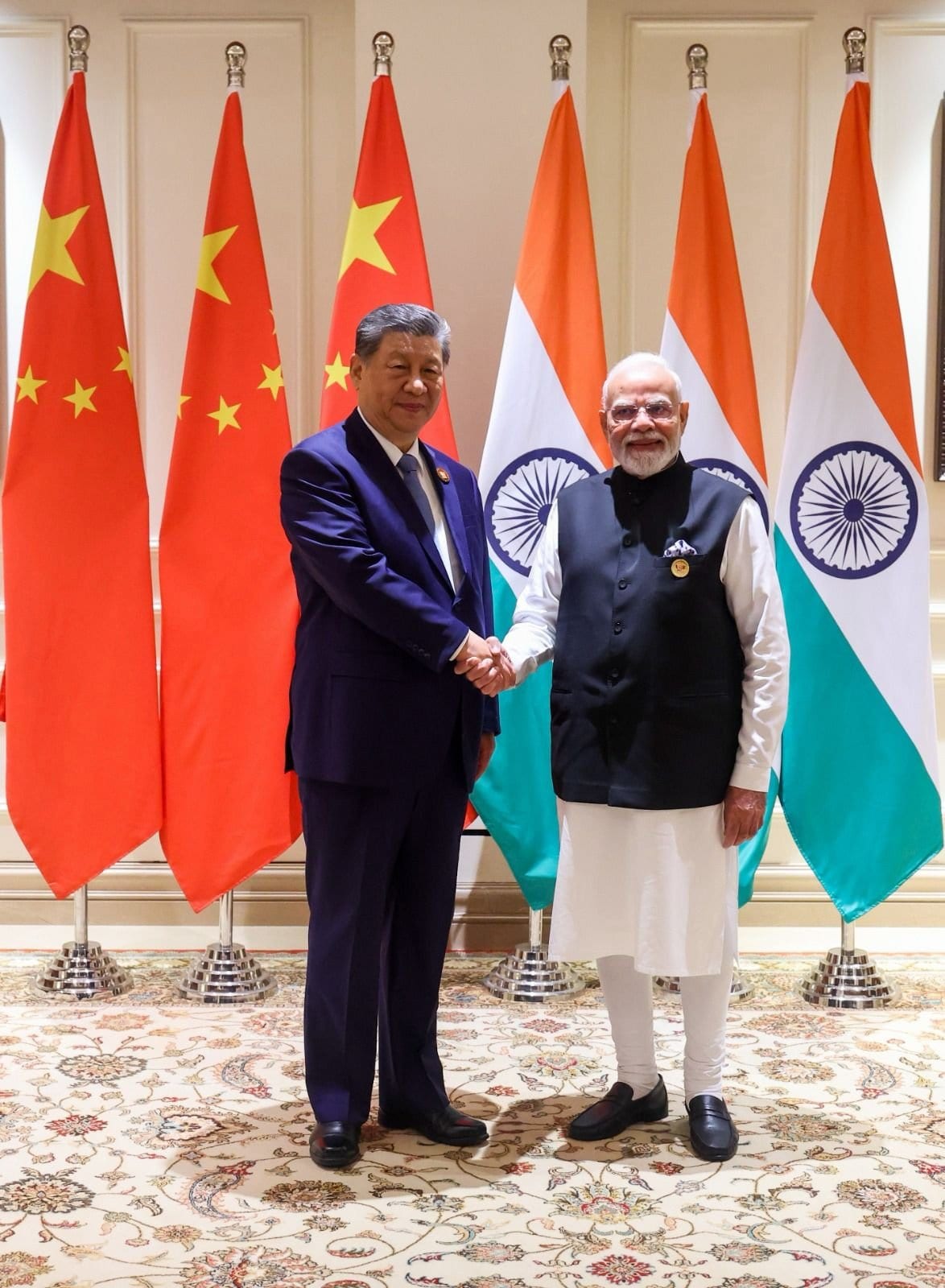
The summit's choreography also carried evidence of bilateral thaw. China Southern Airlines announced the resumption of regular passenger services on the Guangzhou to New Delhi route starting 21 September after a six-year suspension, and direct Delhi-Beijing flights have resumed following discussions between the Indian Prime Minister and Chinese President, India Today reported. These developments run parallel to the BRICS consensus: New Delhi can host a grouping that includes both Beijing and Moscow while reopening air links that serve Indian students, business travellers and diaspora movements.
Global governance language extends the summit's agenda
Prime Minister Narendra Modi used the leaders' meeting to call for BRICS to reform global governance, proposing a roadmap for reforms by 2027 and calling for representation and active roles for the Global South. The declaration's governance provisions echo that push, advocating changes that better reflect current international realities and amplify the voice of the Global South. The language does not name the United Nations Security Council or the Bretton Woods institutions, but the direction is clear: BRICS wants the architecture of global decision-making to catch up with the weight of its members.
Coordination without realignment
C. Raja Mohan, senior fellow at Asia Society Policy Institute, has long argued that BRICS enables India to articulate a non-Western consensus on West Asia without changing its bilateral Middle East relationships. Harsh V. Pant of the Observer Research Foundation makes a similar point: India uses BRICS communiques to signal strategic autonomy while keeping its Gulf, Israel and Iran ties intact. The Saturday statement demonstrates that argument in action. India coordinated with Russia and China to produce a text, yet the text binds no member to any operational commitment that would complicate India's parallel partnerships with the Quad, I2U2 or individual Gulf states. Delhi set the summit agenda, chaired the negotiations and defined the consensus.
What the consensus holds for Indian readers
For Indian households that depend on Gulf remittances, for refiners that buy West Asian crude, and for a government that has spent years pushing international platforms to name cross-border terror, the BRICS joint statement delivers aligned outcomes. The de-escalation language lowers the probability of a regional conflict that would spike oil prices and disrupt evacuation corridors; the trade provisions push back against the weaponisation of tariffs that could snag Indian export shipments; the terrorism clause adds institutional weight to Delhi's own security narrative. None of this changes India's independent Middle East strategy, but it strengthens the platforms through which that strategy is expressed. A presidency that began with a May failure has produced a document that holds together the grouping's divergent views and leaves Indian interests written into the final text.