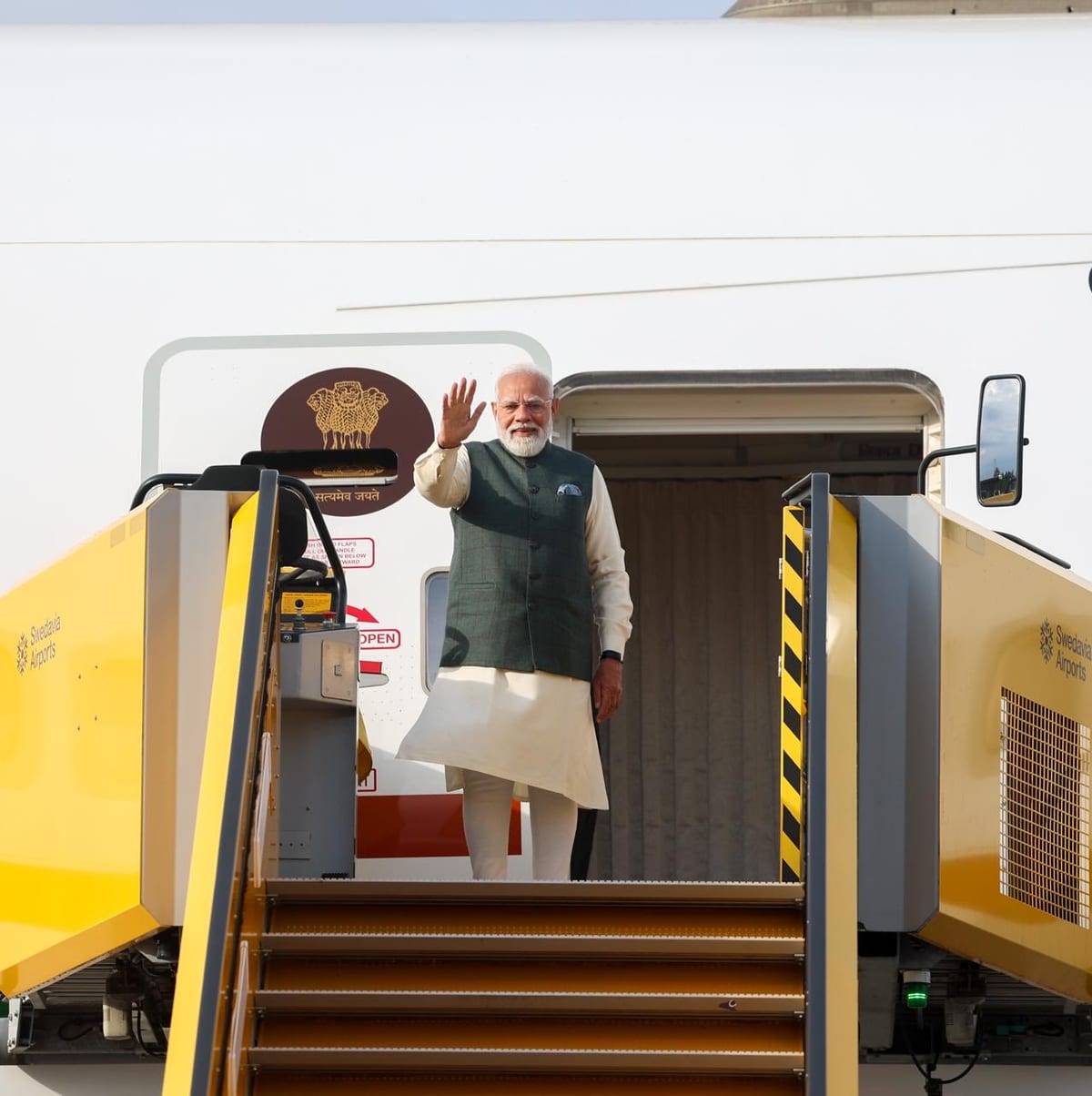
Prime Minister Narendra Modi's official visit to Gothenburg on May 17, 2026, upgraded India-Sweden relations as both nations agreed to establish a strategic partnership built on four pillars. The move reflects India's systematic approach to deepening European engagement through bilateral channels that complement its broader India-EU framework.
The partnership rests on strategic dialogue for stability and security, next-generation economic partnership, emerging technologies and trusted connectivity, and collaborative sustainability initiatives. Swedish Prime Minister Ulf Kristersson and Modi endorsed an upgraded Joint Action Plan 2026-2030 that will guide implementation across these domains. Both leaders set a target to double bilateral economic exchange within five years through complementary "Make in India" and "Made with Sweden" initiatives.
Defense and Security Architecture
The strategic dialogue pillar establishes enhanced exchanges between National Security Advisors and strengthened defense-level consultations. Sweden's defense industrial base includes companies like Saab, which operates in aerospace, radar systems, and electronic warfare. These capabilities align with India's defense modernization priorities. The framework creates mechanisms for regular political and diplomatic engagement and establishes pathways for defense industrial collaboration.
Sweden's military tradition combined with cutting-edge defense technology offers India a partnership model that works with its strategic autonomy principles. This partnership enables technology cooperation without constraining India's independent foreign policy. The defense dialogue positions India to access Nordic innovation while maintaining its multi-alignment approach across global partnerships.
Technology Corridor and Digital Cooperation
Modi's interest in Swedish participation in India's AI Impact Summit reflects the technology-focused dimension of the partnership. The leaders agreed to strengthen cooperation through the Sweden-India Technology and Artificial Intelligence Corridor (SITAC), creating frameworks for collaboration in emerging technologies and trusted connectivity.
Sweden's work in digitalization and artificial intelligence research gives India access to advanced technological ecosystems. The corridor enables knowledge transfer and joint research initiatives that support India's digital transformation while positioning Swedish companies to participate in India's large-scale digital infrastructure projects.
The technology partnership matters given India's focus on developing indigenous technological capabilities across critical sectors. Sweden's expertise in sustainable technology and advanced manufacturing offers pathways for India to build technological sovereignty and resilient supply chains for emerging technology sectors.
Economic Security and Supply Chain Resilience
The economic partnership pillar addresses supply chain security concerns that shape contemporary strategic planning. Both leaders emphasized economic security imperatives, reflecting recognition that stable supply chains support national resilience in an era of geopolitical volatility.
The India-Sweden Business Leaders Round Table provides institutional support for expanding commercial relationships. The planned 2027 bilateral summit "India-Sweden: Stronger Together - towards 2047" aligns with India's centenary development objectives. The economic framework enables Swedish companies to integrate into India's manufacturing ecosystem while providing Indian businesses access to European markets through Swedish commercial networks.
Sweden's position as a bridge between Nordic innovation and broader European markets offers India strategic commercial advantages. The partnership creates opportunities for Indian companies to establish European operations through Swedish partnerships while enabling technology transfer that supports India's industrial modernization.
European Engagement Strategy
The India-Sweden strategic partnership emerges within the context of Modi and Kristersson's shared emphasis on the historic India-EU Summit of January 27, 2026, which produced the "Towards 2030: A Joint India-European Union Comprehensive Strategic Agenda" and concluded the India-EU Free Trade Agreement. The bilateral partnership complements these multilateral achievements by creating focused cooperation channels that can advance shared objectives more rapidly than bloc-level negotiations.
Sweden's influence within EU institutions and its leadership on climate and sustainability provide India with leverage in European policy discussions. The partnership enables India to shape European perspectives on Indo-Pacific security, technology governance, and sustainable development through direct bilateral engagement that reinforces its broader EU relationship.
This bilateral approach reflects India's understanding that effective multilateral engagement often requires strong bilateral foundations. By deepening partnerships with key EU members individually, India creates multiple pathways for advancing its interests within European institutional frameworks.
Sustainability and Innovation Framework
The "Shaping Tomorrow Together" pillar addresses people, planet, and resilience through collaborative approaches to sustainability challenges. Sweden's leadership in environmental technology and sustainable development practices gives India access to proven solutions for its sustainability transitions.
The partnership creates opportunities for joint innovation in clean energy, sustainable manufacturing, and circular economy practices that align with India's climate commitments while providing Swedish companies access to India's large-scale implementation opportunities. This collaboration enables both nations to advance their sustainability objectives through shared technological development and market access.
The framework's emphasis on resilience reflects recognition that future prosperity depends on building adaptive capacity across economic, technological, environmental, and social domains. Sweden's experience in building resilient systems offers insights for India's development planning.
The India-Sweden strategic partnership represents bilateral cooperation that embodies India's evolving approach to international engagement, combining strategic autonomy with deepening partnerships across multiple regions and domains. The comprehensive framework strengthens India's European engagement while providing access to Nordic innovation and expertise that support its long-term development objectives. The partnership establishes institutional mechanisms that will guide bilateral relations toward India's 2047 centenary goals.