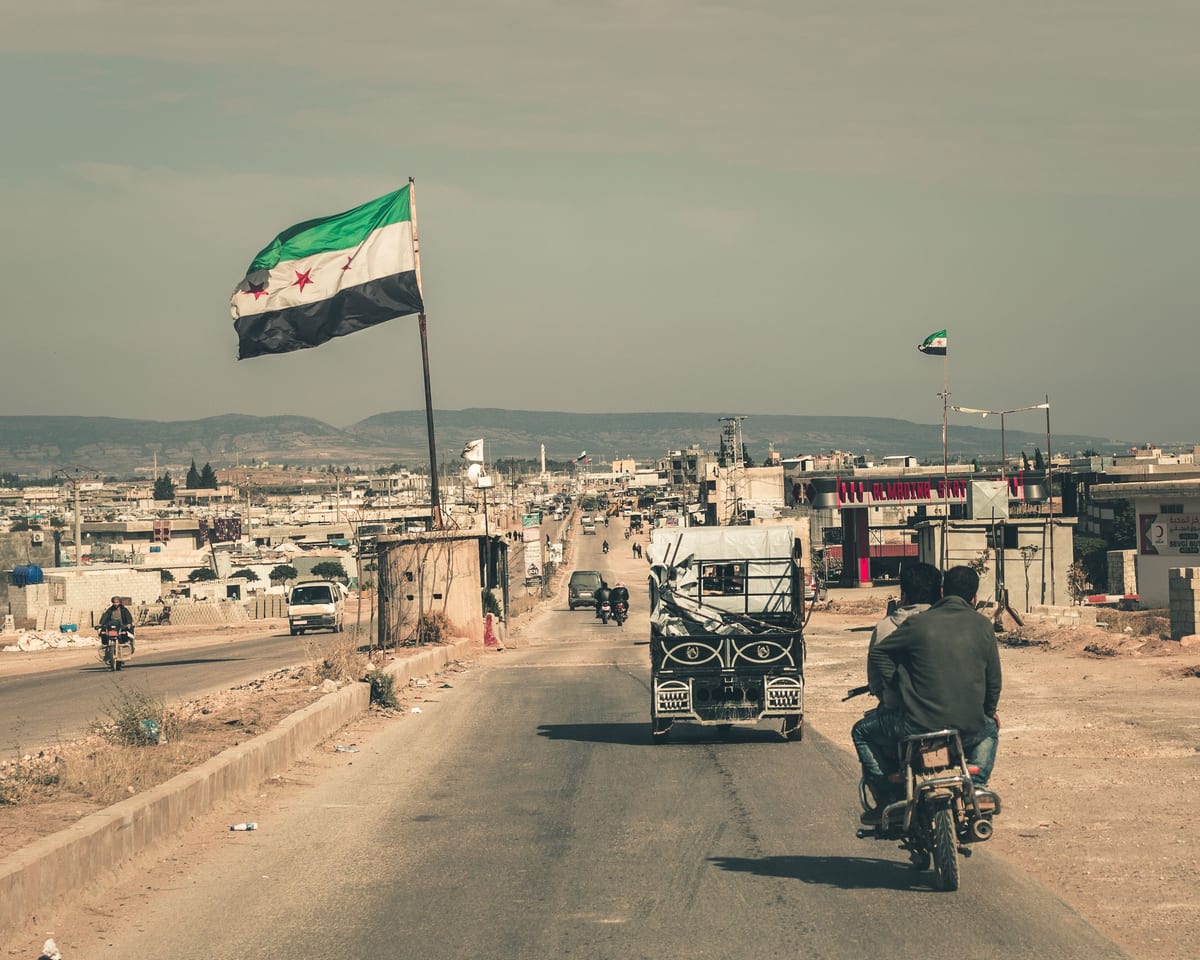
Somewhere in eastern Democratic Republic of the Congo, health workers in protective equipment are moving between villages where Ebola has killed more people than in any recorded outbreak in the country's history. The pathogen responsible — the Bundibugyo strain, distinct from the Zaire strain that shaped the world's mental image of the disease — has no licensed vaccine. That gap is now the subject of an accelerating international trial, launched this week with WHO backing, whose results may be months away but whose supply-chain decisions are being made now.
The outbreak's scale is without precedent. The WHO described it as the largest ever recorded in the DRC, with cases and deaths rising as the trial gets underway. The Bundibugyo strain was first identified in Uganda in 2007 and has caused sporadic outbreaks since, but it has never attracted the same vaccine-development urgency as Zaire — partly because its historical mortality burden was lower, and partly because outbreak response has long depended on ring-vaccination strategies using the rVSV-ZEBOV vaccine, which targets Zaire only. This outbreak may have changed that calculus permanently.
The Blank Space on the Vaccine Map
The trial represents a genuine scientific frontier. Developing a vaccine for Bundibugyo requires immunogenicity data specific to that strain's surface proteins and logistics infrastructure capable of reaching outbreak zones where cold chains are unreliable and population mobility is high. The WHO's role in coordinating the trial signals that this is being treated as a global public health priority. That designation has real consequences for which manufacturers get invited into the supply conversation at an early stage.
That invitation process is where strategy and science converge. When the Zaire strain vaccine — developed with involvement from institutions including the International AIDS Vaccine Initiative and later licensed by Merck as Ervebo — moved toward emergency use authorization, the manufacturing partnerships had already been structured. Countries and institutions embedded in trial-stage production networks had leverage over technology transfer, pricing, and regional stockpile agreements. Countries that arrived later, however large their domestic manufacturing base, had less. The same logic applies here, and it applies with particular force to India.
The Pharmacy That Keeps Arriving Late
India's claim to pharmacy-of-the-world status rests on genuine institutional depth. The Serum Institute of India has delivered doses at a scale that most national programmes cannot replicate; Biological E and other manufacturers have expanded into vaccines beyond routine immunisation; and India's commitments under the Coalition for Epidemic Preparedness Innovations have created at least the scaffolding for engagement with WHO-coordinated outbreak response. Adar Poonawalla stated in a 2024 Financial Times interview that SII is actively evaluating haemorrhagic fever vaccine candidates as part of its CEPI-funded pipeline — which places the Bundibugyo trial directly within the institutional perimeter of India's stated ambitions.
Yet analysts who track India's Africa health engagement have identified a persistent structural failure: the gap between the brand and institutionalised presence. Oommen C. Kurian of the ORF Health Initiative has argued that India must move from ad hoc vaccine philanthropy to systematic co-development agreements with WHO-backed trials in Africa, warning that the window to embed Indian manufacturers in early-stage trial supply chains is consistently missed. Gagandeep Kang, one of India's most respected vaccinologists, has noted that India's Central Drugs Standard Control Organisation needs faster mutual recognition pathways with African regulators, so that Indian-made vaccines reach outbreak zones without bureaucratic delay consuming the advantage that manufacturing speed creates. These describe a specific failure mode that this Bundibugyo trial will either repeat or break.
Africa Engagement Cannot Run on Summits Alone
India's Africa strategy has deepened considerably in recent years. The African Union's inclusion as a permanent member of the G20 — championed by India during its 2023 presidency — was a genuine diplomatic achievement, one that positioned India as a voice for African institutional inclusion within the world's most consequential economic forum. India has also invoked Vaccine Maitri as evidence that its health engagement goes beyond rhetoric. But Vaccine Maitri, whatever its humanitarian value, was primarily a distribution exercise — India supplying doses of vaccines developed and approved elsewhere. What the Bundibugyo trial represents is categorically different: a chance to participate in knowledge creation, not merely in logistics.
China is not waiting. Chinese pharmaceutical companies have been systematically expanding their presence in African clinical trial infrastructure, regulatory harmonisation discussions, and emergency medicine supply. The competition is not for goodwill; it is for the embedded relationships that produce long-term market access, regulatory familiarity, and the kind of institutional trust that determines which country's manufacturers get the call when the next outbreak begins its trial phase. India's response to this competition has largely been reactive — framed around its existing strengths rather than around the specific gaps that early-phase African outbreak trials represent.
The Takshashila Institution's Anupam Manur has noted that India's Africa health engagement remains underfunded relative to its stated strategic goals, and that outbreak response moments are precisely the opportunities India repeatedly misses to institutionalise presence. The trial's duration — with results potentially months away — still provides a meaningful window for the Ministry of Health and Family Welfare and the Department of Biotechnology to open formal conversations with WHO and the trial's lead institutions about Indian manufacturer participation in antigen production or fill-and-finish operations. This is market positioning in a segment where early entrants set the terms for years.
What Early Stage Actually Means
There is a tendency in discussions of vaccine diplomacy to conflate different phases of engagement as though they carry equivalent strategic value. Supplying finished doses to an outbreak response is visible and humanitarian. Participating in trial-stage antigen production is quieter, more technical, and far more consequential — because it determines intellectual property access, technology transfer terms, and whether a country's manufacturers are on the inside or the outside of the consortium when scale-up decisions are made. India has demonstrated the capacity to operate at scale. What it has not consistently demonstrated is the institutional reflex to insert itself before scale becomes the question.
The Bundibugyo outbreak will eventually be contained — whether through the trial vaccine, expanded ring vaccination with existing tools, or the brutal arithmetic of outbreak dynamics in low-density populations. What will outlast the outbreak is the consortium structure that emerges from this trial: who produced the antigens, who ran the fill-and-finish, which regulatory agencies built recognition pathways, and which country's manufacturers now sit inside the network that will be activated when Bundibugyo resurfaces — as filoviruses have repeatedly demonstrated they will. India has the institutional capacity to be inside that network. Whether it has the institutional urgency to act before the invitations close is the question its own analysts are no longer willing to leave rhetorical.