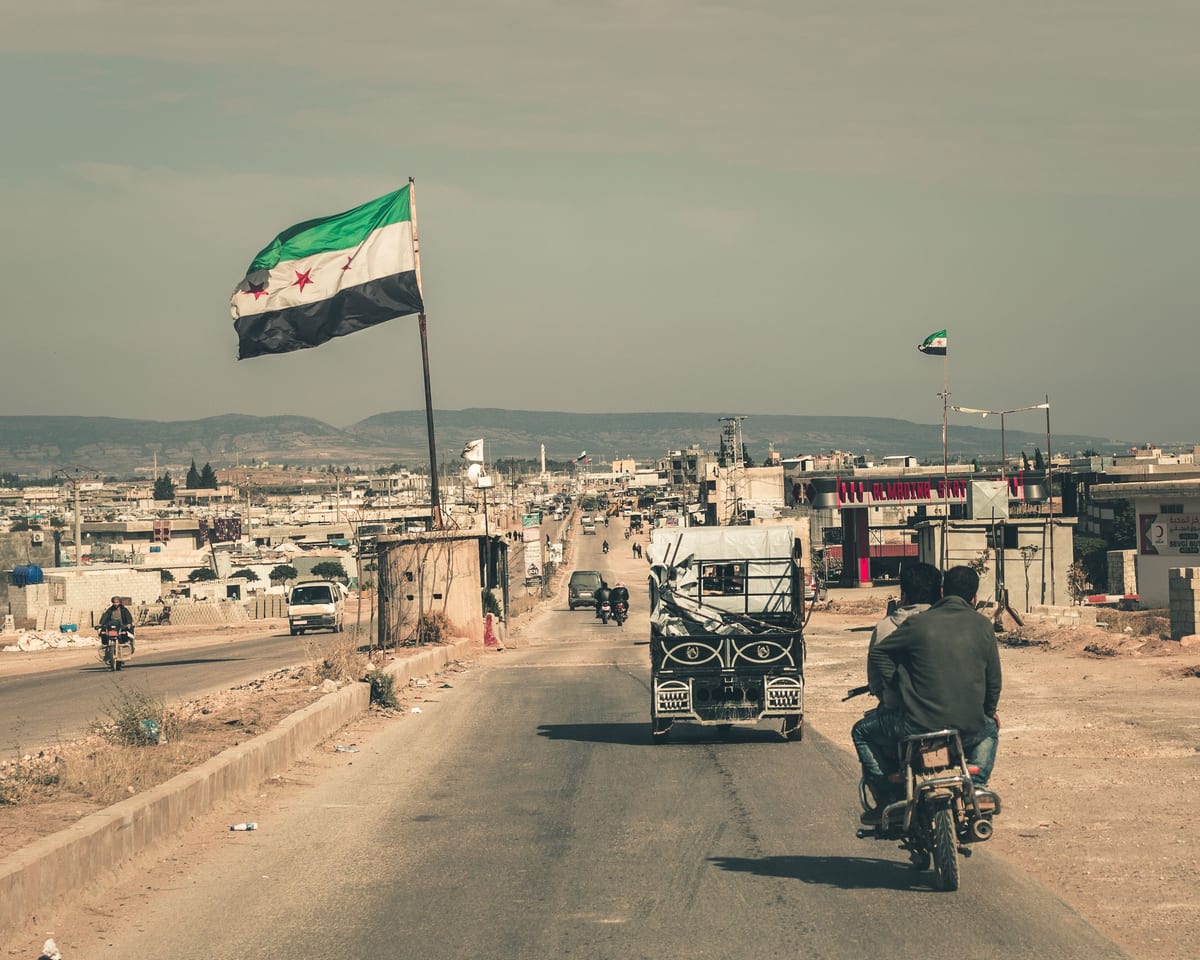
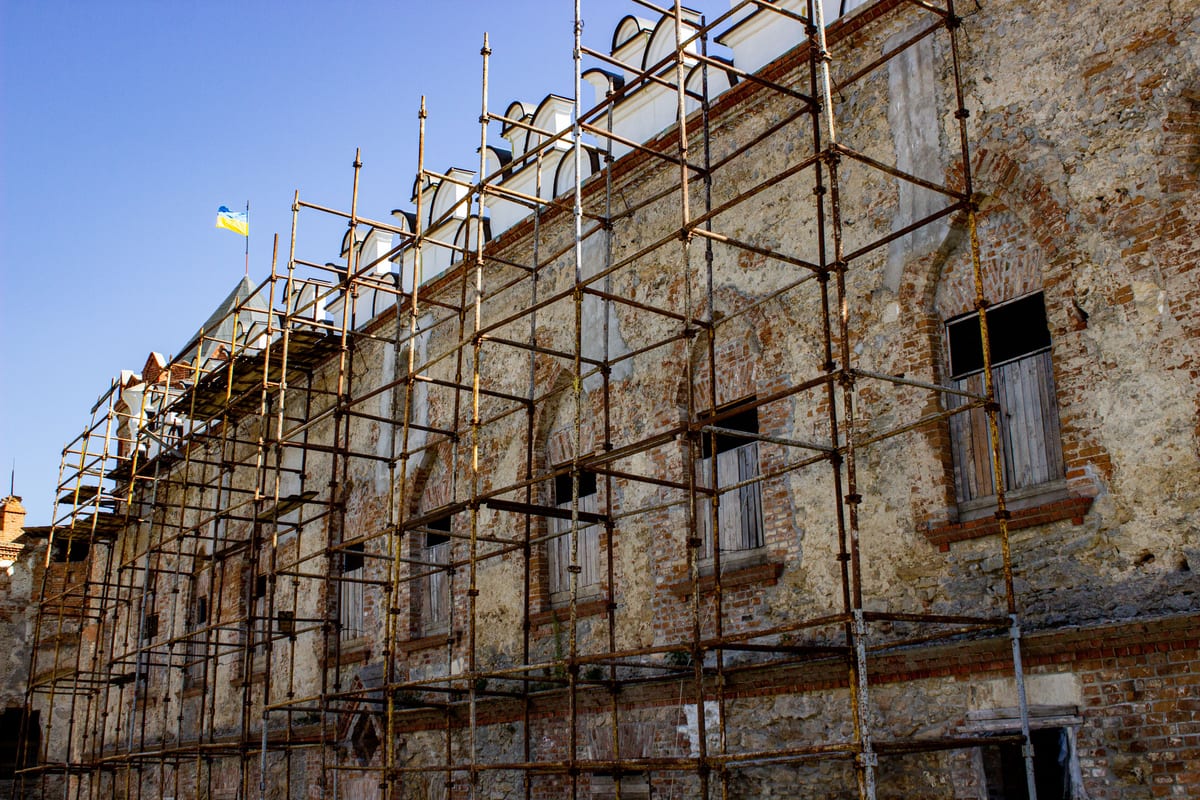
The images coming out of Ukraine in August 2026 are not the ones the world has been trained to expect. They show maternity wards functioning again, classrooms filling up, communities stitching themselves back together in the middle of an active conflict. A UN News dispatch published on August 1 documents this recovery across hospitals, schools, and local institutions in Ukraine. The war has not ended. But something is shifting in its texture.
Recovery stories from active conflict zones carry strategic weight. When institutions begin to function again in contested spaces, when supply chains for medicine and food re-establish themselves, when maternity wards register live births rather than evacuations — these are signals to investors, governments, and development banks that the reconstruction phase has begun. The argument that Ukraine's rebuild must wait for a ceasefire is losing ground to the reality that rebuild is already underway, however unevenly.
The Economics of a War That Did Not End Cleanly
The postwar reconstruction architecture the West assembled after 1945 assumed a decisive military conclusion — surrender, armistice, a clear before-and-after. Ukraine fits none of that. Its reconstruction is happening in parallel with bombardment, which means the countries and companies that enter now do so under conditions of genuine risk, but also with the advantage of early positioning. Western reconstruction funds have been pledged in significant quantities, and the task of delivering cost-efficient services — pharmaceuticals, software, civil infrastructure — falls heavily on non-Western suppliers who are not bound by the political conditions attached to those funds.
This is where India's economic position becomes concrete. New Delhi abstained on multiple UN General Assembly resolutions condemning the Russian invasion. It did not join Western sanctions. It continued purchasing discounted Russian crude. To Western commentary, this read as equivocation. Seen from Kyiv's aid offices or Warsaw's logistics corridors, it reads differently: India is a large, technically capable economy that is neither sanctioning Russia nor antagonising Ukraine, which gives it access to both.
Harsh V. Pant at the Observer Research Foundation has argued that India's abstention generates diplomatic capital because it preserves optionality — the capacity to be a credible partner with Moscow and a commercially attractive partner for Kyiv simultaneously. The argument is about leverage. A country that has sanctioned Russia cannot easily sell pharmaceuticals to Ukraine through Russian-adjacent supply chains. India can.
Operation Ganga Was the First Chapter
When Russia launched its full-scale invasion in February 2022, India had approximately 20,000 nationals in Ukraine — mostly students at medical and engineering colleges in cities that became front lines within days. The government mounted Operation Ganga, evacuating roughly 22,500 Indian citizens through Romania, Hungary, Poland, and Slovakia. The operation was improvised and ultimately successful enough to become a template cited in MEA briefings.
What gets less attention is what happened after the flights landed. The Indian diaspora in Europe — concentrated in Poland and Germany — absorbed significant logistical burden in the critical first weeks, helping stranded students with accommodation, food, and documentation. Constantino Xavier at Carnegie India has noted this as a soft-power dimension that the MEA acknowledged but did not fully capitalise on. Community networks did work the state could not have done quickly enough. That shapes the contours of Indian engagement with Ukraine going forward: the institutional machinery proved it could move, but the informal networks proved they were already there.
The students who returned mostly resumed their education in India or transferred to European institutions. Some are now qualified doctors, engineers, and pharmacists. The cohort that experienced Ukraine firsthand and survived the chaos of February 2022 is an underused human asset in any future India-Ukraine commercial engagement. They know the country. They know its institutions. They are young enough to build careers around reconstruction contracts.
Wheat, Sunflower Oil, and the Inflation That Reaches Indian Kitchens
The commodity dimension of this war has been discussed extensively in general terms, but its specificity to Indian households deserves stating plainly. Ukraine and Russia together account for a major share of global wheat exports and dominate the sunflower oil market. Every time the conflict disrupts Black Sea shipping, the price signal travels from Odessa to the wholesale mandis of Indore and Rajkot within weeks. India monitors edible oil import costs with the kind of vigilance a finance ministry reserves for crude oil, because sunflower oil sits in the cooking pots of hundreds of millions of households.
Prolonged conflict sustains these price pressures and embeds them structurally. Supply chains reroute, new suppliers extract premiums for reliability, and the baseline price for edible oils ratchets up in ways that prove sticky even after individual disruptions resolve. India's fertiliser import bill faces a parallel dynamic: Ukraine was a significant potash and ammonia exporter, and the disruption to those flows pushed fertiliser costs higher at the moment Indian agriculture needed stability. The humanitarian recovery documented by the UN — schools, maternity wards, local communities — is also the gradual stabilisation of supply chains that feed back into Indian food price management.
The Structural Ceiling
Former Foreign Secretary Shyam Saran has made the case that India's neutral stance creates long-term leverage in both Moscow and Kyiv, and that New Delhi should convert this diplomatic capital into concrete reconstruction contracts. The argument is compelling in principle. In practice, it runs into a structural ceiling that Pranay Kotasthane at the Takshashila Institution has identified: India's accelerated energy import diversification toward Russia — a rational response to discounted crude availability after 2022 — has created a dependency that Kyiv notices and factors into its calculations about how warmly to welcome Indian commercial overtures.
There is no clean resolution to this tension. India is not going to unwind its Russian energy imports on Ukraine's timeline. The economic logic is too powerful, and the domestic political case for cheap energy is not abstract. But the ceiling it creates on India-Ukraine commercial depth is real. Ukrainian procurement officials, however pragmatic, operate within a political context shaped by their Western funders. A country buying Russian oil at volume — however legally, however rationally — starts any conversation about reconstruction contracts slightly uphill.
The lever India has is not alignment. It is competence and cost. Indian pharmaceutical companies were a meaningful bilateral trade partner with Ukraine before the war, and those supply lines are showing signs of recovery as humanitarian logistics stabilise. Indian IT firms are competitive on price and capability in exactly the software and systems integration work that post-conflict institution-building requires. Indian construction and infrastructure companies operate at cost structures that Western contractors cannot match. None of this requires India to take a geopolitical position it is not prepared to take. It requires consistent commercial engagement, sustained humanitarian contributions — medicines, food assistance — and patient diplomacy that builds goodwill in Kyiv without antagonising Moscow.
The recovery happening in Ukraine's classrooms and hospital corridors is real and fragile and deeply human. For Indian policymakers, the question that follows is unsentimental: when the rebuild contracts begin to flow in earnest, which Indian firms are already on the ground, already trusted, already priced in? Diplomatic capital earned through four years of principled non-alignment has a shelf life. The window to convert it into commercial relationship is open now — not after a ceasefire that may still be years away.