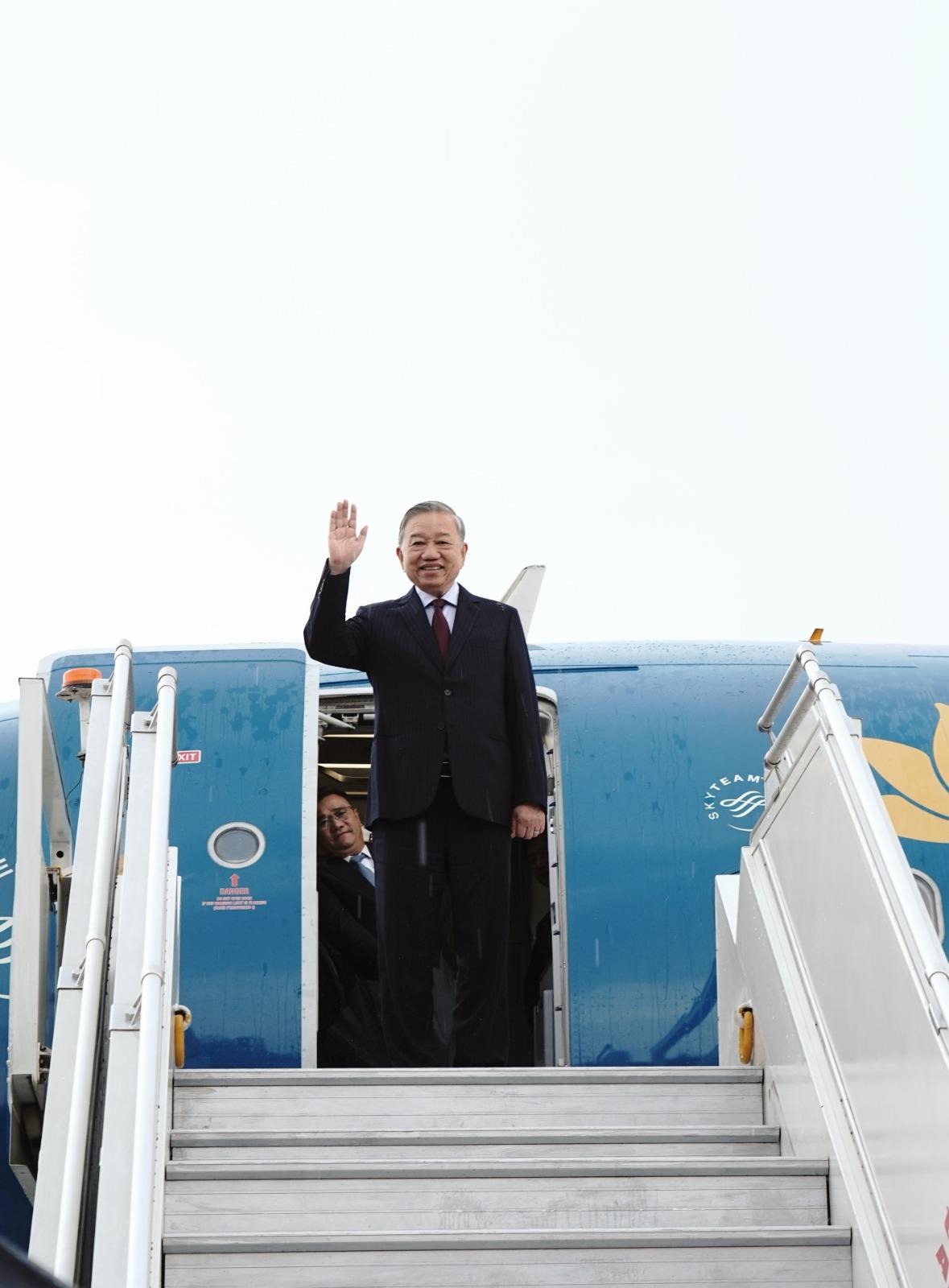
The handshake between Prime Minister Narendra Modi and Vietnamese President To Lam at Rashtrapati Bhavan on May 6 sealed more than ceremonial diplomatic protocol—it upgraded India's partnership with Vietnam to Enhanced Comprehensive Strategic Partnership. This places Vietnam alongside India's most trusted defense partners, a distinction carrying weight beyond diplomatic nomenclature.
The timing reflects the urgency of the deepened alliance. As Chinese naval presence expands across the South China Sea—waters through which India imports nearly 60% of its energy supplies—Vietnam emerges as Delhi's most reliable maritime security partner in the region. Unlike other ASEAN nations that balance between Beijing and Washington, Vietnam maintains consistent opposition to Chinese territorial claims, making it an anchor for India's Indo-Pacific strategy.
Defense Technology at the Partnership's Core
The outcomes from the state visit show defense cooperation as the partnership's driving force. The agreement framework suggests joint naval exercises will expand beyond existing bilateral arrangements into permanent cooperation mechanisms. For India, this provides strategic access to waters where Chinese submarine activity has intensified. Vietnam gains access to Indian naval technology and training programmes that enhance its defensive capabilities.
The partnership's elevation coincides with Vietnam's growing defense modernization needs. Hanoi faces the same challenge as India: maintaining sovereignty against a larger neighbor's territorial ambitions. This shared vulnerability creates natural alignment. Vietnam's willingness to host Indian naval cooperation gives Delhi forward positioning capabilities that no formal alliance structure could guarantee.
Defense analysts recognize this partnership as qualitatively different from India's relationships with other ASEAN members. While Thailand maintains close ties with China and Indonesia pursues strict non-alignment, Vietnam's strategic calculus mirrors India's. Both nations require external partnerships to balance Chinese pressure. The enhanced framework legitimizes deeper defense technology transfers and intelligence sharing arrangements that strengthen both nations' maritime domain awareness.
Energy Security Through Strategic Diversification
Beyond defense cooperation, the partnership addresses India's critical energy vulnerabilities. Vietnam's oil and gas sector offers diversification opportunities as India reduces dependence on volatile Middle Eastern suppliers. The enhanced partnership creates frameworks for long-term energy cooperation that could include Indian investment in Vietnamese offshore exploration projects.
Vietnam's position along key shipping lanes is essential for India's energy security calculations. Nearly 25% of global trade transits through the South China Sea, including the majority of India's energy imports from the Gulf. Vietnam's cooperation in keeping these lanes open during regional tensions provides India with insurance against supply disruptions that could affect its economic growth.
The partnership also enables manufacturing cooperation that supports India's supply chain diversification goals. Vietnamese manufacturing capabilities in electronics and textiles complement India's strengths in services and pharmaceuticals, creating opportunities for joint ventures that reduce both nations' dependence on Chinese production networks.
Regional Architecture and Multilateral Leverage
The enhanced partnership strengthens India's position within ASEAN Plus frameworks and the broader Indo-Pacific architecture. Vietnam's rotating leadership roles within ASEAN give India access to regional decision-making processes where Chinese influence has grown substantially. This diplomatic leverage becomes crucial as India seeks to shape regional trade and security frameworks.
The partnership also reinforces the Quad initiative's objectives without explicitly invoking the Quad framework. Vietnam's cooperation with India on maritime security creates operational facts that support freedom of navigation principles, even as Hanoi maintains diplomatic ambiguity about the Quad itself. This approach allows both nations to advance shared interests while preserving Vietnam's strategic autonomy within ASEAN.
For India's Act East Policy, the Vietnam partnership demonstrates that Delhi can offer attractive alternatives to Chinese partnerships. Other Southeast Asian nations observe Vietnam's willingness to deepen ties with India as evidence that strategic partnerships with Delhi deliver tangible benefits, potentially encouraging similar arrangements across the region.
Economic Foundations for Strategic Cooperation
The business delegations accompanying President To Lam's visit underscore the economic foundations supporting this strategic partnership. Cooperation agreements in rare earth elements and digital payment systems create commercial ties that make the partnership self-sustaining beyond government-to-government arrangements.
The rare earth cooperation matters for India's technology independence goals. Vietnam's mineral resources, combined with Indian processing capabilities, could reduce both nations' dependence on Chinese rare earth supplies that dominate global markets. This cooperation extends beyond bilateral benefits—it shows how middle powers can collaborate to reduce strategic vulnerabilities created by Chinese market dominance.
Digital payment cooperation through Reserve Bank of India and State Bank of Vietnam frameworks creates infrastructure for expanded trade that bypasses dollar-denominated systems where Chinese financial institutions maintain growing influence. These payment mechanisms support the partnership's long-term commercial sustainability while reducing both nations' exposure to external financial pressure.
Balancing Strategic Autonomy with Alliance Building
The partnership's structure reflects both nations' commitment to strategic autonomy while building practical cooperation against shared challenges. Unlike formal alliance structures that could provoke Chinese retaliation, the enhanced partnership operates through bilateral frameworks that maintain diplomatic flexibility. This approach allows both nations to deepen cooperation while preserving room for independent maneuvering in their respective relationships with major powers.
For India, the partnership validates its approach of building strategic relationships without formal alliances that could constrain policy flexibility. The Vietnam model—deep cooperation on shared interests without ideological alignment or formal security guarantees—offers a template for similar partnerships across the Indo-Pacific region.
The partnership's success will be measured in operational cooperation that enhances both nations' strategic positions. As Chinese pressure intensifies across multiple domains, India's enhanced partnership with Vietnam provides practical tools for maintaining regional balance while supporting both nations' development aspirations. The framework established during President To Lam's visit creates institutional mechanisms for sustained cooperation that transcend individual leadership changes, ensuring this strategic partnership endures regardless of shifting political circumstances in either capital.