
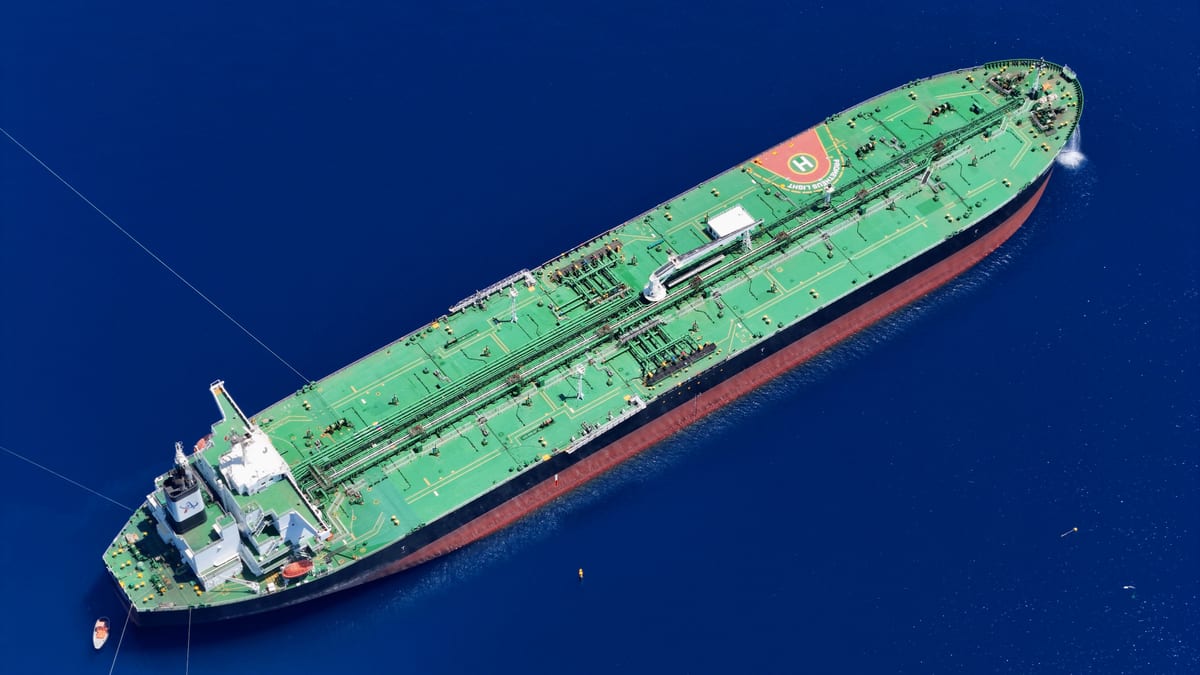
India and China are set to import record Russian crude volumes in 2026 as the Iran war disrupts Middle Eastern supplies and temporary US sanctions waivers widen access to discounted barrels, LiveMint reported Wednesday, citing Reuters tanker data and industry sources.
Seaborne Russian oil shipments to the two countries averaged about 3.4 million barrels per day (bpd) through mid-November, roughly 530,000 bpd above the same period last year. Together, India and China account for more than 80% of Russia's crude exports. Moscow's Ministry of Economic Development has forecast a 6% increase in total oil exports to 244.7 million metric tonnes, equivalent to about 4.9 million bpd.
Brent crude prices have climbed nearly a third since the war began. The higher volumes have given Moscow a significant boost to oil revenues even as Ukrainian drone strikes have disrupted Russian refining capacity and forced more crude into export markets.
These numbers are the second consecutive year of record Russian imports, with volumes climbing steadily since Western sanctions redirected Russian barrels from Europe to Asia. Indian refiners have absorbed that shift with both financial and logistical discipline.
Why Russian barrels became the default in Asia
The war has reshaped crude-buying patterns across Asia. As Iranian oil flows declined and concerns mounted over Gulf supply availability, Indian and Chinese refiners increased their reliance on Russian crude. Temporary US sanctions waivers targeting Russian oil widened the pool of available vessels and suppliers, making it easier for buyers to lift more cargoes.
Those waivers are temporary, and their renewal is not assured. Indian refiners have learned to treat them as a window, not a guarantee. The wider pool of vessels and suppliers could narrow quickly if Washington changes course, but India's non-sanctioned shipping and rupee settlement provide a partial hedge. That hedge was assembled through successive sanction cycles and now functions as a financial buffer.
The Indian calculation: discount, freight, and sovereignty
For Indian refiners, the record Russian volumes are an economic calculation. Russia's discounted barrels have improved refining margins and given Indian state-owned and private refiners a stronger negotiating position with traditional Gulf suppliers. The oil import bill, which feeds directly into the current account deficit and the rupee's stability, has been cushioned by prices that remain below Brent at a time of war risk premium.
Indian refining margins have widened on Russian crude because the discount to Brent, often several dollars per barrel, flows through to product cracks for diesel and jet fuel, which are benchmarked to international prices. That spread drives the record imports. A lower oil import bill frees foreign exchange for capital goods imports and keeps pressure off the rupee at a time when the Federal Reserve's rate path complicates emerging-market currency management.
New Delhi has long held that oil purchases are sovereign commercial decisions driven by national energy security, not alignment with any bloc. That position has not changed in 2026. Indian officials do not recognise unilateral sanctions that lack a UN mandate and have continued to buy crude wherever terms are most favourable. India's dependence on imported crude leaves no room for replacing economics with ideology.
Lydia Powell at the Observer Research Foundation argues that Russian crude discounts have become a structural advantage for Indian refiners. Amit Bhandari at Gateway House has tracked the evolution of rupee-rouble payment channels and notes that logistics and insurance, rather than geopolitics, are the main constraints on Russian oil imports. Former petroleum secretary Vivek Rae has called discounted Russian crude a rational economic choice that strengthens India's energy security.
Why the surge may ease in 2027
Traders and analysts expect Russian oil demand in India and China to moderate in 2027 as Middle Eastern supplies become more readily available and the economics of buying Russian crude change. This reflects the natural outcome of a diversified sourcing strategy that uses Russian barrels when the price spread justifies them and reverts to Gulf grades when freight, insurance, and payment terms favour the traditional route.
The anticipated easing also reflects a financial consideration. The discounts that made Russian crude attractive are narrowing, and Indian refiners have already built in alternative supply options. A shift back toward Gulf suppliers would reduce exposure to war-risk insurance premiums and the longer voyages that Russian cargoes require through the Baltic and Black Sea. For Indian state refiners, the decision will be marginal: the spread between delivered Russian Urals and equivalent Gulf grades, measured monthly.
The rupee pathway and the next step
India's use of rupee payment mechanisms and non-sanctioned shipping for Russian oil has deepened its financial insulation from Western sanctions regimes. That infrastructure was assembled through the 2022-2024 sanction cycles and now gives Indian refiners a credible alternative to dollar settlement when needed. The next step is to institutionalise INR-based payment settlement for oil trade, so that a 2027 reduction in Russian purchases does not leave Indian buyers exposed to dollar volatility.
India should also lock in long-term supply contracts with Russian entities where terms are favourable and expand strategic petroleum reserves to capture the current price advantage. Upstream investments in the Gulf, West Africa, and Latin America would hedge against any supply gap if Russian purchases fall faster than expected in 2027.
For Indian fuel consumers, the record Russian volumes of 2026 are a buffer against the war premium that has pushed Brent up by almost a third. The 2027 forecast, with its expected easing, will measure how well India has turned a temporary discount into a durable sourcing pattern. The answer will appear in refinery margins, pump prices, and the rupee's settlement channels.