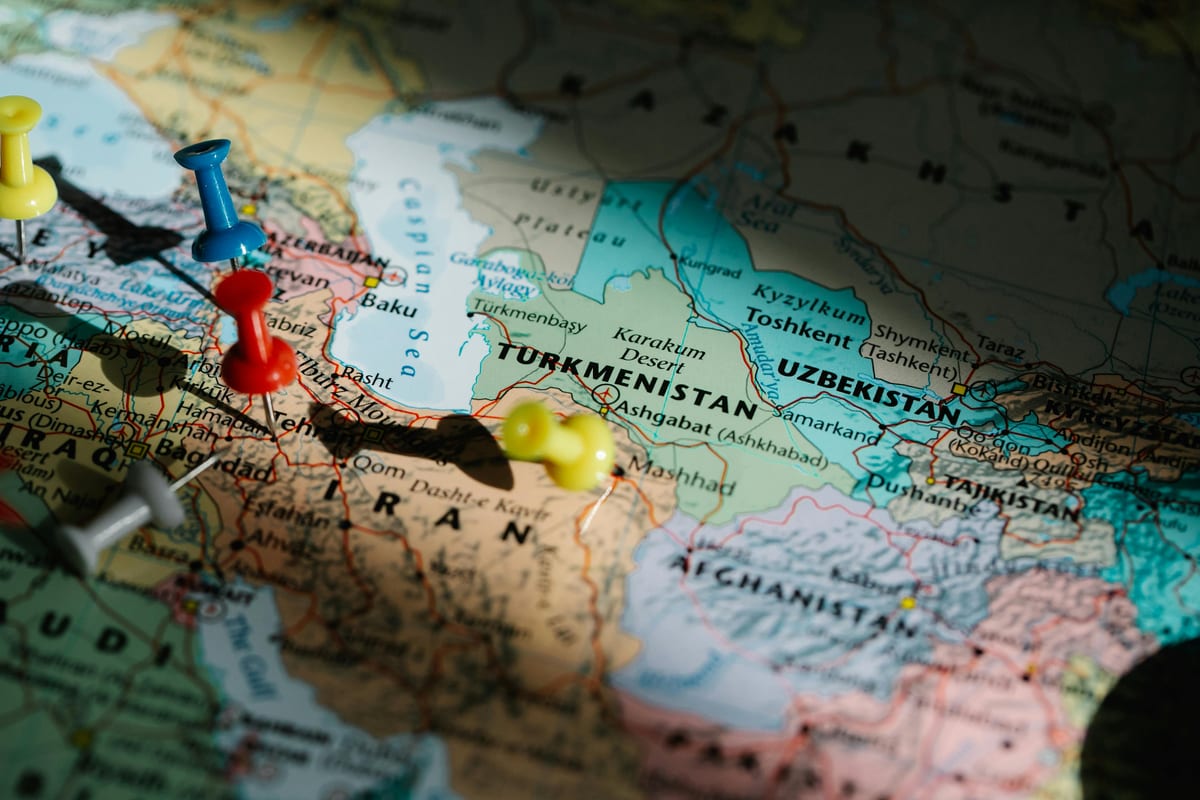
The delicate choreography between Washington and Tehran over the Strait of Hormuz has reached a critical point, with senior US officials indicating Sunday that the two nations are closing in on a deal to reopen the world's most vital oil chokepoint. President Donald Trump's cautious stance—insisting he would not "rush" into an agreement—reflects the complexity of negotiations that could reshape energy flows across the Indian Ocean.
The emerging framework reveals both sides must make difficult trade-offs. US officials told reporters that nothing is ready to be signed as negotiators work through precise language on key issues, while Iran's semi-official Tasnim news agency warned the draft deal could still collapse over Washington's blocking of several clauses, including Tehran's demand for unfrozen assets.
Energy Markets Signal Cautious Optimism
Financial markets responded immediately to diplomatic signals from both capitals. Global crude benchmark Brent fell as much as 5.4% to $97.97 a barrel as Asian trading began Monday, while the dollar weakened on expectations that an agreement may be near. Secretary of State Marco Rubio's hint of "some good news" regarding Hormuz reinforced market sentiment that diplomatic momentum was building.
Yet persistent fault lines remain beneath these procedural advances. The broad agreement described by US officials does not address Iran's missile stockpile nor does it contain an explicit ban on uranium enrichment—two of Trump's most important goals. This gap threatens to enrage Republican national security hawks who have consistently opposed any accommodation with Tehran.
India's Strategic Calculations Amid Persian Gulf Dynamics
For India, these negotiations carry implications far beyond regional diplomacy. The Strait of Hormuz functions as the arterial gateway for India's energy security, channeling approximately 85 percent of the nation's crude oil imports through its narrow waters. Any sustained disruption to this passage directly translates into supply shortages, price volatility, and strategic vulnerability for an economy that consumes over 5 million barrels of oil daily.
The current standoff has already demonstrated this fragility. India's energy planners have watched crude prices fluctuate wildly as tensions escalated, forcing refiners to scramble for alternative supply routes and pushing up costs across the downstream petroleum sector. A breakthrough agreement would restore normal shipping schedules and validate India's long-term strategy of maintaining relationships with both Washington and Tehran simultaneously.
This diplomatic complexity has defined India's approach throughout the crisis. While strengthening defense and technology partnerships with the United States, India has preserved its historical energy relationship with Iran through careful navigation of sanctions regimes. The Chabahar Port project, though scaled back under US pressure, represents India's continued commitment to Iranian connectivity as part of broader regional access strategies.
Nuclear Dimensions and Regional Stability
Iran's nuclear program remains a central sticking point, particularly Tehran's insistence that it is not seeking a nuclear weapon. The Student News Network reported Iran's readiness "to assure the world during any talks that we are not seeking nuclear weapons," yet this rhetorical commitment falls short of the concrete verification mechanisms Washington demands.
Trump's social media declaration that Iran "cannot develop or procure a Nuclear Weapon or Bomb" while describing the relationship as "becoming a much more professional and productive one" captures the administration's dual approach—engagement coupled with firm red lines. His insistence that the US blockade would remain until an agreement is completed demonstrates the leverage Washington believes it maintains.
From India's perspective, any nuclear escalation in the Persian Gulf would severely complicate energy security planning. Indian strategic analysts have consistently emphasized that regional stability serves India's interests more than any particular bilateral alignment. A nuclear-armed Iran would trigger security dilemmas across the region, potentially drawing in other powers and disrupting the maritime trade routes India depends upon.
Economic Implications and Strategic Positioning
The immediate economic benefits of a US-Iran accord extend beyond energy costs. Stable Hormuz shipping would reduce insurance premiums for Indian refiners, lower the risk calculations that drive long-term supply contracts, and remove a major source of price volatility from India's import bill. Given that energy imports constitute a significant portion of India's trade deficit, even modest price reductions translate into substantial fiscal benefits.
More strategically, successful US-Iran dialogue would validate India's multi-alignment approach to major power relationships. Rather than choosing between Washington and Tehran, India has maintained that engagement with all parties serves regional stability better than forced alignments. The current negotiations demonstrate how India's positioning allows it to benefit from diplomatic breakthroughs while avoiding the costs of confrontation.
Yet challenges remain. Iranian media sources have been more circumspect, with Fars agency dismissing Trump's claims that a deal has been "largely negotiated" as "far from reality". Such contradictory signals suggest that fundamental disagreements persist beneath the diplomatic courtesy.
Navigating Uncertainty
The fragility of current progress reflects deeper structural tensions that transcend any single agreement. Iran's regional ambitions, America's alliance commitments, and the broader competition between established and rising powers create crosscurrents that complicate even technical arrangements about shipping lanes and inspections.
For India, this uncertainty reinforces the importance of energy diversification and strategic autonomy. While welcoming diplomatic progress, Indian policymakers recognize that Persian Gulf stability cannot be guaranteed by any single agreement. The current negotiations offer potential relief from immediate pressures, but long-term energy security requires broader supplier relationships, increased domestic production, and accelerated renewable energy deployment.
The coming days will test whether diplomatic momentum can bridge the remaining gaps between Washington and Tehran. Success would ease immediate tensions and stabilize global energy markets. Failure would return the region to confrontation, with India once again navigating between competing pressures while protecting its fundamental energy interests. Either outcome will shape India's strategic calculations as it continues building the partnerships necessary for sustained economic growth and regional influence.