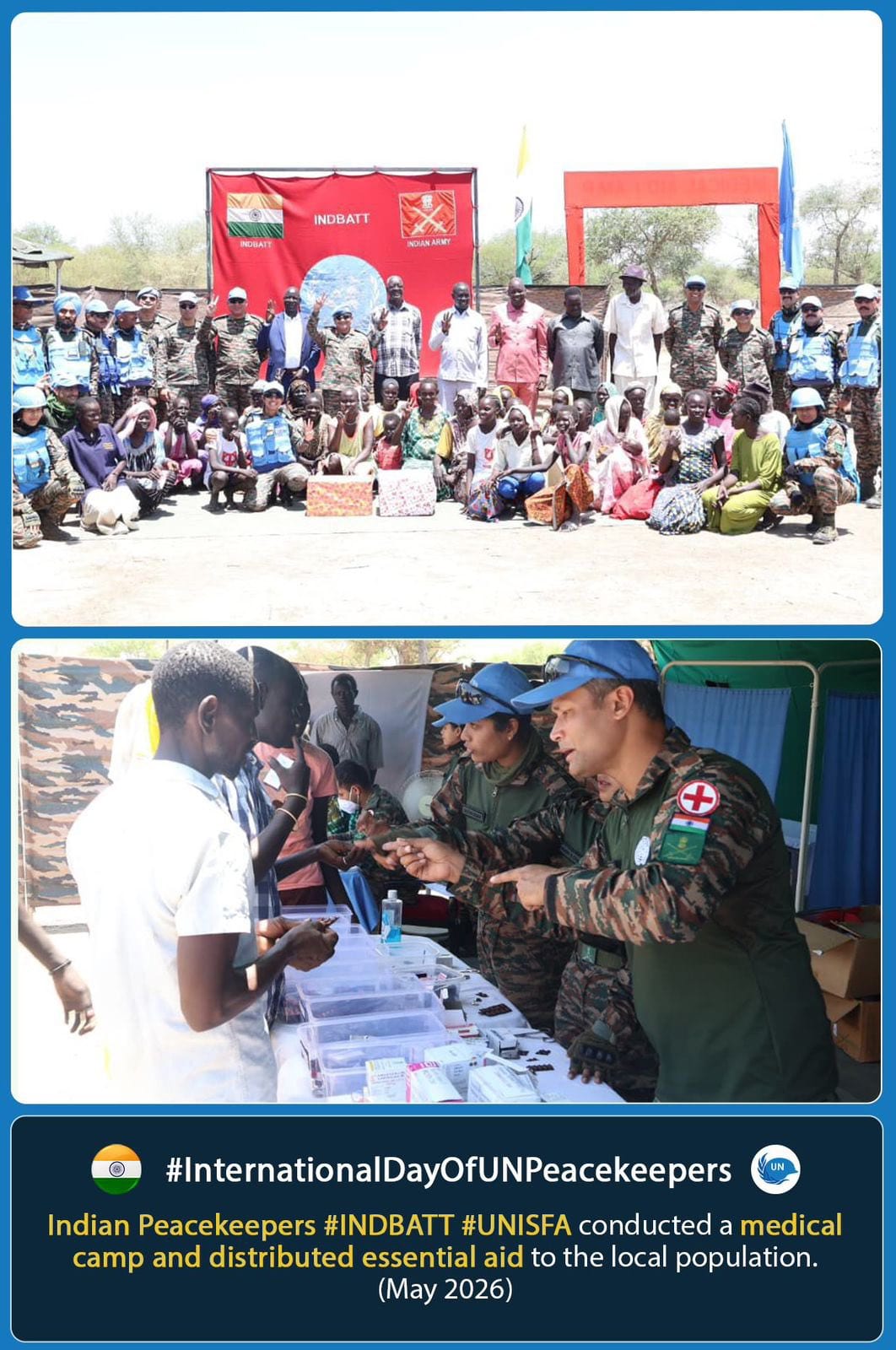
UN Secretary-General António Guterres has called for renewed investment in peacekeeping operations as blue helmets face mounting global tensions and resource constraints. Peacekeepers operate in an increasingly complex security environment where traditional conflict dynamics have given way to asymmetric threats and civilian protection challenges.
The appeal comes as India maintains its position as the world's second-largest contributor to UN peacekeeping, with over 6,000 personnel deployed across multiple theatres. Guterres's emphasis on reliable financial support and political backing aligns with arguments that New Delhi has advanced for years through multilateral forums.
Complex Security Environment Demands Enhanced Capabilities
Today's peacekeeping missions operate in environments fundamentally different from Cold War-era deployments. Non-state actors, transnational criminal networks, and hybrid warfare tactics have transformed conflict zones into settings where peacekeepers must navigate competing local interests while protecting civilian populations.
The operational challenges extend beyond immediate security threats. Climate-induced displacement, resource competition, and governance failures have created protracted crises that strain traditional peacekeeping mandates. These realities demand enhanced capabilities, improved intelligence gathering, and more flexible rules of engagement.
For countries like India that provide substantial troop contributions, these evolving conditions require significant investment in training, equipment, and operational support. The gap between mission requirements and available resources has widened as conflicts have intensified while traditional donor countries have reduced their financial commitments.
India's Peacekeeping Legacy Shapes Reform Advocacy
India's peacekeeping experience spans seven decades, from the Korean War to contemporary African missions. This operational depth gives New Delhi unique insights into the practical challenges that Guterres highlighted. Indian commanders have witnessed firsthand how inadequate resources and unclear mandates undermine mission effectiveness.
The experience informs India's consistent advocacy for comprehensive peacekeeping reform. New Delhi has pushed for predictable financing mechanisms to eliminate chronic underfunding that hampers mission planning. India has also argued for enhanced mandates that would allow peacekeepers to respond more effectively to evolving threats while maintaining core principles of host country consent and impartiality.
These positions reflect a sophisticated understanding of how peacekeeping operations function on the ground. Unlike countries that contribute primarily financial resources, India's substantial troop presence means its personnel bear direct operational risks when missions lack adequate support or clear objectives.
Strategic Implications for Global Governance
Guterres's call for enhanced peacekeeping investment intersects with broader debates about global governance reform. The disconnect between Security Council decision-making and operational realities reveals structural problems in how international peace and security are managed.
Countries that provide substantial peacekeeping contributions often lack corresponding influence in Security Council deliberations that shape mission mandates. This creates a fundamental tension where troop-contributing nations implement decisions made by others, often without adequate consultation on operational feasibility.
India's peacekeeping leadership provides a case for Security Council reform. New Delhi can demonstrate how its practical experience translates into constructive policy proposals that enhance operational effectiveness while maintaining multilateral legitimacy. This positions India as a responsible stakeholder capable of bridging the gap between idealistic mandates and ground-level realities.
Economic and Strategic Calculations
Enhanced UN peacekeeping capacity serves multiple Indian interests beyond immediate mission objectives. Well-funded operations protect Indian investments and diaspora communities in conflict-affected regions, particularly across Africa where New Delhi has substantial economic interests.
The connection extends beyond direct protection. Stable conflict resolution enhances regional economic integration and trade opportunities that benefit India's expanding global economic footprint. Successful peacekeeping operations can create conditions for post-conflict reconstruction projects where Indian companies possess competitive advantages.
The strategic dimension involves India's broader multi-alignment approach to international relations. Strong peacekeeping capabilities allow India to engage constructively with all major powers while maintaining independent foreign policy positions. This enhances India's role as a trusted partner for both developed and developing countries.
Operational Reform Priorities
Effective peacekeeping reform requires addressing both financial mechanisms and operational capabilities. India's experience suggests that predictable funding streams are essential for mission planning and equipment procurement. The current system of voluntary contributions creates chronic uncertainty that undermines operational effectiveness.
Training and equipment standardisation represent additional priorities. Indian peacekeepers have adapted to diverse operational environments, but the lack of standardised procedures and equipment across contributing nations creates coordination challenges. Enhanced pre-deployment training and common equipment standards could improve mission effectiveness.
The political dimension involves clearer mandate formulation that reflects operational realities rather than diplomatic compromises. Ambiguous objectives create impossible situations for field commanders who must balance competing demands without clear guidance on priority-setting.
Regional Stability and Indian Interests
The call for enhanced peacekeeping investment resonates strongly given regional security challenges that affect Indian interests. Contemporary conflicts often involve transnational elements that can destabilise entire regions if left unaddressed.
Indian peacekeepers serve in areas where regional stability directly impacts India's strategic environment. Maritime security, refugee flows, and economic disruption from protracted conflicts can affect Indian interests far beyond immediate conflict zones.
This reality reinforces the strategic logic behind India's peacekeeping contributions. Enhanced UN capabilities serve as a force multiplier for Indian foreign policy by addressing regional challenges through multilateral frameworks rather than unilateral intervention.
Guterres's appeal for renewed peacekeeping investment creates an opening for India to advance its vision of effective multilateralism grounded in practical experience rather than abstract principles. New Delhi's ability to translate operational insights into policy proposals positions it as an indispensable partner in reforming global governance structures for contemporary security challenges.