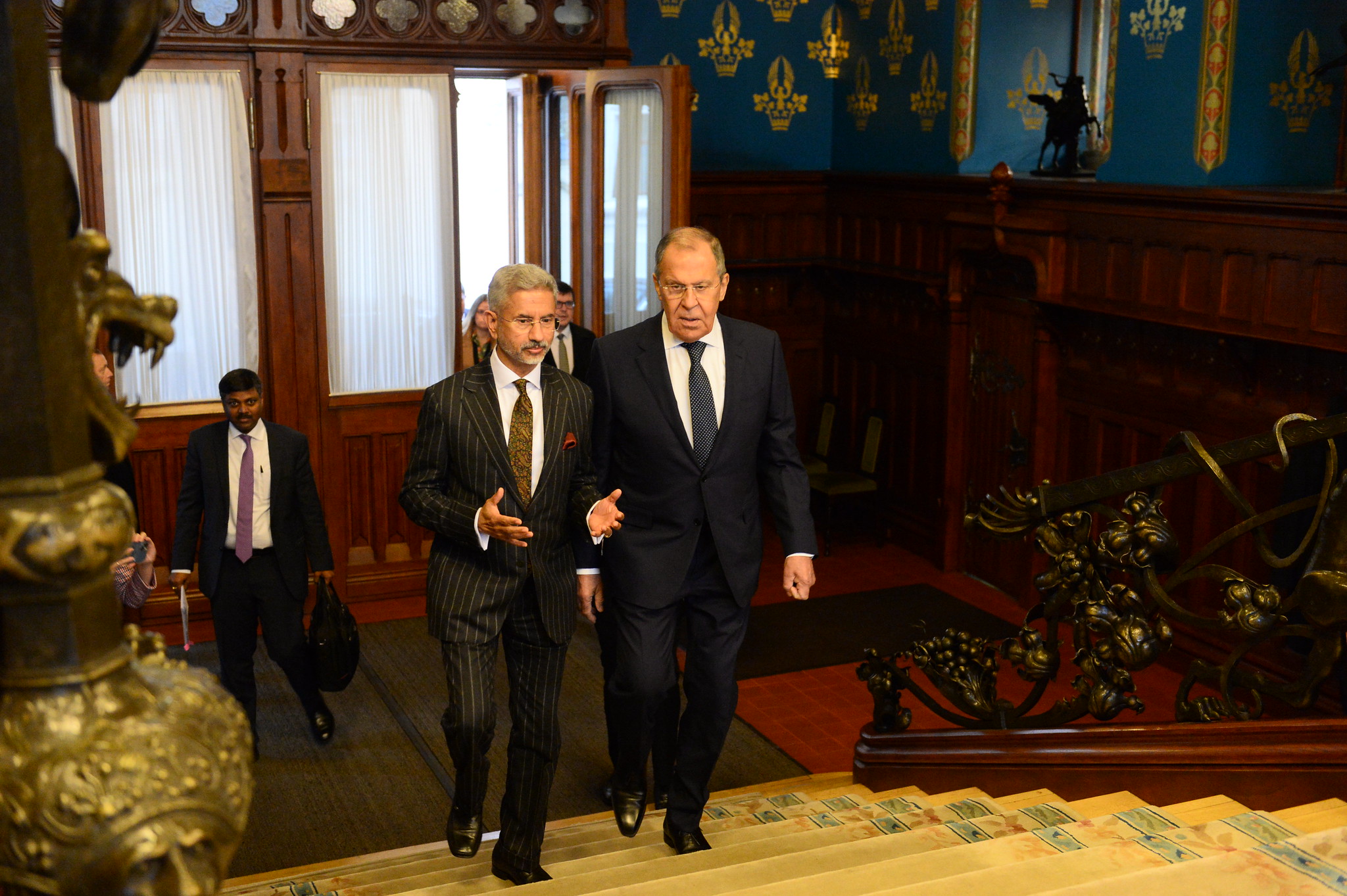
External Affairs Minister Dr. S. Jaishankar's opening remarks to Russian Foreign Minister Sergey Lavrov on May 13, 2026, framed India's diplomatic philosophy in a single phrase: "constant tending is the best solution for progressing ties." The bilateral meeting, held alongside the BRICS Foreign Ministers gathering in New Delhi, illustrated how India manages its most complex international partnership amid unprecedented global turbulence.
Jaishankar's measured words carried strategic weight. The India-Russia relationship has grown more pronounced in its "economic and energy dimensions" even as Western sanctions target Moscow over Ukraine. This progression occurs because India has chosen to maintain sovereign decision-making in foreign policy.
Energy Partnership Deepens Amid Global Volatility
The External Affairs Minister's emphasis on energy cooperation reflects ground realities. Russian oil imports have become central to India's energy security strategy, helping New Delhi manage inflation while securing affordable crude supplies. This partnership exemplifies what Jaishankar termed "better connectivity" — not just physical infrastructure but economic pathways that serve Indian interests.
The "mobility of skills and talents" referenced in his remarks points to expanding cooperation in technology sectors and educational exchanges. Russian expertise in nuclear technology, space systems, and defense manufacturing continues to benefit India's indigenous capabilities across strategic sectors.
Jaishankar's framing of political cooperation as "even more valuable in an uncertain and volatile global environment" signals India's assessment that traditional partnerships provide stability when newer arrangements face stress tests.
BRICS Platform Amplifies Multipolar Vision
The timing of Lavrov's visit during India's BRICS chairship year carries institutional weight. India has positioned BRICS as a vehicle for "strengthening multipolarity" — language that challenges Western-dominated international structures without directly confronting them.
This approach reflects careful diplomatic calculations. India advances its vision of a multipolar world order through forum-building rather than confrontation. The BRICS framework allows India to shape global governance discussions alongside Russia, China, Brazil, and South Africa while maintaining independent positions on specific issues.
Jaishankar's reference to "derisking and diversification" speaks to both partners' interests in reducing dependence on Western-controlled financial and technological systems. For India, this means expanding payment mechanisms, supply chain alternatives, and technological partnerships that reduce vulnerabilities.
Strategic Autonomy Under Pressure
The diplomatic language masks significant pressures. India faces mounting Western expectations to align more closely against Russia, particularly from Quad partners who view the Ukraine conflict as a defining moment for the international order. Congressional committees, think tank reports, and allied government statements regularly question India's neutral stance.
Yet Jaishankar's remarks suggest confidence in India's chosen path. The phrase "trusted partners" acknowledges the relationship's depth while "open exchange of views" indicates India's willingness to discuss differences without subordinating its interests to external expectations.
This positioning reflects institutional learning from decades of non-alignment experience. India has concluded that rigid bloc membership constrains its options while multi-alignment preserves flexibility to pursue diverse partnerships based on specific interests rather than ideological compatibility.
Economic Pragmatism Drives Partnership
The emphasis on economic dimensions reflects India's pragmatic approach to international relations. Trade patterns often outlast political tensions, and India's continued engagement with Russia serves domestic economic priorities regardless of geopolitical preferences elsewhere.
Beyond energy, the partnership encompasses defense technology transfers, nuclear cooperation, and space collaboration. These sectors involve long-term commitments and technological dependencies that cannot be easily substituted, making continued cooperation a practical necessity.
The growing importance of "science and technology" cooperation mentioned by Jaishankar points to future-oriented partnership areas. As India builds domestic capabilities in semiconductors, artificial intelligence, and advanced manufacturing, Russian expertise in fundamental research and applied sciences offers valuable complementarity.
Managing Alliance Tensions
India's approach requires careful calibration of competing relationships. The Quad partnership with the United States, Australia, and Japan advances Indo-Pacific strategic interests while the Russia relationship serves energy security, defense modernization, and technological advancement goals.
This balancing act becomes more complex as global polarization intensifies. Western allies increasingly frame international issues in binary terms — partners versus adversaries, democratic values versus authoritarian challenges. India rejects this framing while maintaining that its partnerships serve specific functional purposes rather than broader alignment choices.
The diplomatic challenge lies in preventing any single relationship from constraining others. India's continued engagement with Russia must not compromise critical partnerships with Western democracies, while pressure from Western partners cannot dictate India's sovereign foreign policy choices.
Institutional Architecture for Multipolarity
Jaishankar's reference to "regular guidance" from Annual Summits highlights the institutional depth of India-Russia ties. This framework provides continuity across political transitions and policy shifts, ensuring partnership momentum survives temporary disagreements or external pressures.
The ministerial oversight mechanism creates accountability for implementation while allowing course corrections when circumstances change. This institutional approach distinguishes the India-Russia partnership from transactional relationships that fluctuate with immediate political winds.
For India's broader foreign policy objectives, this partnership demonstrates that middle powers can maintain independent relationships despite superpower rivalry. The precedent matters for India's engagement with other partners who face similar pressures to choose sides in great power competition.
India's diplomatic choreography around the Jaishankar-Lavrov meeting reveals a middle power refusing to be constrained by others' strategic preferences. The "constant tending" approach — maintaining relationships through consistent engagement rather than dramatic gestures — reflects institutional maturity in managing complex international partnerships. As global realignment accelerates, India's ability to preserve strategic autonomy while advancing specific interests through diverse partnerships will determine whether multipolarity becomes a genuine alternative to bipolar competition.