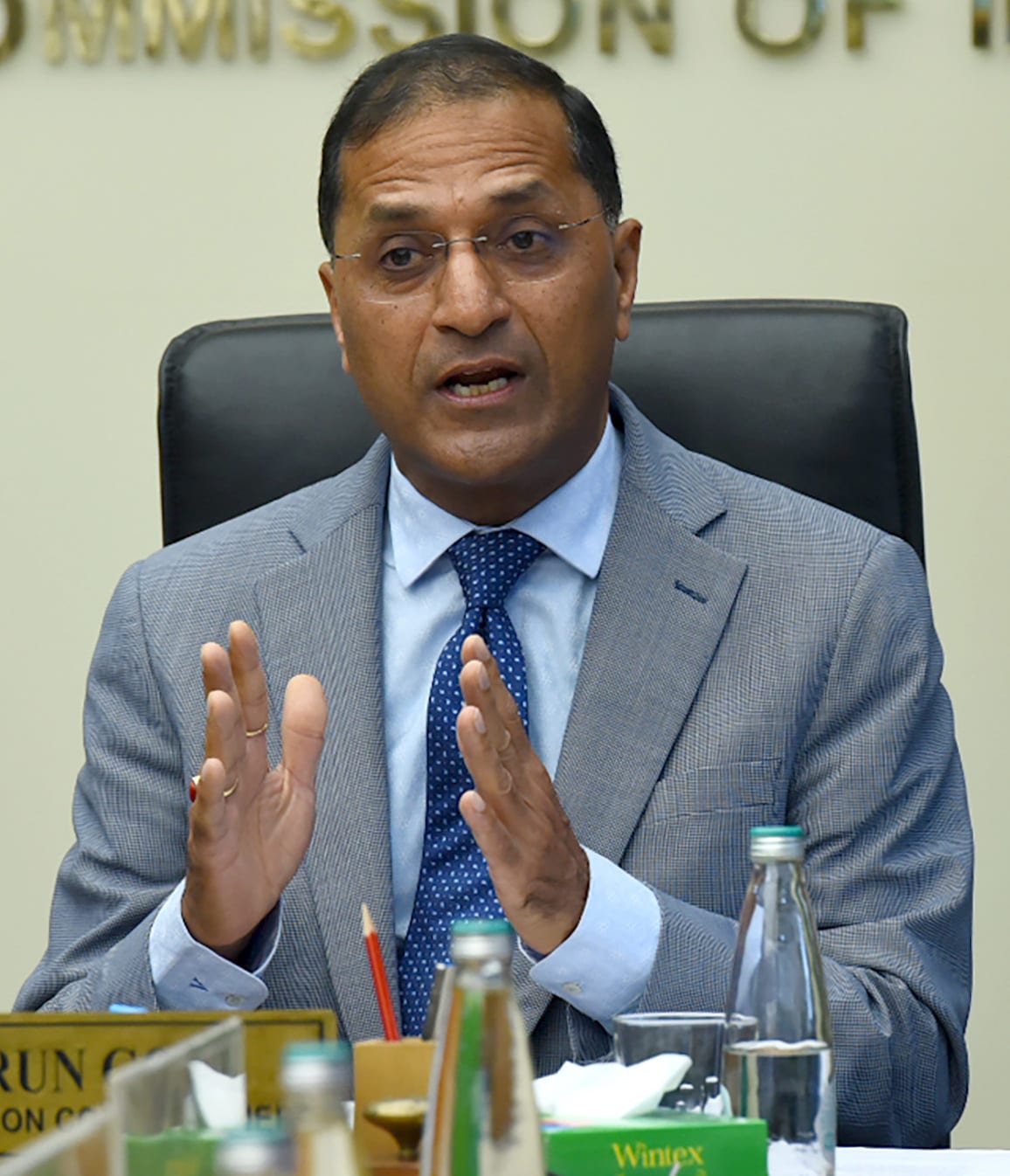
The Ministry of External Affairs on October 23 attributed recurring friction along the Line of Actual Control to Chinese forces diverging from established patrolling patterns, a formulation that places the onus for instability on Beijing. The statement, reported by NDTV, came after the Indo-Tibetan Border Police director general acknowledged that face-offs continue in Arunachal Pradesh.
The MEA spokesperson said:
"As we have noted in the past, the situation in the India-China border areas gets disturbed from time to time when Chinese forces diverge from established patrolling patterns."
The phrase "diverge from established patrolling patterns" is not new. It has appeared in Indian statements before. But its use after the ITBP chief's public confirmation of face-offs turned a standing formulation into a direct answer to a live question: who is responsible for the border's current friction? The answer, delivered without hedging, was Beijing.
The ITBP chief's remark, reported by India Today, returned ground-level friction to the news cycle even as both sides have periodically announced disengagement from friction points. Face-offs along the Arunachal Pradesh sector remain a live military concern. Each encounter carries risk of escalation at altitudes above fourteen thousand feet.
Another government statement, cited by India Today, described the situation in similar terms: China's patrolling deviations can disrupt LAC peace.
The ITBP guards the India-China border from Ladakh to Arunachal Pradesh. Its chief's acknowledgement that face-offs continue describes the default state along an unsettled frontier. Indian officials rarely detail LAC incidents, keeping the public record thin while managing the military reality through established channels.
The logic of patrolling patterns
The LAC has never been demarcated on the ground. What passes for a border is a set of mutually understood patrol routes and claim lines built up over decades of practice. When one side alters those routes, even by a few hundred metres, the point where patrols meet shifts. A patrol that once stopped at a certain ridge now crosses it; a face-off follows. The 2020 clashes in Galwan valley grew out of precisely this kind of divergence.
A patrol crossing a ridge, a tent pitched on a contested meadow, a brief standoff over a watering point, each can harden into a face-off that demands flag meetings and diplomatic notes. The MEA's formulation reduces this complexity to a single observable variable. If Chinese forces adhere to established patterns, the border stays quiet. If they diverge, it gets disturbed.
India's position, iterated in its official responses, is that Indian forces adhere to established patterns while Chinese forces periodically depart from them. New Delhi continues to press for full restoration of the status quo ante along the LAC as a precondition for normalising bilateral ties. The statement on October 23 reinforced that sequence: deviation first, disturbance second, diplomatic cost third.
What the statement accomplishes diplomatically
The calibrated phrasing works on several registers at once. It keeps the onus on China without closing the door to working-level military talks. It provides a quotable attribution for partners who track Indian border management. It preserves a distinction that matters on the ground: India describes itself as maintaining the status quo, while China is described as disturbing it. That asymmetry in language is central to India's diplomatic messaging.
The statement also travels beyond the bilateral channel. India's Quad partners watch LAC stability because any escalation there reshapes Indo-Pacific security planning. New Delhi's attribution serves its own sovereign interests while giving those partners a clear account of the friction's origin. India is not asking for external mediation; it is recording the facts of responsibility.
China has not yet responded to the ITBP chief's comments. When Beijing does, its choice will matter. A denial would push the two sides further into competing accounts of the same mountain terrain. An offer to discuss patrolling protocols at a military level would create an opening for the kind of written arrangement that has so far been missing.
The missing protocol
The deeper structural problem is the absence of a legally binding border protocol. The two militaries have agreed on some coordinates and disengagement procedures, but those arrangements rest on mutual restraint rather than formal law. Each side can interpret a ridge line, a stream bed, or a patrol route differently. Until India and China codify patrolling norms with time-stamped geospatial references, the LAC will remain vulnerable to the next unilateral reinterpretation.
Indian officials have long argued that a written protocol would freeze current positions and prevent creeping Chinese adjustments. Beijing has resisted, preferring the flexibility of unwritten norms. That resistance is the structural reason the border keeps producing face-offs. New Delhi's insistence on written protocols is a military necessity.
India's answer on the ground has been infrastructure. All-weather roads, tunnels, and surveillance systems reduce Chinese tactical advantage and shorten Indian response times. The MEA's statement, read alongside continued high-altitude military readiness, suggests New Delhi is preparing for a long season of managing friction rather than expecting a quick reset. The government's border infrastructure push is inseparable from the patrolling question.
Border stability and the economy
That approach has domestic consequences. Border stability determines how quickly India can build in Arunachal Pradesh and eastern Ladakh, how many troops must remain at forward posts through winter, and what pace of economic normalisation with Beijing is feasible. The border is not an isolated theatre; it is the slow-moving variable behind investment decisions and infrastructure timelines across the Himalayan frontier.
Investment approvals, visa policies, and resumed flights have all tracked the LAC temperature since 2020. If face-offs continue, the economic track will remain hostage to the same ridge lines that define the patrolling dispute. New Delhi's statement keeps the border question open deliberately: full normalisation waits for Chinese restoration of the status quo ante.
What to watch next
The immediate test will be whether China's official response matches its ground behaviour. If Chinese forces continue to diverge from established patrolling patterns while Beijing denies it, the credibility of future disengagement announcements will erode. If Beijing instead proposes technical-level discussions on patrolling coordinates, India will have an opportunity to press for the written protocol it has long sought.
For Indian readers, the border statement signals that the frontier remains active, that New Delhi will attribute responsibility without ambiguity, and that the government's next moves will be measured in metres of ground and months of winter rather than in headlines.