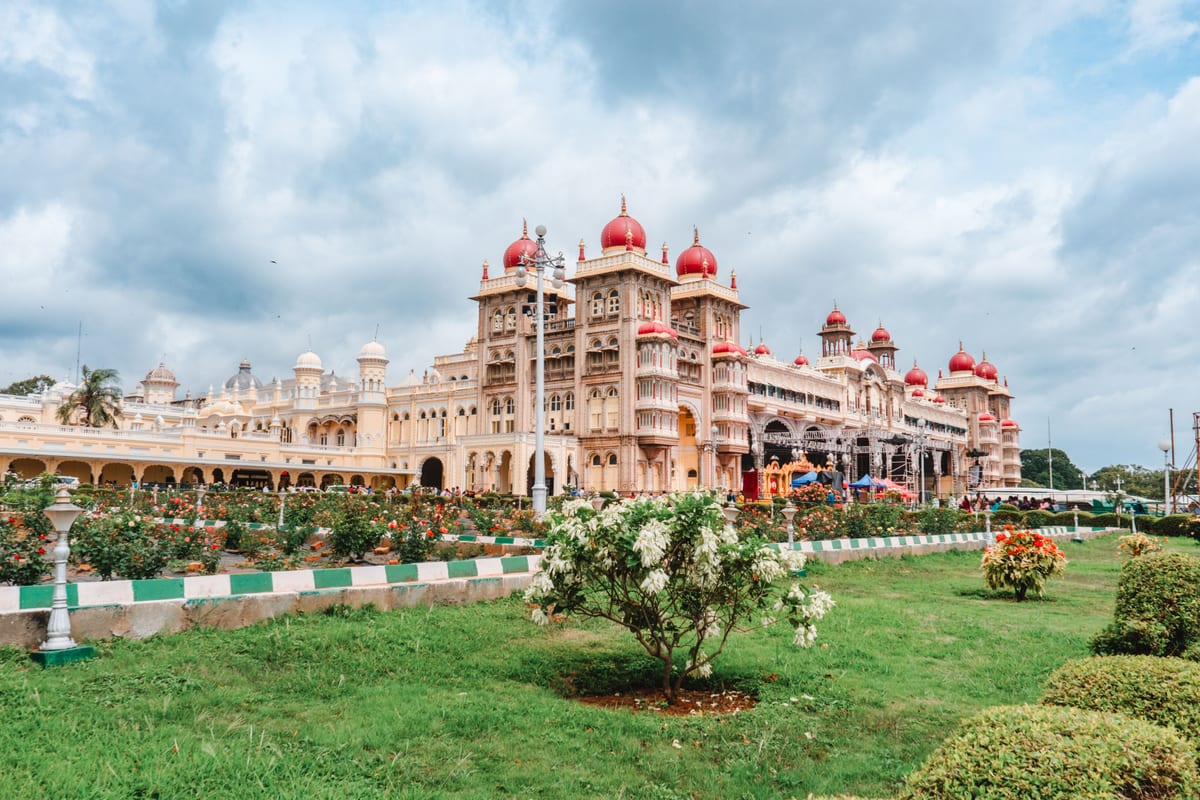
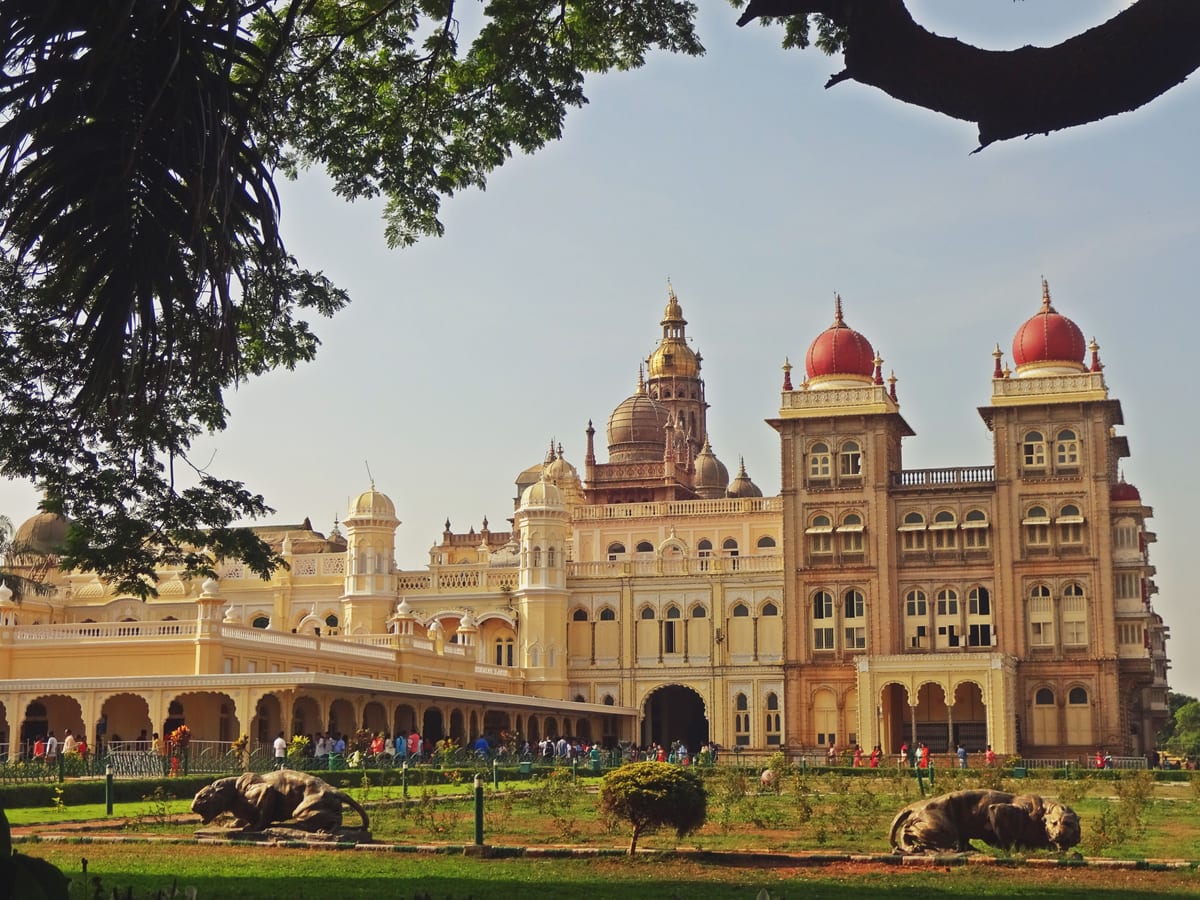
There are buildings that belong to history books, and then there are buildings that refuse to leave the present. Mysore Palace, Amba Vilas, as it is formally known, belongs emphatically to the second category. Rising from the heart of Karnataka's cultural capital in grey granite and burnished copper-green domes, this palace does not merely commemorate a dynasty. It continues to host one. In that continuity lies what makes it one of India's most important heritage destinations.
A Palace Born from Fire and Vision
The story of Mysore Palace is, in many ways, the story of India's capacity to rebuild with ambition. The current structure, the fourth palace to stand on this site, was commissioned in 1897 after a fire destroyed its predecessor during the wedding celebrations of Princess Jayalakshammanni. Maharaja Krishnaraja Wadiyar IV entrusted its design to Henry Irwin, a British architect of considerable reputation, who produced something that defied colonial convention: a monument that was neither purely European nor purely Indian, but a synthesis of both.
The result is the Indo-Saracenic masterpiece that greets visitors today. Three storeys of sculpted stone feature Rajput turrets, Mughal domes, Gothic arches, and Hindu ceremonial motifs, all woven together with a confidence that speaks to India's ancient ease with cultural absorption. Completed in 1912, the palace was expanded and embellished under successive Wodeyar rulers, each adding their own artistic chapter to the structure. Incredible India's official page on Mysore Palace documents the scale of this achievement, a monument that today stands as the second most visited in India, after the Taj Mahal.
Inside the Amba Vilas: Rooms That Remember
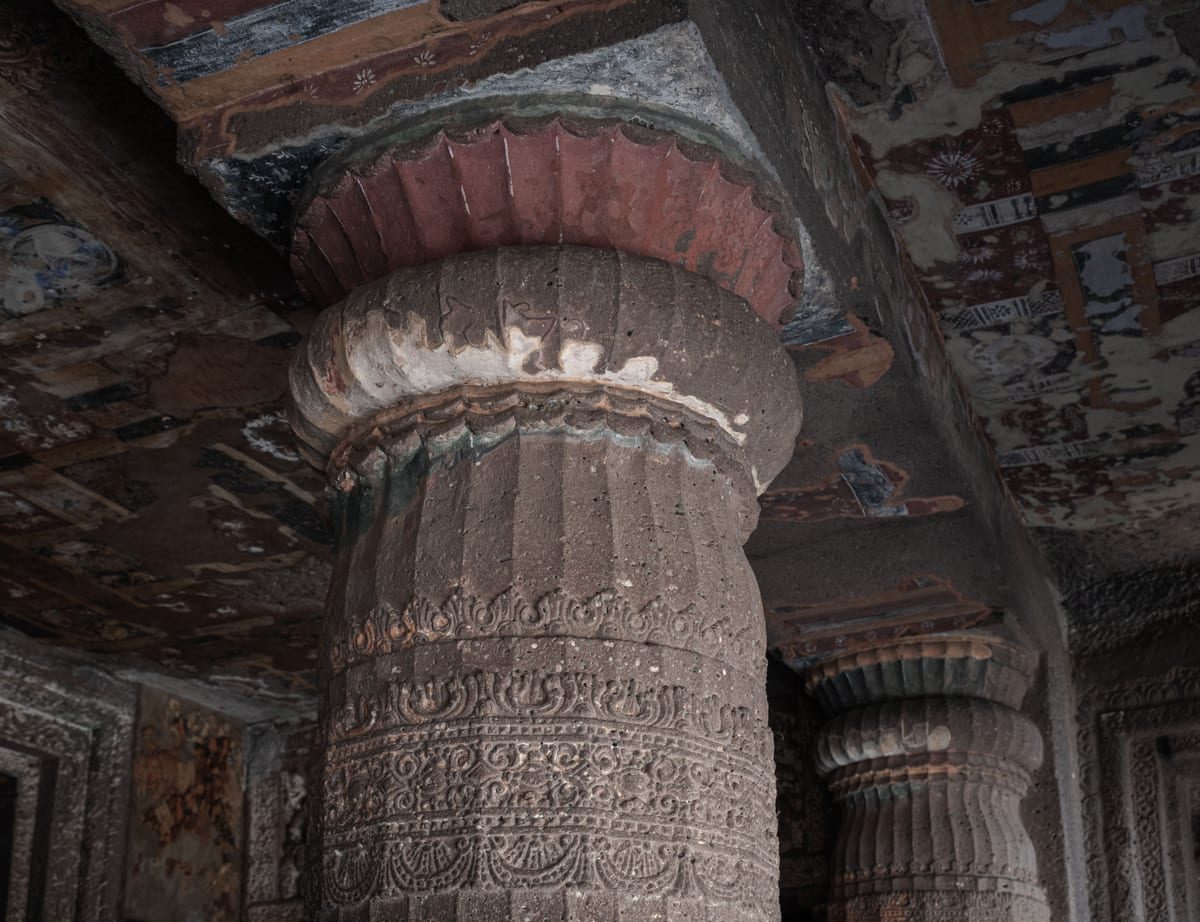
To step through the ornate gates of Mysore Palace is to enter a world where craftsmanship is a form of devotion. The Durbar Hall, the public audience chamber, is perhaps the most breathtaking interior in the palace: its ceiling a mosaic of stained glass and floral ironwork, its pillars ringed with gold-leaf detail, its floor a sweep of coloured mosaic that catches light like a still lake at noon. The golden throne displayed here during Dasara is among the most celebrated royal artefacts in South Asia.
The Private Durbar Hall, the Marriage Pavilion with its jewelled ceiling, the armoury, the portrait gallery of Wodeyar monarchs, each room is a document. Together they form an archive not of conquest but of patronage: of a dynasty that supported Carnatic music, funded schools, electrified a city before most of Europe, and made Mysore a byword for enlightened governance in the princely India of the early twentieth century. Walking these corridors, you read the palace itself.
Dasara: When the Palace Becomes a Living Ceremony
If you visit Mysore Palace during any ordinary week, you will be awed. If you visit during Dasara, the ten-day festival culminating on Vijayadashami, typically in October, you will be transformed. The Wodeyar dynasty's Dasara celebrations have continued for over five centuries, making this one of the longest unbroken royal ceremonial traditions in the world. During this period, the palace is illuminated by nearly a hundred thousand light bulbs, turning the entire facade into a luminous tableau visible from miles away. A grand procession carries the idol of Goddess Chamundeshwari through the city on a golden howdah atop a ceremonially adorned elephant, a procession that is part religious rite, part civic festival, and entirely Mysorean in its character.
This is what continuity looks like when it is alive. Not recreated for tourists, not performed as nostalgia, but observed, believed, and celebrated by a community for whom the palace is not a monument but a home for shared memory.
The City Around the Palace
Mysore as a destination extends beyond the palace gates. Chamundi Hills, rising steeply to the southeast, offers the ancient Chamundeshwari Temple and the famous Nandi monolith, a twelve-foot bull carved from a single granite boulder in 1659. The sprawling Brindavan Gardens at the base of the Krishnaraja Sagara dam are a masterclass in formal landscape design, and their musical fountain evenings draw visitors from across the country. The Jaganmohan Palace, now an art gallery, houses one of the finest collections of Mysore-style paintings in existence. The city's markets, particularly Devaraja Market, with its mountains of kumkum, jasmine strings, and sandalwood, offer a direct look at south Indian daily life.
Practical Guide: Planning Your Visit
The finest time to visit Mysore is between October and February, when Karnataka's Deccan plateau enjoys cool, dry weather suited to outdoor exploration. The Dasara season in October is peak time, book accommodation months in advance if you plan to be here for the festival. Monsoon months bring lush greenery and fewer crowds, though outdoor sightseeing requires patience with the rains.
Getting to Mysore is straightforward. The city is approximately 145 kilometres from Bengaluru, connected by an excellent expressway that makes the drive under three hours. Regular trains operate between Bengaluru City Junction and Mysore Junction, many of them fast intercity services. The nearest major airport is Kempegowda International Airport in Bengaluru, from which taxis, buses, and rail services provide onward connections. Within Mysore, auto-rickshaws and app-based cabs are readily available for local transport.
Why Mysore Palace Matters
India has many palaces. It has forts, temples, stepwells, and monuments that could occupy a lifetime of curious travel. But Mysore Palace occupies a particular place in the national imagination because it refuses the role of ruin. It is too alive for that. The Wodeyar family continues to reside in a portion of the structure. The Dasara tradition continues. The city that grew around the palace continues to bear the cultural imprint of five centuries of royal patronage, in its silk weaving, its sandalwood carving, its classical music traditions, its university, its public gardens.
This is what India's greatest heritage sites quietly insist upon: that civilisation is not something that happened. It is something that keeps happening. Mysore Palace, golden and glowing in the Karnataka evening, is proof of that.