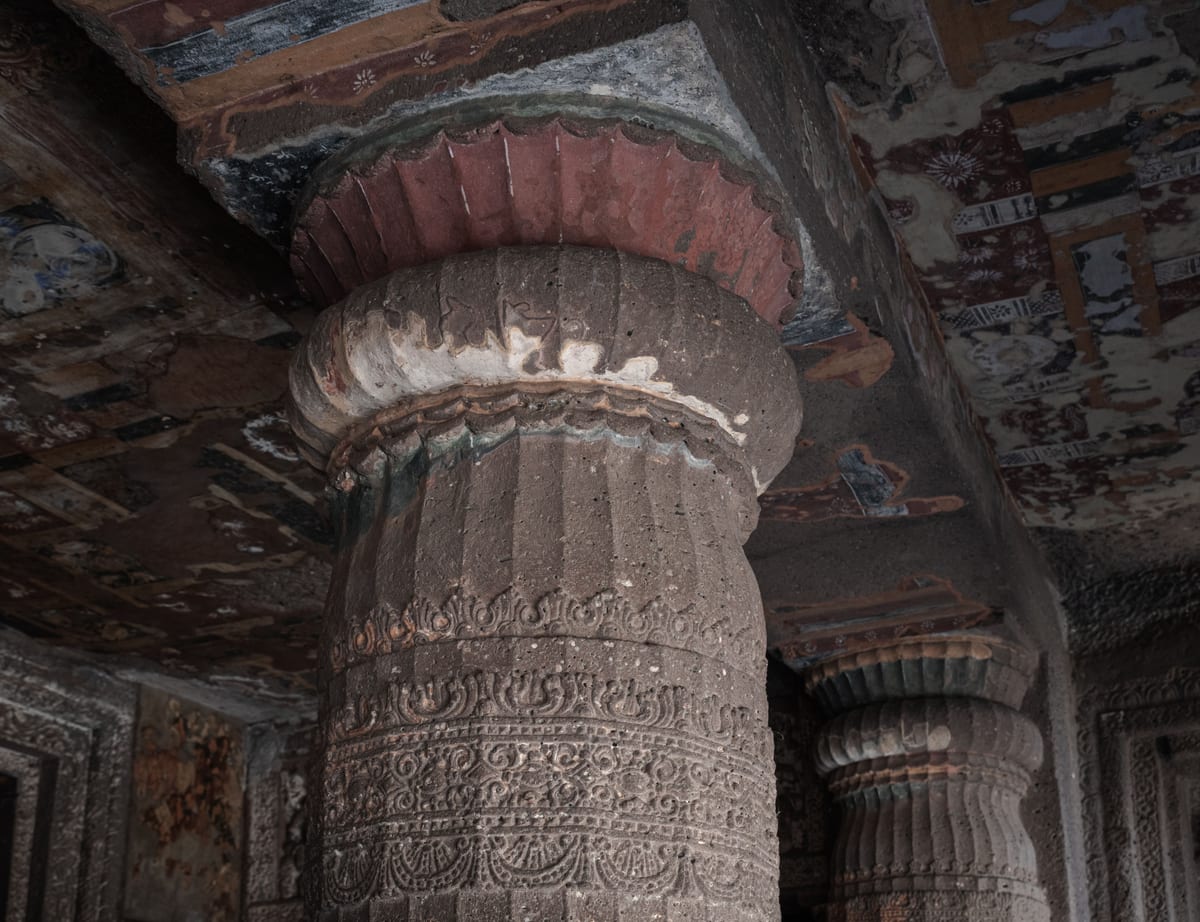
There are places in the world that demand silence. Not the polite silence of a museum, where you lower your voice out of social obligation, but the involuntary silence that drops over you when you realise you are standing inside something far larger than yourself. The Ajanta Caves in Maharashtra's Aurangabad district are exactly such a place. Thirty caves, chiselled and painted across a dramatic horseshoe-shaped cliff above the Waghora River, they are the result of what human beings are capable of when devotion and artistry combine.
A Story Two Thousand Years in the Making
The Ajanta Caves were not built in a single inspired moment. They were carved, layer by patient layer, across roughly eight centuries, beginning around the 2nd century BCE and continuing through the 5th and 6th centuries CE under the patronage of the Vakataka dynasty. Two distinct phases of activity produced two types of caves: the earlier Hinayana phase, which emphasised symbolic representation of the Buddha, and the later Mahayana phase, which produced the figurative paintings and sculptures we associate with Ajanta today.
These caves were not royal palaces or administrative centres. They were monasteries and prayer halls, chaityas and viharas, created by monks for monks, and by artists who understood that beauty itself could be a form of spiritual practice. After the 7th century CE, the forest grew back over the cliff. The world forgot Ajanta. It was only in 1819 that a British officer, John Smith, on a tiger hunt in the Deccan wilderness, stumbled upon Cave 10 and rediscovered one of humanity's great artistic achievements.
What the Caves Hold: Art That Still Breathes
The paintings of Ajanta are the reason the caves hold UNESCO World Heritage status, and they earn it in full. Executed in tempera on a carefully prepared plaster surface, the frescoes depict Jataka tales, stories of the Buddha's previous lives, with a psychological richness and narrative fluency that would not look out of place in a contemporary graphic novel. Figures lean into each other in conversation. Eyes hold grief, or longing, or a serenity so complete it feels almost unbearable. The famous Bodhisattva Padmapani, a lotus-bearing figure of such tender melancholy that it has become almost synonymous with Ajanta itself, watches you from Cave 1 with an expression that feels, impossibly, personal.
Beyond the paintings, the sculptures are equally commanding. Cave 26 houses a colossal reclining Buddha, the Mahaparinirvana figure, measuring over seven metres in length, flanked by grieving disciples whose sorrow is rendered with startling human intimacy. The facades of the caves are themselves works of art, elaborate carvings of elephants, dwarfs, celestial beings, and floral motifs that speak of craftspeople who took joy in their work.
Civilisational Continuity: More Than a Monument
It is tempting, and dangerously misleading, to think of Ajanta as a monument to something gone. The philosophical and aesthetic traditions that produced these caves, the compassion ethic of Buddhism, the Indian artistic vocabulary of sensory abundance in service of spiritual meaning, the belief that the sacred and the beautiful are inseparable, remain living currents in India's civilisational stream. They appear in its classical dance traditions, its temple sculpture, its manuscript painting, its understanding of the relationship between the human and the divine.
When you walk through Ajanta, you are not visiting a dead world. You are tracing a thread that is still being woven. That is what makes it irreplaceable, not merely as a World Heritage Site, but as a mirror in which India can recognise itself across centuries.
Planning Your Visit: Practical Essentials
Best Time to Visit: The ideal season to visit Ajanta is between October and March, when the Maharashtra weather is cool and pleasant. The monsoon months, while dramatically beautiful around the Waghora River and its seasonal waterfalls, can make the cave paths slippery. Summer heat (April to June) is intense in this part of the Deccan plateau.
How to Reach: The nearest major city is Aurangabad, approximately 100 kilometres from Ajanta. Aurangabad is well connected by air, rail, and road from Mumbai, Pune, Delhi, and other major Indian cities. From Aurangabad, state buses, private cabs, and organised tour vehicles run regularly to the caves. The Maharashtra Tourism Development Corporation (MTDC) operates guided tours that combine Ajanta with the nearby Ellora Caves, which is strongly recommended.
Nearby Attractions: Ajanta and Ellora are almost always visited together, and rightly so. The Ellora Caves, 34 rock-cut temples representing Buddhist, Hindu, and Jain traditions, lie about 30 kilometres from Aurangabad and offer a complementary, though distinctly different, experience. Aurangabad itself rewards a day's exploration: the Bibi Ka Maqbara (often called the poor man's Taj), the Daulatabad Fort, and the Aurangabad Caves are all within easy reach.
On-Site: Electric vehicles operate between the site entrance and the caves to reduce pollution and protect the fragile microclimate inside. Photography restrictions apply within certain caves, respect them. The caves are closed on Mondays. Carry water, wear comfortable shoes, and allow yourself a full day. These caves do not reward rushing.
Why You Must Go
There are heritage sites that impress, and then there are those that transform. Ajanta belongs to the second, rarer category. To sit quietly in Cave 1 as the painted ceiling arches above you, to follow the gaze of the Bodhisattva Padmapani as morning light shifts across the rock, is to feel the particular quality of awe that only genuine civilisational achievement can produce, the sense that you have been given a glimpse of what human beings, at their very best, have managed to be.
India's heritage story is long, layered, and still being written. Ajanta is one of its most luminous chapters. Do not read about it from the outside. Go in.