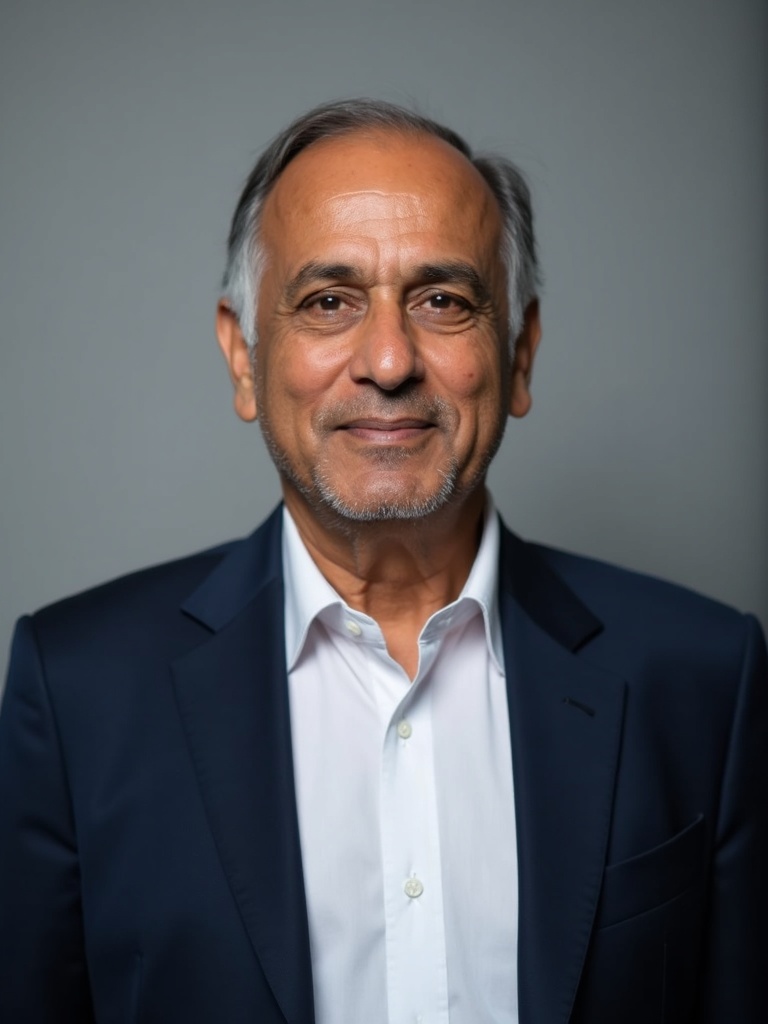
A Pakistani minister attending the SCO Civilisational Dialogue Forum in New Delhi said on Thursday that "all of our relationships will improve," offering an optimistic line from a government that India has refused to treat as a normal neighbour. His remarks, reported by NDTV, came hours after Leader of the Opposition Rahul Gandhi repeated the condition Delhi has held since the Pulwama attack: unless Pakistan stops sponsoring terrorism, dialogue cannot resume.
Pakistan's culture minister, in Delhi for the Shanghai Cooperation Organisation's civilisational dialogue forum, told reporters he hoped the visit would "end complaints" between the two countries, India Today reported. He did not address what Islamabad was prepared to do about the armed networks that India accuses it of running, and which New Delhi has made the baseline for any conversation.
The Condition Has Not Moved
Rahul Gandhi's statement matters because it narrows whatever political space exists for reading the Pakistani minister's words as a new opening. The Congress leader did not offer a softer line; he restated the government's long-held precondition.
"Unless Pakistan stops sponsoring terror, dialogue cannot resume," Gandhi said.
That convergence between the treasury benches and the Opposition on Pakistan is rare in Indian politics. It is also the reason the Pakistani minister's hopeful framing produces no echo in Delhi. For India, the question has never been whether relations "will improve" in some vague regional future. It is whether Islamabad will shut down the infrastructure that sent suicide bombers across the Line of Control. Those names are not diplomacy; they are case files.
The memory of those attacks is not archived away in Delhi's files. It lives in the Valley's abandoned houses, in the refugee camps of Jammu, in the families that still calculate a son's age by the year they left Srinagar. A sentence like "all of our relationships will improve" does not answer the question of who pays for those years. It sounds like a man describing weather, not responsibility.
There is also a domestic reason the Indian public does not rush toward such overtures: the displaced Kashmiri Pandits and the security forces' families who have borne the cost of Pakistan's proxy war do not hear a cultural minister's optimism as reconciliation. They hear it as the sound that preceded earlier betrayals, when the Valley's pluralism was dismantled and a generation learned to live in one-room flats while its childhood homes were burned. The minister's words, however measured, cannot retroactively make that history less true.
The SCO Setting
The venue matters. The minister is not in Delhi for a bilateral summit; he is attending a multilateral gathering the SCO hosts around civilisational dialogue. That is a lower-wattage platform than a foreign secretary-level meeting, and Pakistan knows it. It allows Islamabad to project willingness to talk without committing to the security account New Delhi has demanded. It also lets a cultural minister use the word "relationships" while the Indian side measures something else entirely: verifiable action against terrorist groups and their patrons.
India's position, repeated by officials since the Pulwama attack, is that normal ties require an end to cross-border terrorism. The minister's remarks have not drawn a formal reaction from South Block, and no Indian official has suggested that the precondition has been diluted. That silence is its own signal. Delhi does not need to perform indifference; the precondition already exists in the public record.
The Long Game
India's leverage is not rhetorical. It is structural. Pakistan's economy has been under strain for years, and the one neighbourhood it wants to rejoin, the South Asian trading and transit web, runs through Delhi's goodwill. The minister's plea that complaints should end is a request India hears every few years, usually before a multilateral meeting, and then watches fade. What makes this iteration worth noting is not the content but the timing: a region in flux, as the minister himself put it, and a Pakistani establishment trying to read whether the flux can be converted into relief.
The minister described the region as in flux, and he is right. But flux does not require India to alter a position it has held deliberately. India's neighbourhood policy rests on the understanding that security preconditions are not bargaining chips; they are the floor beneath which no summit photograph can descend. The SCO forum, with its civilisational focus, can host a Pakistani minister and an Indian audience without either side pretending the bilateral ledger has changed.
What a Real Shift Would Require
If Islamabad were serious, the first move would not be a cultural minister's press interaction. It would be the arrest and prosecution of men Indian intelligence has identified as planners and handlers, the closing of training camps, and a public audit of the funds that keep them running. None of that can be accomplished by a speech in Delhi. It requires the Pakistani state to turn against the assets it has used as policy tools, or at least to demonstrate that it no longer controls them. India has asked for exactly this, and it has not been offered it.
The alternative reading is less generous. A Pakistani overture that stops at atmospherics is designed not to end complaints but to reset the narrative ahead of an international forum where India has been winning the argument on terrorism. Delhi's counter is simple: the narrative is not the problem; the bodies are.
The Indian Reader's Take
For Indian readers, especially those from Jammu and Kashmir, the test is whether words are accompanied by a changed security environment. A reduction in infiltration, a fall in targeted killings, a year without a fidayeen attempt, those are metrics, not moods. Until Islamabad produces them, the phrase "all of our relationships will improve" remains a line from a visiting minister, not a policy from the Pakistani state.
India should continue to treat the terror precondition as non-negotiable, and it should let the SCO platform do what it is meant to do: host civilisational dialogue, not substitute for bilateral normalization. The government's quiet confidence in holding the line is not isolation; it is the deliberate posture of a state that has decided the price of a fake thaw is higher than the cost of waiting. The minister may leave Delhi with his hope intact. India will keep the ledger open, and the ledger has only one column: verifiable action against terror. Until that column fills, no improvement is real.