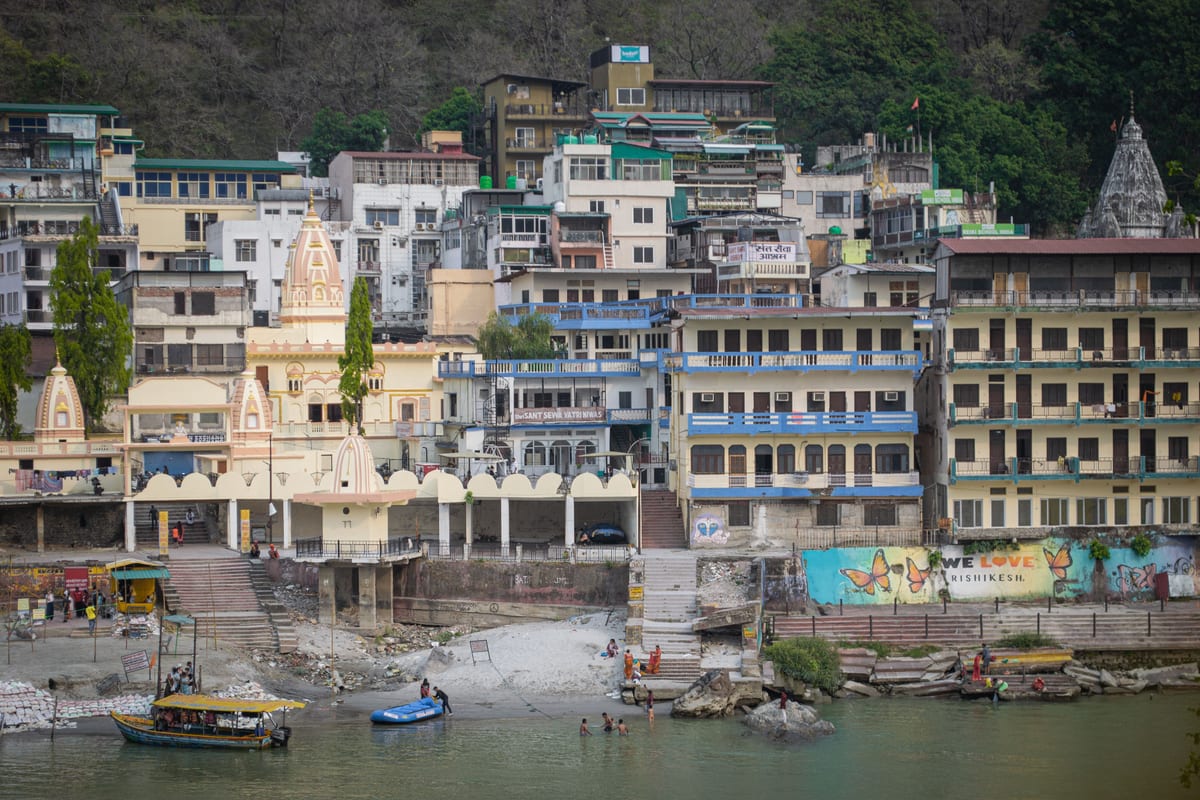
There are places in India that feel like they exist slightly outside of time, not frozen, but perpetual. Rishikesh is one of them. Tucked into the foothills of the Himalayas in Uttarakhand, where the sacred Ganga descends from the mountains and broadens into something vast and luminous, this small city has been a centre of spiritual life for millennia. To visit Rishikesh is to step into a civilisation that never stopped moving.
A Name Rooted in Ancient Wisdom
Begin with the name itself. Rishikesh derives from the Sanskrit words Rishi, meaning sage, and Kesh, meaning hair, an etymology that conjures an image of countless ascetics, their matted locks a mark of renunciation, who sought enlightenment in this land between the river and the mountains. This was their chosen threshold: close enough to the plains to receive pilgrims and students, high enough in spirit to touch the divine. According to Incredible India's official page on Rishikesh, the city's sacred character is inseparable from Hindu mythology. It is believed that Lord Rama himself performed penance here at the serene Triveni Ghat, atoning for the killing of Ravana, a story that stitches Rishikesh into the Ramayana and, by extension, into the moral and spiritual imagination of an entire civilisation.
In Rishikesh, mythology becomes geography. It becomes ritual. It becomes the evening aarti flame reflected on the Ganga's surface. India does not merely remember its past; it inhabits it.
The Yoga Capital of the World
Rishikesh carries the title of Yoga Capital of the World as an earned designation rooted in centuries of practice. The ashrams and gurukuls that line the riverbank have transmitted the science of yoga, asana, pranayama, meditation, philosophy, in an unbroken lineage from teacher to student. When the Beatles arrived in the 1960s to study under Maharishi Mahesh Yogi, they were following what seekers from across the world have done for ages: moving spiritually upstream toward Rishikesh.
Today, that tradition continues with extraordinary vitality. Yoga enthusiasts, meditators, and spiritual seekers arrive from every continent, attending courses in ashrams by the hallowed riverside, sitting with renowned gurus, and immersing themselves in the teachings of Vedanta, Hatha Yoga, and Ayurveda. What is remarkable is not merely the quantity of practitioners but the quality of continuity. The same river. The same chants. The same mountain air. The method has been refined across generations; the essence has not changed.
The Sacred Geography of the Town
Rishikesh rewards the unhurried traveller. The iconic suspension bridges, Ram Jhula and Lakshman Jhula, sway gently over the turquoise-green Ganga, connecting the two banks and offering some of the most arresting views in northern India. These bridges are thresholds between the everyday and the sacred, between the market and the ashram, between noise and contemplation.
The colourful ashrams that dot the landscape each carry their own character and lineage. The air around Triveni Ghat, where the evening Ganga Aarti takes place, fills with incense, flowers, and the deep resonance of devotional bells. To stand there at dusk, watching the brass lamps trace their arcs above the water, is to understand viscerally why India's spiritual traditions have endured. They are not abstract. They are fire and water and song.
Gateway to the Char Dham
Rishikesh is the gateway to the Char Dham pilgrimage circuit, the four sacred sites of Yamunotri, Gangotri, Kedarnath, and Badrinath, all nestled deep in the Himalayas. For devout Hindus, the Char Dham pilgrimage is a life's ambition, a journey that promises purification and liberation. Every year, pilgrims begin that journey from Rishikesh, drawing upon the town's energy as spiritual fuel before ascending into the high mountains. This role as a departure point for one of Hinduism's most significant pilgrimage routes places Rishikesh at the centre of an ancient network of faith that spans the subcontinent.
Best Time to Visit
Rishikesh welcomes visitors across the year, though each season offers a distinct experience. The months from October through February bring cool, crisp air, ideal for yoga retreats and contemplative walks along the Ganga. January temperatures range between approximately 5°C and 24°C, creating a bracing but beautiful atmosphere. Spring, from March into early April, is arguably the most visually stunning period, with the hills greening and temperatures warming pleasantly before the summer heat builds. The monsoon months, June through September, see the Ganga swell dramatically, and while some adventure activities are restricted, the rains lend the landscape an almost supernatural lushness.
How to Reach Rishikesh
Reaching Rishikesh is straightforward from most major Indian cities. The nearest airport is Jolly Grant Airport in Dehradun, which receives direct flights from Delhi and other cities. Indira Gandhi International Airport in Delhi is the primary international gateway, from where Rishikesh is accessible by road or rail in approximately five to six hours. The Rishikesh Railway Station connects the town to the broader Indian rail network, and regular bus services run from Delhi, Dehradun, and Haridwar. Once in Rishikesh, the town is best explored on foot or by cycle rickshaw, the riverside areas reward slow movement.
Why Rishikesh Matters
In a world accelerating toward abstraction, where experience is increasingly mediated, simulated, curated, Rishikesh offers something direct: a river that has been called sacred for three thousand years. A philosophy of self-mastery that predates the modern nation-state. A community of seekers and teachers maintaining a conversation about consciousness and liberation that India began and has never abandoned. Rishikesh does not ask you to believe anything in particular. It asks only that you arrive, sit still, and listen. The Ganga will do the rest.
This is India's heritage story at its most alive, not preserved in amber but flowing, always flowing, southward from the mountains, carrying everything with it.