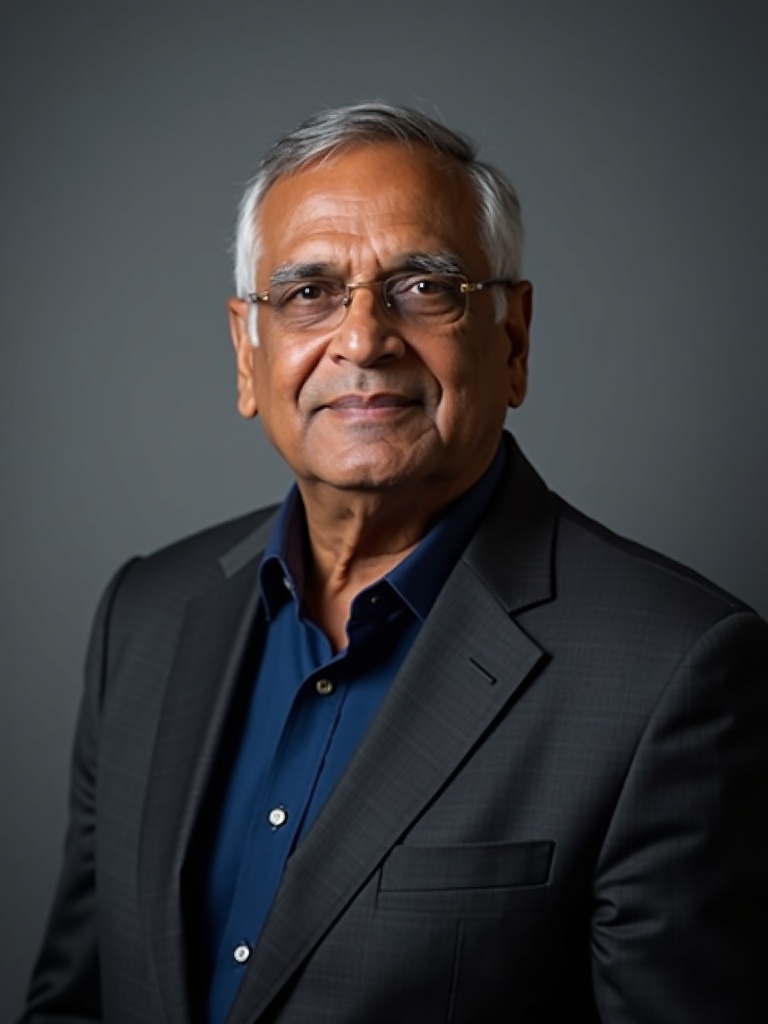
The Rashtriya Swayamsevak Sangh has revived its demand for a nationwide National Register of Citizens, choosing a public cultural venue in Delhi to make the case. RSS publicity in-charge Sunil Ambekar told an audience at the Indira Gandhi National Centre for the Arts on Wednesday that identifying citizens was necessary to address what the organisation calls "population imbalance" and to protect the country's "unity, integrity and security". The report in Livemint placed the demand at the centre of a political storm already swirling around the Election Commission and its Special Intensive Review.
Ambekar tied the absence of a national registry to Partition, arguing that a population imbalance had split the country in 1947 and that Scheduled Castes, Scheduled Tribes and economically weaker sections left behind in neighbouring states that became Islamic republics continued to face persecution. For those who came back, he said, citizenship under the Citizenship Amendment Act had to be secured; for those wrongly included in electoral rolls, the NRC had to identify them.
"For those who have come back, ensuring their citizenship through CAA is necessary. Identifying such people through the NRC is necessary. If people have been wrongly included in the voter list, it is necessary to identify them."
Hyderabad MP Asaduddin Owaisi rejected the demand immediately. He called a nationwide NRC "100 times worse" than the Special Intensive Review and alleged that the exercise would disenfranchise Dalits, Adivasis, minorities and migrant workers. The warning carries weight because the SIR itself is now the subject of a bruising procedural fight inside the Election Commission.
The National Register of Citizens is a government register of persons recognised as Indian citizens. One was prepared in 1951 after the Census. The exercise gained particular importance in Assam after the Assam Accord of 1985 because of long-standing concerns over migration. After the nationwide protests against the CAA and the proposed NRC in 2019-20, the issue receded from the political centre. The Government of India has issued no notification for a nationwide NRC. The last clear executive statement came from Home Minister Amit Shah in Parliament on 19 November 2019, when he said the exercise would be implemented across India and illegal immigrants expelled. No draft rules or bill has since been tabled.
The federal wall
Several states governed by opposition parties have already said they will not run the exercise. That turns a citizenship registry into a Centre-state collision. A national NRC cannot work if state civil services refuse to issue verifications, if district collectors reject the documentation process, or if state police do not enforce the outcomes. Parliament may hold the authority over citizenship, but implementation rests with the states. Non-BJP governments have no reason to absorb the political risk for a project they did not design. The Constitution does not offer a ready tool for the Centre to force a state administration to run a document-verification drive against its will.
The CAA knot
The RSS argument ties the CAA and the NRC together. The first legalises certain migrants from neighbouring theocratic states; the second identifies citizens and weeds out the wrongly included. The government has kept the two legally distinct in public statements, because a national NRC would immediately reopen the question of whether a CAA beneficiary slips through a documentary net built for others. That ambiguity is not accidental. It gives the executive room, but it leaves every district magistrate without a clear rulebook. A citizenship verification that cannot explain how it treats a legalised migrant is a litigation factory waiting to open.
The SIR shadow
The NRC demand arrived as the Election Commission battles fallout from a report in The Indian Express that election commissioners Sukhbir Singh Sandhu and Vivek Joshi flagged objections at least 14 times over 10 months to procedures linked to the Special Intensive Review. The Opposition has linked that fight to Chief Election Commissioner Gyanesh Kumar and demanded his removal, as India Today reported. The connection matters because SIR and NRC both deal with the sanctity of the voter roll. One reviews existing entries; the other would re-establish the entire list from documentary proof. For the Opposition, the SIR row is a preview of what a national NRC might do to every constituency.
The cost of proof
No state has yet placed a price tag on a nationwide NRC, but the burden would fall hardest on the poor, on informal workers, on Dalit and Adivasi families whose land records are incomplete, and on migrant labourers who hold voter cards from one state but live in another. An exercise of this size would require verification camps, an appeals architecture, legal aid, and tribunals with the power to restore a name to the rolls quickly. Without that, the registry becomes a machine for producing statelessness. Assam's partial experience already showed this. Bangladesh and other neighbours would also need clear diplomatic protocols to avoid a cross-border legal tangle. UN bodies and Western governments will raise procedural questions, but India's sovereign right to set citizenship rules is not up for negotiation.
A sovereign route
India has every right to determine who is a citizen. The question is whether a nationwide NRC is run as a rule-based migration management measure or as a political instrument. A pilot in a single state, integrated with credible digital identity verification and a straightforward error-correction mechanism, would tell the country more than a thousand speeches. A white paper placed before Parliament would give the exercise legislative footing and reduce federal resistance. Dedicated tribunals would protect citizens from exclusion. None of this diminishes the sovereign power; all of it increases the chance that the final list is accurate.
For Indian readers, the NRC debate is not about Assam alone. It is about what proof of belonging the Republic will demand from its own citizens and what happens to those who cannot produce it. The answer will be written in state secretariats, district collectorates and courts, not just in Parliament. The RSS has reopened a question the country has preferred to leave unanswered since 2019.