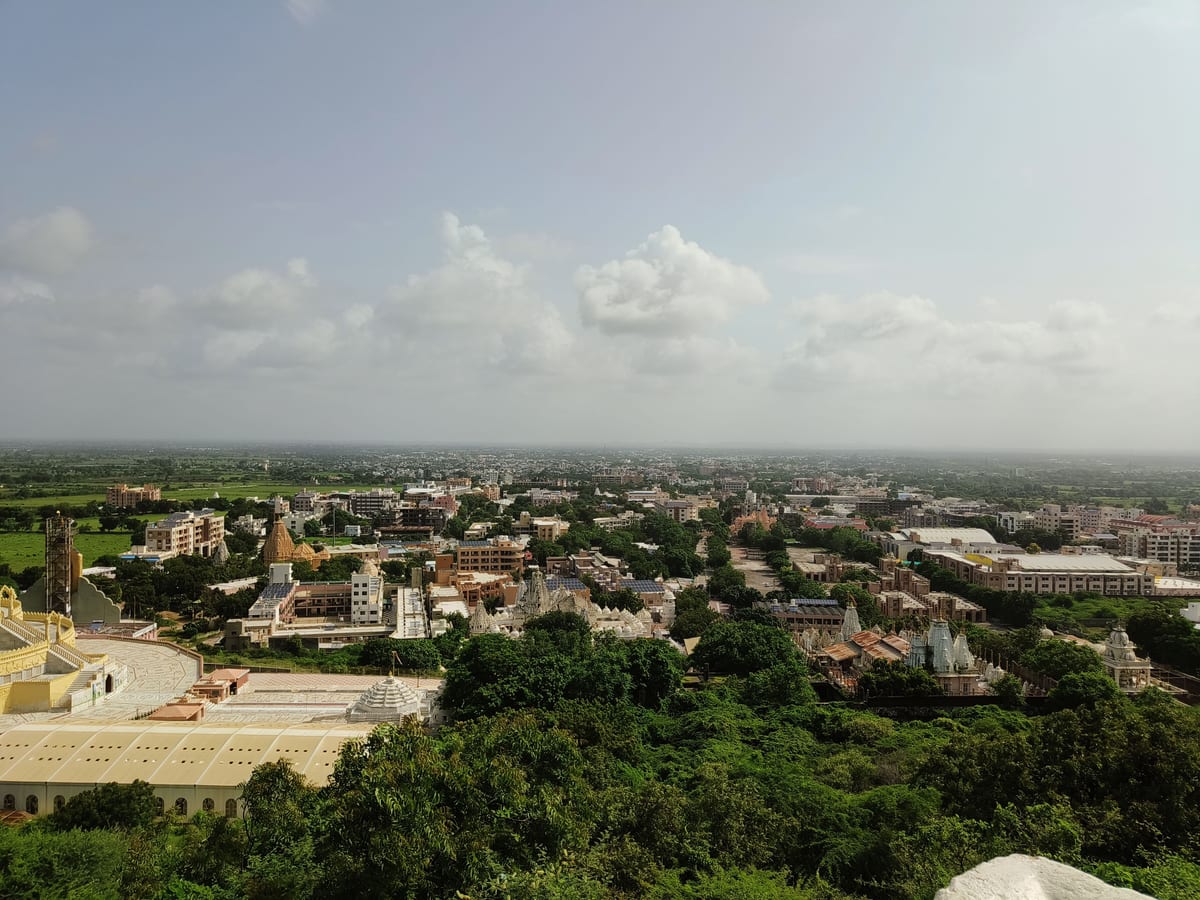
There is a moment at Somnath Temple, usually just after the evening aarti, when the conch shells fall silent and the smoke from the diyas curls upward into the sea air, when time feels elastic. You are standing in a temple consecrated in 1951, but you are also standing in a place that ancient Sanskrit texts described as luminous enough to be seen from the moon. The Arabian Sea crashes against the rocks a few dozen metres away, indifferent to centuries of conquest and reconstruction, and the Shivalinga in the sanctum glows in the lamplight exactly as it always has. This is Somnath: not a museum of loss, but a monument to return.
The Story Etched in Stone and Silence
Somnath, whose name translates as 'Lord of the Moon', is the first and most revered of the twelve Jyotirlingas, the sacred abodes of Lord Shiva scattered across the Indian subcontinent. According to Hindu tradition, the Moon God Chandra himself built the original temple here in gold, followed by the Sun God in silver and Lord Krishna in wood. The historical record, beginning in earnest around the 11th century, is both glorious and brutally contested.
Mahmud of Ghazni's raid in 1025 CE is the most infamous chapter, the temple's treasures looted, its structure demolished. But what the textbooks seldom note is what happened next: it was rebuilt. And then attacked again. And rebuilt again. By most scholarly accounts, Somnath has been razed and reconstructed at least seven times across history. Each reconstruction was not an act of denial but of defiance. Communities gathered resources, kings pledged patronage, and ordinary devotees carried stones, because the idea of Somnath proved impossible to destroy.
The present temple, built in the Chalukya style of architecture with its soaring shikhara and intricately carved facades, was consecrated on 11 May 1951. Sardar Vallabhbhai Patel, who championed the reconstruction project with fierce personal conviction, oversaw the foundation-laying ceremony months before his death. For Patel, rebuilding Somnath was an act of national self-respect, a declaration that an independent India would not leave its civilisational wounds unaddressed. President Rajendra Prasad performed the consecration, and the moment carried a weight that no political speech could have matched.
What the Visitor Experiences
Approaching the temple complex from the town of Veraval-Somnath, visitors are drawn into its gravitational field. The white limestone structure rises against a sky that seems perpetually alive with sea birds and salt haze. The shikhara, the tower above the sanctum, reaches approximately 15 metres, its geometry precise and its carvings dense with mythological narrative.
Inside, the atmosphere shifts entirely. The sanctum houses the Jyotirlinga, and the air carries the mingled scent of flowers, camphor, and incense. Pilgrims queue with quiet intensity; there is no casual tourism here, only devotion of varying depths. The temple trust manages the complex with admirable order, and the sanctity of the space is palpable even to the secular visitor.
One of the most celebrated experiences at Somnath is the Sound and Light show held in the evenings at the temple grounds. It narrates the temple's tumultuous history against the backdrop of the illuminated structure and the sound of the sea, and it is one of the more moving heritage presentations in India, informative without being didactic, dramatic without being theatrical.
The Triveni Sangam, the confluence of the Hiran, Kapila, and Saraswati rivers, lies adjacent to the temple complex and is considered deeply sacred. Pilgrims bathe here before entering the sanctum. The Somnath Beach, stretching nearby, offers a quieter counterpoint: a place to sit with the horizon and process the weight of what you have just witnessed.
For those interested in layered history, the old ruined temple of Somnath, left deliberately unrestored nearby as historical testimony, offers a perspective on loss. Its broken pillars and worn stonework stand as a counterpoint to the gleaming new structure, together telling a more complete story than either could alone.
Nearby Attractions Worth Your Time
The surrounding Saurashtra region is extraordinarily rich. Gir National Park, home to the last surviving population of Asiatic lions, lies within comfortable driving distance and rewards an early-morning safari with an encounter unlike anything else in India. The ancient port city of Diu, with its Portuguese-era fort and colonial architecture layered over older histories, is roughly 85 kilometres away and merits at least a day's exploration. Junagadh, approximately 85 kilometres northeast, houses the extraordinary Uparkot Fort and the Ashoka edicts inscribed in Brahmi script, a direct encounter with Mauryan India.
Best Time to Visit and How to Get There
The most comfortable season to visit Somnath is between October and March, when Gujarat's coastal heat is tempered by cooler air and the Arabian Sea is at its most photogenic, blue, calm, and dramatic at sunset. The monsoon months (June to September) bring lush green surroundings but also heavy rainfall and rough seas; the temple remains open but the experience is more demanding. Summer (April to June) can be intensely hot and is best avoided for extended exploration.
The nearest airport is Diu Airport, approximately 85 kilometres away, with connections to Mumbai. The more convenient option for most travellers is Rajkot Airport, roughly 190 kilometres distant, which is well-connected to major Indian cities. Veraval Railway Station, just 7 kilometres from the temple, has direct train services from Ahmedabad, Mumbai (via Ahmedabad), and several other major cities, making the train the preferred mode of arrival for pilgrims and independent travellers alike. From Veraval, auto-rickshaws and taxis connect easily to the temple complex.
Why Somnath Belongs in Every Indian Journey
India has thousands of temples. What makes Somnath singular is not merely its antiquity or its architectural beauty. It is the completeness of its story. Here is a place that has absorbed destruction and returned. Here is a Jyotirlinga that was never truly extinguished, because it was held alive in the memory of millions who had never seen it but knew, with absolute certainty, that it would be rebuilt.
Sardar Patel understood this. When he stood at the foundation-laying ceremony in his last years, ailing but resolute, he said words to the effect that the reconstruction of Somnath would be complete, and that it would stand as testimony to the vitality of Indian culture. He was right. The temple that greets you today, its shikhara catching the last light of the Gujarat evening, its bells audible over the surf, is not a reconstruction in the sense of a replica. It is a continuation.
That is the deepest gift Somnath offers: not nostalgia for a golden past, but evidence that India's civilisational story is still being written, still being lived, still being sung in Sanskrit shlokas above the sound of an ancient sea.
For full details on visiting Somnath Temple, including official tourism information, visit the Somnath Temple page on Incredible India, the official tourism portal of the Ministry of Tourism, Government of India.