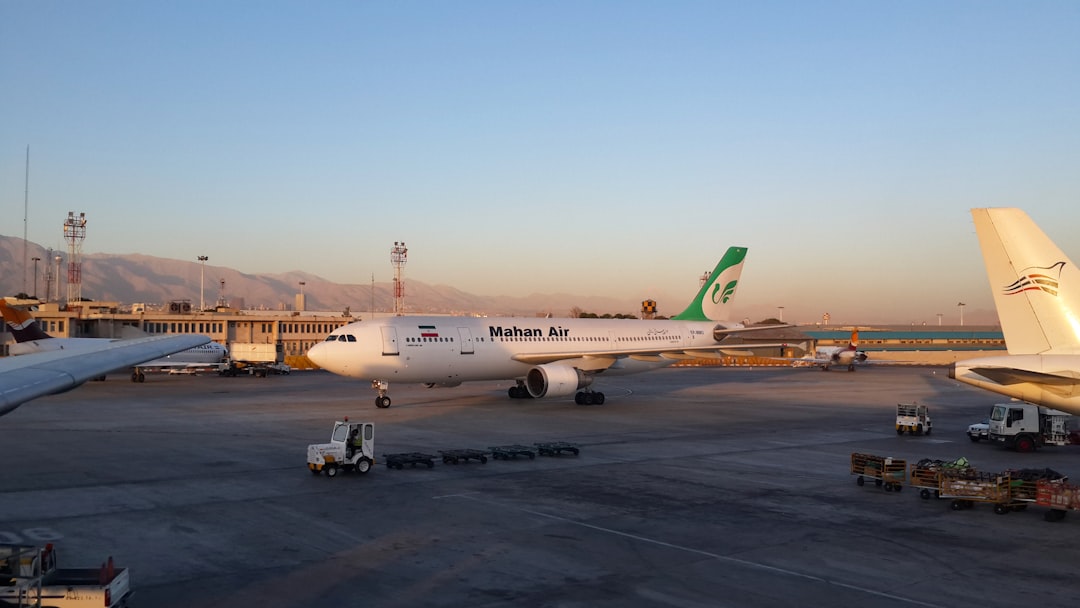
International flights have resumed at Tehran's Imam Khomeini International Airport after weeks of disruption caused by regional warfare following a US-Iran ceasefire. The restoration of commercial aviation operations is the first tangible sign of normalisation after two months of conflict that had isolated Iran from international air traffic networks.
For India, this development extends beyond aviation logistics. The resumption of flights to Tehran creates new diplomatic and economic possibilities for a country that has maintained relationships with both the United States and Iran despite pressure to align with one or the other. India's navigation of these competing interests will now be tested as the ceasefire opens space for renewed engagement.
Regional Stability and India's Energy Security
The de-escalation in US-Iran tensions affects India's energy security directly. Iran supplies a significant portion of India's crude oil needs, and regional instability drives volatile global oil prices that strain India's energy-import dependent economy. The ceasefire reduces the immediate risk of supply disruptions through the Strait of Hormuz, through which a substantial portion of India's energy imports transit.
Beyond immediate energy concerns, improved regional stability enables India to advance long-stalled connectivity projects. The International North-South Transport Corridor, designed to link India with Russia and Central Asia through Iran, has faced repeated setbacks due to sanctions and regional conflicts. A sustained improvement in US-Iran relations could provide the space necessary to operationalise these infrastructure initiatives.
The Chabahar Port project, India's strategic response to China's Gwadar Port development in Pakistan, has been constrained by sanctions and regional tensions. Commercial flights resuming for the first time since the conflict began about two months ago suggests a level of normalisation that could facilitate the technical and diplomatic engagement necessary to advance these connectivity projects.
Diaspora Implications and Regional Access
The restoration of air connectivity affects India's extensive diaspora presence across the Gulf region. Disrupted flight schedules had created hardships for Indian workers and professionals whose livelihoods depend on reliable transportation links between India and the broader West Asian region. The resumption of Tehran flights provides an additional transit option for Indians working across the region, reducing dependence on routes through other hubs.
The development also enhances India's diplomatic access to Iran at a critical moment when New Delhi seeks to maintain its strategic autonomy while managing pressure from various quarters. Regular diplomatic engagement requires reliable transportation links, and the restoration of commercial flights facilitates the sustained dialogue necessary for complex relationships involving India, Iran, and various international partners.
Balancing Act in Multipolar Dynamics
India's approach to the US-Iran détente reflects its broader strategic philosophy of multi-alignment rather than alliance-based thinking. The country has consistently advocated for diplomatic resolution of regional conflicts while maintaining that its bilateral relationships are not zero-sum propositions. This principle becomes particularly relevant as improved US-Iran relations create new dynamics that India must navigate.
The challenge for Indian policymakers lies in leveraging improved regional stability without appearing to take sides in great power competition. India's historical non-aligned tradition provides a framework for this approach, but the contemporary multipolar environment requires more active engagement than passive neutrality. The resumed flights to Tehran offer a practical opportunity to demonstrate this more assertive form of strategic autonomy.
From an economic perspective, de-escalation creates opportunities for Indian businesses to explore Iranian markets within international legal frameworks. The pharmaceutical and automotive sectors, where Indian companies have competitive advantages, could benefit from reduced geopolitical tensions that have constrained business relationships. However, India must carefully calibrate any increased economic engagement to avoid complications with its strategic partnerships, particularly with the United States.
Infrastructure Connectivity and Regional Integration
The restoration of Tehran flight operations extends to India's vision of regional integration through infrastructure connectivity. The resumption of normal air traffic signals a return to the predictable operating environment necessary for large-scale infrastructure projects. This stability is essential for the technical assessments, diplomatic negotiations, and financial arrangements required to advance connectivity initiatives.
India's approach to regional connectivity has always emphasised multiple pathways and redundant options. The availability of Iranian transit routes provides strategic depth for India's connectivity to Central Asia and beyond, reducing dependence on any single corridor or partner. This diversification of options strengthens India's negotiating position with all regional partners while advancing its own economic interests.
The development also intersects with India's broader maritime security concerns in the Indian Ocean region. A stable Iran contributes to maritime security in the Arabian Sea and Gulf of Oman, areas where India has significant commercial and strategic interests. The reduced regional tensions could facilitate greater cooperation on maritime security issues that affect shipping lanes vital to India's trade.
Strategic Recommendations for Indian Policy
The current window of reduced US-Iran tensions presents opportunities that Indian policymakers should approach with careful strategic thinking. First, India should advance technical discussions on stalled connectivity projects while avoiding high-profile announcements that might complicate relationships with other partners. The focus should be on operational progress rather than diplomatic symbolism.
Second, India should explore opportunities for trilateral cooperation that includes Iranian participation without excluding other regional partners. This approach could help build confidence while demonstrating India's commitment to inclusive regional integration rather than zero-sum competition.
Third, Indian businesses should be encouraged to explore Iranian market opportunities within existing legal frameworks, with government support for navigating complex compliance requirements. This engagement should minimise risks while maximising potential benefits from improved regional stability.
The resumption of flights at Tehran airport signals a potential shift in regional dynamics that India must navigate with characteristic pragmatism. The challenge for Indian strategists will be leveraging these opportunities while maintaining the delicate balance that has enabled India to pursue its interests across multiple partnerships simultaneously. Success in this endeavour could provide a template for Indian diplomacy in an increasingly multipolar world where great power competition requires smaller powers to demonstrate greater strategic sophistication.