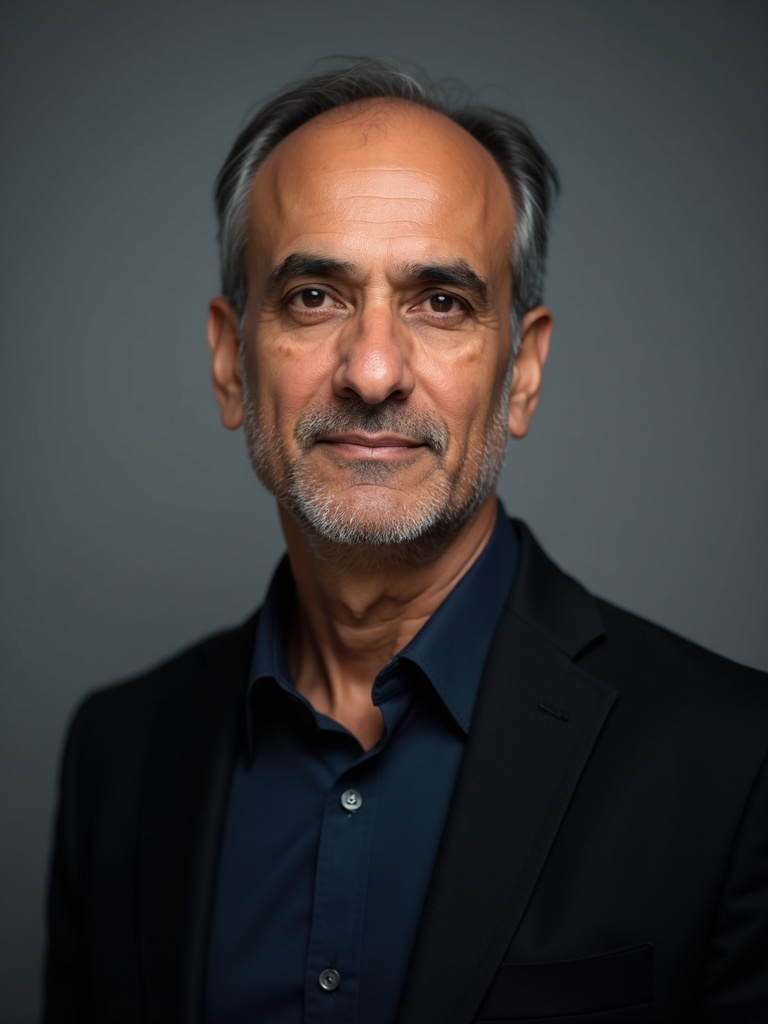

At Medanta Hospital in Gurugram on Friday, Union Minister JP Nadda read out three government assurances to Sonam Wangchuk, and the environmentalist agreed to break a hunger strike that had run for twenty-six days. Union Minister Jitendra Singh stood beside him as the fast ended. The scene looked like resolution — hospital room, senior ministers, a gaunt man agreeing to eat. It lacked the substance of one.
The three assurances Nadda offered were specific enough to end the fast and vague enough to leave the underlying argument intact. The government expressed a positive disposition toward not registering cases against those who had protested at Jantar Mantar or participated in the march to Parliament on July 20. It promised a parliamentary discussion on paper leaks and educational reform. It said it was positively considering suitable compensation for affected families. None of the three touched Wangchuk's foundational demand: Sixth Schedule tribal protections for Ladakh, and a constitutional settlement for a Union Territory that has been administered directly from the centre since October 2019, when Jammu and Kashmir was reorganised.
The Fast That Moved Parliament, and What It Did Not
Wangchuk's activism had, by the time Nadda arrived at his bedside, already accomplished something measurable. Abhijeet Dipke of the Cockroach Janta Party, who had kept the street pressure alive at Jantar Mantar, described the moment with genuine feeling: Wangchuk had fasted for over twenty-six days, and his decision to end the strike was taken for the sake of students—specifically so that no cases would be filed against any student protester. That condition, at least, the government appeared willing to meet.
But Dipke then complicated the resolution almost immediately. Even as he praised Wangchuk, saying what the environmentalist had done for the nation and its future generations would be remembered in history, he issued a warning from Jantar Mantar that his own party faced possible arrest that night based on fresh intelligence. "Don't try to arrest me," he declared. "I will not leave Jantar Mantar." He warned that any detention would only expand the movement: "This movement will spread to entire country. Now if you arrest me, movement will grow bigger."
The protest, Dipke made clear, would continue regardless of Wangchuk's decision. Its remaining demand was singular: the resignation of Education Minister Dharmendra Pradhan. "There is only one solution," he said, "if the BJP or the government wanted to resolve the issue."
Two Protests, One Stage
What Jantar Mantar has been hosting are two distinct agitations that have shared a stage and sometimes a vocabulary without sharing a cause. Wangchuk's fast was rooted in Ladakh's constitutional status—the demand for Sixth Schedule inclusion, elected legislative representation, and environmental protections for a high-altitude ecosystem. The CJP's campaign is focused on examination accountability and the political accountability that follows from the NEET paper leak controversy.
The conflation served both movements tactically. Wangchuk gave the student protests a moral gravity they might not otherwise have sustained; the student protests gave Wangchuk a numbers base that kept the agitation visible beyond Ladakh's small population. But the assurances Nadda delivered were aimed almost entirely at the examination reform dimension—the parliamentary discussion on paper leaks, the compensation for affected families. The Ladakhi constitutional question received no parallel commitment.
This matters because the two issues operate on entirely different timescales and institutional terrains. Examination reform is amenable to parliamentary legislation, administrative restructuring, and criminal prosecution—indeed, IWE's coverage of the fast-track courts established under the Public Examinations (Prevention of Unfair Means) Act shows the machinery already in motion. Ladakh's constitutional status requires a political decision that the Centre has not been prepared to make since 2019, and three assurances read aloud in a hospital room do not bring that decision closer.
The Strategic Cost of the Governance Gap
Ladakh is not a peripheral administrative problem. It shares active borders with both China and Pakistan. The Indian Army's operational capacity in that terrain depends not merely on roads and tunnels—though both are under construction at significant scale—but on the cooperation of local communities who know the high passes, the seasonal patterns, the geography that no satellite can fully render. Civilian sentiment in a border Union Territory is a force-multiplier, or its absence is a friction cost.
ORF analysts have previously observed that Ladakh's post-2019 status creates a representation vacuum—a territory with strategic weight but without the legislative institutions through which grievances are normally channelled. When those institutions are absent, grievances find other outlets. Wangchuk's hunger strikes—this is not his first—are the predictable result of a constitutional architecture that removed Ladakh from J&K without providing it a framework of its own.
The Centre's preferred instrument has been the Hill Councils, but their powers fall well short of Sixth Schedule protections, which would give tribal communities legal authority over land use, forest rights, and customary law. Without that framework, every infrastructure project in Ladakh—and there are many, driven by border-preparedness imperatives—can become a site of contestation rather than consensus. That is a slow bleed the strategists in South Block cannot afford to ignore even if the politicians in Parliament prefer to.
The Cyclical Credibility Problem
India has now managed two Wangchuk fasts through the same instrument: senior minister outreach, assurances read aloud, fast broken. The approach is not without political intelligence—it avoids the optics of forcing a prominent civilian activist to fast to death, and it keeps the dialogue within the Centre's framing. But it also creates a pattern that Wangchuk and those who follow him understand perfectly well. Assurances without institutional follow-through are not settlements; they are deferrals.
Each deferral comes with a cost. Internationally, Wangchuk's activism draws attention to Ladakh's environmental vulnerabilities and what critics frame as a democratic representation deficit—narratives that can surface awkwardly at climate forums and indigenous rights discussions where India seeks to project itself as a responsible steward of its Himalayan ecosystems. The conservation argument and the constitutional argument are, in Wangchuk's framing, inseparable: you cannot protect a high-altitude water tower if the communities living beside it have no legal standing to resist extractive pressures.
That framing—conservation as constitutional right, not merely ecological preference—is actually one India could convert into diplomatic capital at COP and CBD forums, positioning Ladakhi advocacy as consonant with India's climate leadership rather than as a domestic irritant requiring management. The choice between those two framings is, ultimately, a political one.
What the Three Assurances Actually Bought
Nadda's three assurances bought something real: Wangchuk's survival, the de-escalation of a fast that had cost him eleven kilograms and significant muscle mass, and a pause in the street pressure that Dipke's organisation had been maintaining. That is not nothing. A man's health is not nothing.
What the assurances did not buy is the quieting of the argument. Dipke's warning of imminent arrests—if acted upon—shifts the narrative from dialogue to coercion at precisely the moment the government needs the resolution to hold. And Wangchuk's constitutional demands, unmet, remain available as the basis for the next agitation the moment the parliamentary discussion on examination reform closes without producing a companion commitment on Ladakh's governance framework.
The Centre's approach to Ladakh since 2019 has been to treat the territory's political aspirations as a security and administrative question rather than a constitutional one. That distinction has served short-term stability; it has not produced long-term settlement. A structured framework—Sixth Schedule inclusion, or an enhanced legislative council with genuine powers—would convert a recurring crisis into a resolved question. Until then, the hospital room at Medanta is not a conclusion. It is an intermission.