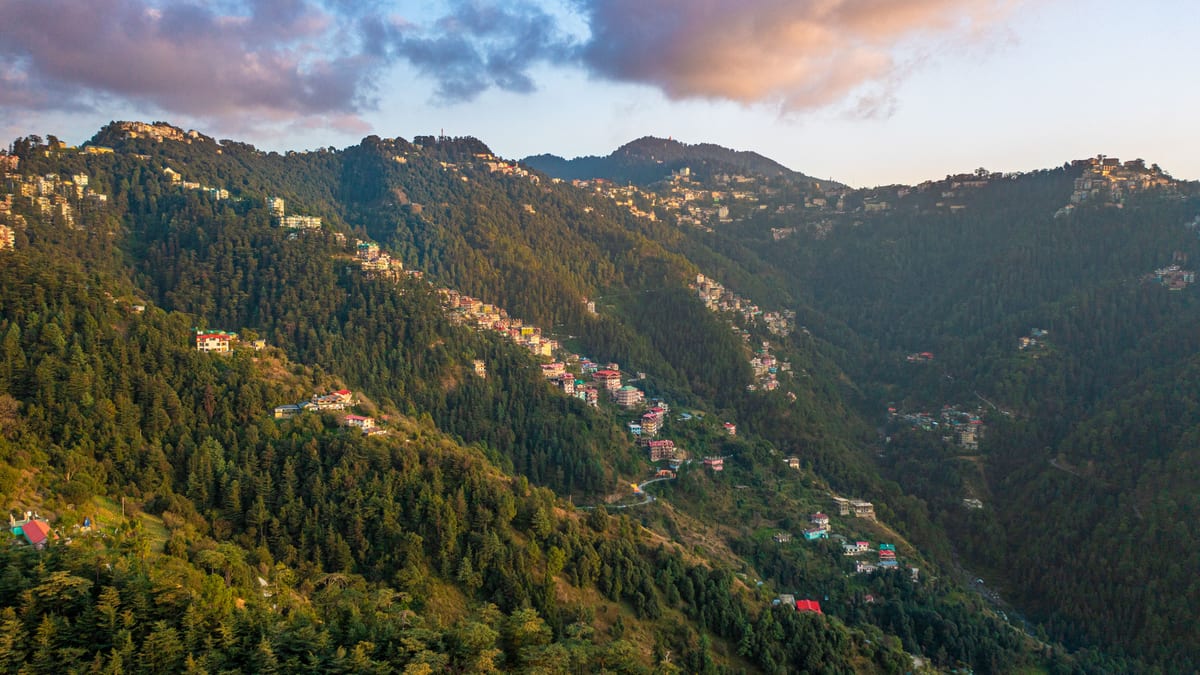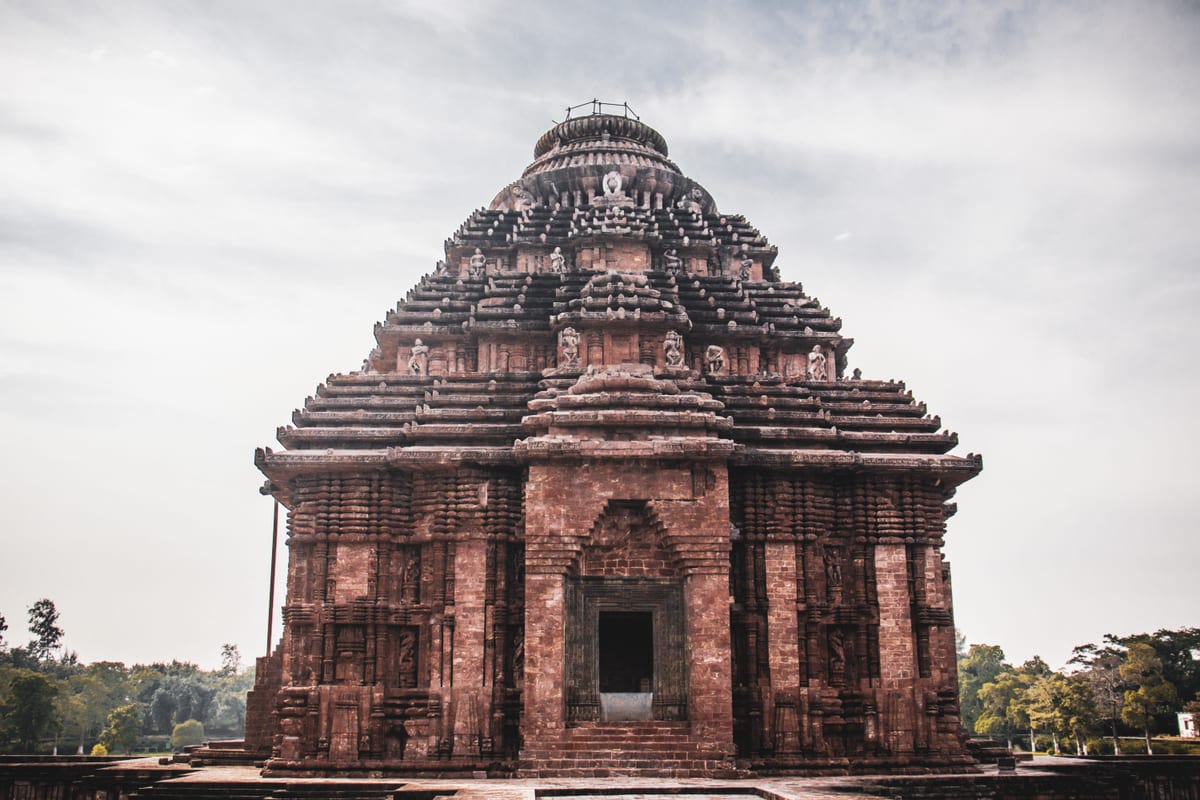
There is a particular kind of silence that greets you when you step into the deodar cedar forest that surrounds the Hidimba Devi Temple in Manali. It is not the silence of abandonment. It is the silence of something ancient and unhurried — a place that has been breathing steadily for centuries, long before the cafés and adventure sports operators arrived on Mall Road. The temple stands at the treeline like a memory that refuses to fade, its three-tiered wooden pagoda topped by a brass finial piercing a sky that, on clear days, frames the Kullu valley in snow-light.
A Goddess Born from an Epic
In the Mahabharata, Hidimba is introduced as a rakshasi — a demoness — who rules a forest and initially sends her brother Hidimb to kill the Pandava brothers who have wandered into her domain. She falls in love with Bhima, defies her brother, and marries the mighty Pandava, bearing him a son, Ghatotkacha, who will later play a decisive role in the Kurukshetra war. In the grand moral accounting of classical literature, Hidimba occupies a morally complex space.
Yet here in the Kullu valley, that complexity has been resolved with extraordinary tenderness. The people of Manali remember Hidimba as a mother, a protector, a deity who chose love over fealty and who has blessed this valley ever since. She is called Hidimba Devi — the goddess — and her temple is among the most venerated in all of Himachal Pradesh. India has the capacity to receive a figure from a pan-Indian epic and re-read her through the lens of local devotion until she becomes entirely, intimately one's own.
The Temple Itself: A Masterpiece in Wood and Devotion
The temple was built in 1553 CE by Raja Bahadur Singh, the ruler of Kullu, and it belongs to the distinctive Himalayan pagoda tradition. The structure rises in four tapering tiers — the lower three clad in wooden shingles, the topmost crowned in brass — and the entire exterior is encrusted with extraordinary wood carvings: hunting scenes, erotic motifs, deities, animals, and geometric patterns that speak to generations of craftsmen who poured their skill into cedar and pine. The doorway alone is a gallery, framed with carved panels of such intricacy that you find yourself reading them like a manuscript.
Inside, the sanctum is dim and intimate, sheltering a large rock that is worshipped as the goddess's footprint — her pratima, her presence. There is no grand idol in the conventional sense. The sacred is located in the earth itself, in the mark left by the divine on stone. This is consistent with India's oldest forms of worship, where the goddess is not represented so much as she is encountered.
A Living Temple, Not a Museum
What distinguishes Hidimba Temple from many heritage sites across India is that it has never stopped functioning as a centre of community life. The annual Dussehra celebrations in the Kullu valley — among the largest and most spectacular in the country — involve the goddess Hidimba in processions that bring together dozens of local deities. During the temple's own festivals, the streets around the cedar grove fill with pilgrims, musicians playing the traditional nagara drum, and a devotional energy that has no interest in performing itself for tourists.
Visitors who come here expecting the polished experience of a managed heritage monument are gently disoriented by this reality. The temple is cared for not by an archaeological survey but by its community, who regard it as theirs — which, of course, it is and always has been.
Planning Your Visit: Practical Notes
Best Time to Visit: The temple is accessible year-round, but the most rewarding seasons are May to June and September to November. Spring and early summer bring clear skies and wildflowers in the surrounding forest. Post-monsoon autumn is crisp and luminous, ideal for photography and contemplation. Winter visits, while challenging due to heavy snowfall, offer an otherworldly stillness — the cedar trees draped in white, the brass finial catching thin winter light.
How to Reach: Manali is well-connected by road. The nearest airport is Bhuntar Airport (Kullu-Manali Airport), approximately 50 kilometres from Manali town, with flights from Delhi and Chandigarh. The nearest major railhead is Jogindernagar or Chandigarh, from where Himachal Pradesh Road Transport Corporation (HRTC) buses and private taxis connect to Manali. The temple itself is roughly 2 kilometres from Manali's centre and is easily reached on foot, by auto-rickshaw, or by taxi.
Nearby Attractions: The Hidimba Temple sits within easy reach of several other significant sites. Manu Temple, dedicated to the sage Manu — believed by local tradition to be among humanity's progenitors — is a short walk away. The Vashisht hot springs and temple lie just 3 kilometres from Manali and are deeply embedded in the local sacred geography. For those drawn to the natural world, the Solang Valley and the approach roads toward Rohtang Pass offer landscapes of staggering scale. The old town of Manali, with its traditional Himachali architecture and the Naggar Castle further down the valley, rounds out a visit that can sustain several meaningful days.
Why It Matters: India's Civilisational Thread
At a moment when India's heritage conversation sometimes risks becoming either purely academic or purely political, Hidimba Temple offers a third way. It is neither a museum exhibit nor an ideological symbol. It is a cedar-scented, drum-beat-loud, flower-offering-fragrant fact of daily life for the people of the Kullu valley. A goddess from an epic written millennia ago is worshipped here this morning, as she was worshipped last week, last century, and four centuries before that when Raja Bahadur Singh consecrated this space in the forest.
That is what civilisational continuity feels like when you stand inside it rather than read about it. Come to Hidimba Temple to recognise that in this particular valley, the past and the present have never been separated.