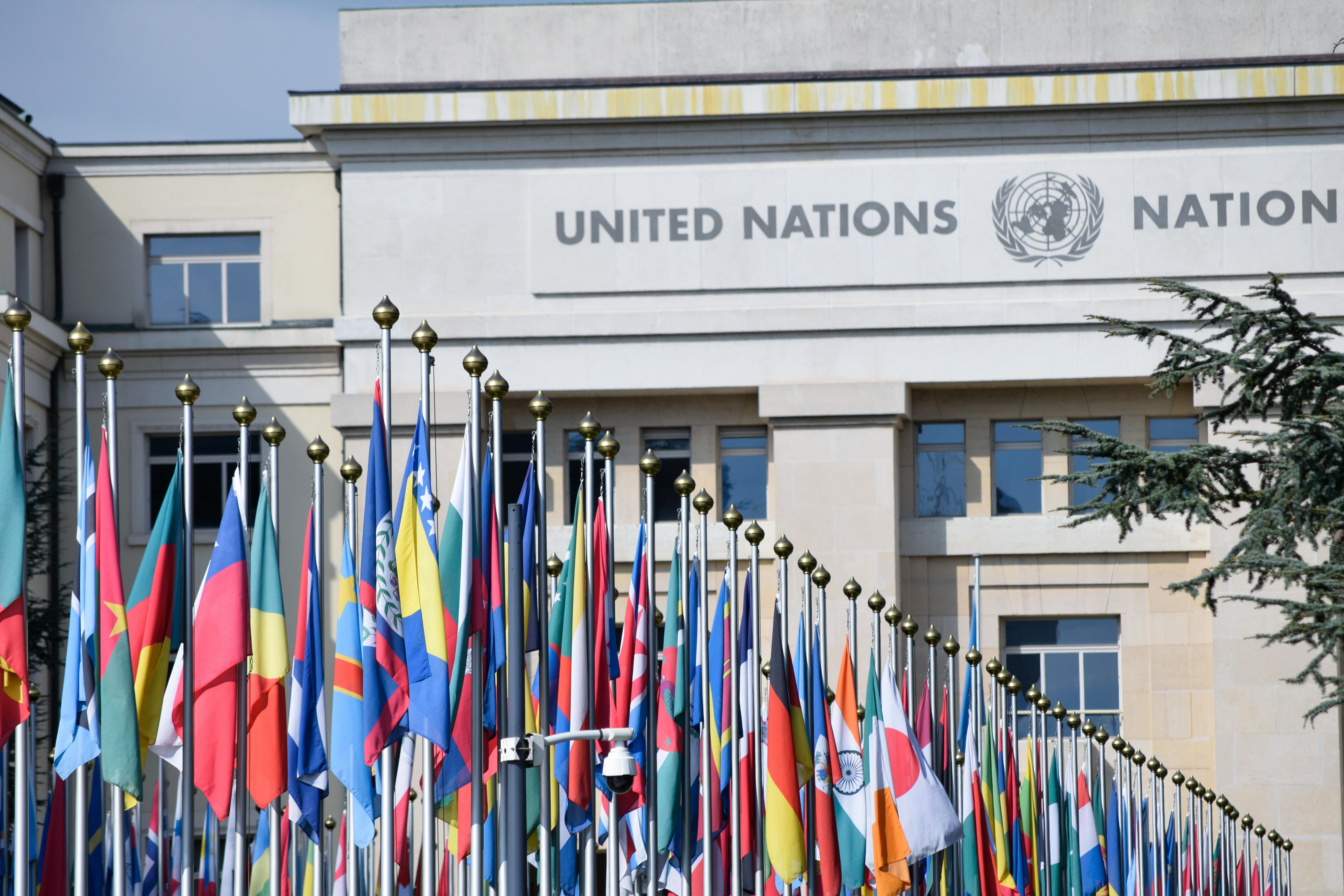
The World Trade Organization's institutional breakdown reached a new low in May 2026, when Britain's permanent representative Kumar Iyer delivered a blunt assessment of the failure at the MC14 conference in Yaoundé. "We did not achieve substantive outcomes on any of the major decision items," Iyer told the Geneva gathering. The statement marked a moment when multilateral trade governance entered visible crisis.
The British statement, delivered with diplomatic courtesy but unmistakable frustration, signals a shift in how major economies approach global trade architecture. While thanking Cameroon for hosting MC14 and acknowledging that delegates "came very, very close" to breakthroughs, Iyer's words reflected a system that no longer serves its members' core interests. The UK's admission that it lacks "a mandate to engage in further process discussions" but remains "ready to engage in further discussions with any and all countries" suggests London is preparing for a post-WTO world of bilateral deals.
The Architecture of Breakdown
The Yaoundé conference's failure exposes the mathematical impossibility of achieving consensus among 164 members with fundamentally divergent economic models and development priorities. As Iyer noted, negotiators had "a document that has widespread support" but could not cross the final threshold into binding agreement.
This near-miss dynamic has become the WTO's defining characteristic. Since the Seattle protests of 1999 and the collapse of the Doha Round, the organization has mastered the art of almost-agreements that dissolve under the weight of national sovereignty concerns. The current impasse differs from earlier failures because it coincides with accelerating economic nationalism and supply-chain fragmentation that makes multilateral coordination both more necessary and more politically toxic.
Britain's position offers insight into how middle powers are recalibrating their trade strategies. The UK's post-Brexit identity depends heavily on demonstrating that nimble bilateral deal-making can outperform the multilateral system. Iyer's statement that Britain will "start to think about substantive policy papers" suggests London is moving toward arrangements that bypass Geneva for the relationships that matter most.
India's Strategic Calculus in a Fractured Order
For India, the WTO's dysfunction presents both a crisis and an opportunity. As a civilizational state with deep commitments to South-South solidarity and non-aligned principles, India has historically championed multilateral institutions as bulwarks against hegemonic power. The breakdown at Yaoundé forces New Delhi to confront an uncomfortable reality: the multilateral system may no longer serve India's interests as effectively as targeted bilateral and regional arrangements.
India's trade strategy has already adapted through mechanisms like the Comprehensive Economic Partnership Agreement with the UAE and ongoing negotiations for similar arrangements across Southeast Asia and the Gulf. These bilateral frameworks allow India to secure market access and investment flows without the complex consensus-building required in multilateral forums where agricultural subsidies, intellectual property rights, and development assistance create paralyzing tensions.
The timing of the WTO crisis coincides with India's emergence as a major manufacturing hub and technology exporter, creating unique leverage that was absent during earlier trade negotiations. India's position as both a significant market and a capable supplier gives it bargaining power that smaller developing countries lack, enabling New Delhi to pursue what amounts to selective engagement with global frameworks—supporting them where they serve Indian interests while building alternative structures where they don't.
The Bilateral Alternative
Britain's readiness to engage in bilateral discussions reflects a broader trend toward what trade economists call "coalition of the willing" approaches. These arrangements, exemplified by the Indo-Pacific Economic Framework and various critical minerals partnerships, allow like-minded countries to advance shared interests without waiting for universal consensus. For India, this model offers particular advantages in sectors like digital services, pharmaceuticals, and renewable energy where Indian capabilities align with global demand.
The shift toward bilateral arrangements also reflects technological realities that the WTO's Marrakesh framework did not anticipate. Digital trade, artificial intelligence governance, and supply-chain resilience require regulatory coordination that moves faster than traditional multilateral processes allow. India's Digital India initiatives and semiconductor manufacturing ambitions position it well for these sectoral partnerships, even as the broader trade architecture fragments.
The bilateral approach carries risks that Indian policymakers must carefully weigh. Smaller developing countries that lack India's market size and technological capabilities may find themselves excluded from critical arrangements, potentially recreating the North-South divisions that the WTO was designed to bridge. India's leadership in forums like the G20 and BRICS creates both opportunities and obligations to ensure that alternative trade frameworks don't simply replicate existing power asymmetries.
Beyond Geneva's Paralysis
The WTO's institutional crisis reflects deeper tensions about globalization's future that extend well beyond trade policy. The consensus model that served reasonably well during the post-Cold War period of American dominance and shared growth assumptions has proven inadequate for an era of great power competition and divergent development models. China's state-directed capitalism, America's industrial policy revival, and Europe's digital sovereignty agenda create irreconcilable tensions that no amount of diplomatic effort can fully resolve.
For India, the challenge is to extract maximum advantage from this fragmented landscape while maintaining the principled positions that have defined its international engagement. The country's commitment to strategic autonomy provides a framework for navigating competing pressures, but it requires constant recalibration as the global order reshapes itself around bilateral and regional arrangements rather than universal institutions.
India's next phase of trade strategy will likely emphasize support for global frameworks where they advance Indian interests while building alternative arrangements where they don't. This approach recognizes that universal institutions may be giving way to a more complex system of overlapping partnerships and selective cooperation. The question is whether India can help shape this transition in ways that preserve space for developing countries to chart their own paths toward prosperity, or whether the post-WTO world will simply reflect the preferences of its most powerful economies.