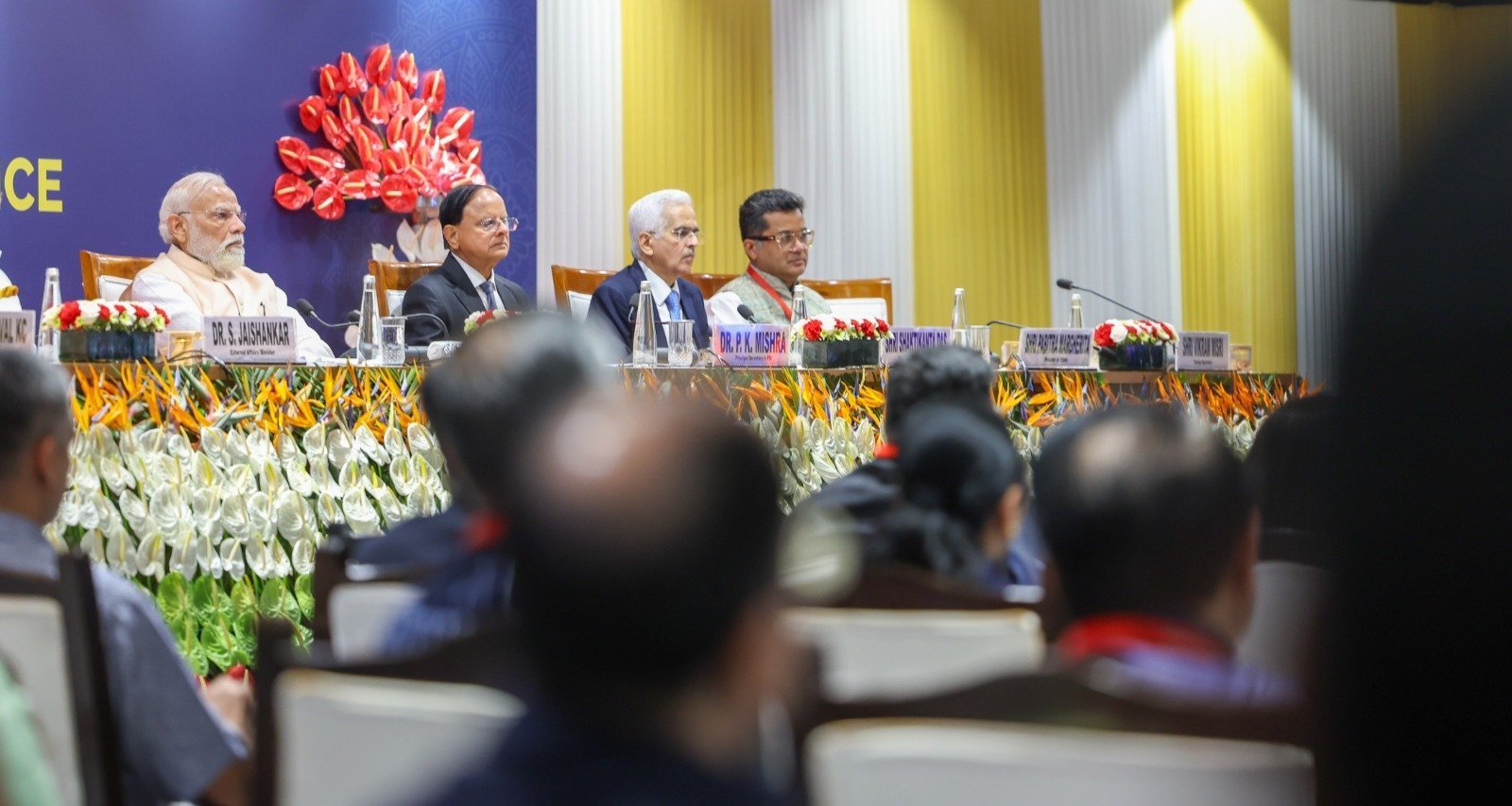
India's diplomatic machinery spent three days recalibrating its global strategy at the 11th Heads of Mission Conference, where over a hundred ambassadors and high commissioners gathered to synchronize their approach to advancing Indian interests across every continent. The April 28-30 gathering at New Delhi's National Agricultural Science Complex centered on "Reforming Indian Diplomacy for 2047"—a framework that signals India's determination to reshape its external engagement as it approaches developed nation status.
Prime Minister Narendra Modi addressed the assembled diplomatic corps on the conference's final day, providing strategic guidance that will ripple through Indian missions from Washington to Wellington. External Affairs Minister S. Jaishankar delivered the inaugural address, setting the tone for discussions that spanned geopolitical developments, emerging technologies, and what the ministry termed the "3Ts"—Trade, Technology, and Tourism—alongside broader themes of future-ready diplomacy and the Bharat story.
Strategic Synchronization Beyond Routine Coordination
This annual gathering is India's institutional mechanism for ensuring coherent foreign policy implementation across a diplomatic network that spans 180 missions worldwide. The conference's yoga sessions, brainstorming exercises, and tabletop simulations create space for strategic alignment and tactical innovation. India's diplomats operate in environments ranging from great power competition in the Indo-Pacific to development partnerships in Africa.
The 2047 theme anchors diplomatic strategy to India's constitutional centenary and the Viksit Bharat vision. The framework demands that every bilateral relationship, multilateral engagement, and economic partnership serve India's transition from emerging economy to developed nation. Trade negotiations, diaspora engagement, and technology transfer agreements all flow from this objective.
Multi-Alignment Requires Mission-Level Precision
India's contemporary diplomatic challenge lies not in choosing sides but in managing simultaneous partnerships with competing power centers. An ambassador in Brussels navigating EU regulatory frameworks needs different tactical approaches than a counterpart in Jakarta managing ASEAN consensus-building, yet both advance the same strategic objectives around India's rise.
The conference's emphasis on emerging technologies reflects this coordination imperative. India's semiconductor ambitions, digital governance models, and renewable energy transitions require diplomatic support across multiple capitals simultaneously. Mission chiefs need unified messaging on India's technology policies, whether engaging Silicon Valley venture capitalists, European regulatory authorities, or Gulf sovereign wealth funds.
The "Bharat story" component is a narrative coordination effort. It ensures that India's civilizational identity, democratic credentials, and economic dynamism receive consistent articulation across diverse cultural and political contexts. As India competes for trade and investment, this storytelling dimension of diplomacy has gained prominence for influence and partnership credibility on the global stage.
Economic Diplomacy as Force Multiplier
The conference's focus on trade and tourism reflects recognition that economic diplomacy is central to India's strategic positioning. With India's economy approaching the $4 trillion mark, diplomatic missions increasingly function as economic advancement platforms. Trade promotion, investment facilitation, and diaspora economic engagement require sophisticated coordination among missions operating in interconnected global markets.
Tourism's inclusion in the "3Ts" framework acknowledges that cultural and soft power projection now carries strategic weight comparable to traditional diplomatic tools. India's tourism sector's recovery and expansion depends partly on diplomatic missions facilitating visa processes, promoting cultural exchanges, and positioning India as both heritage destination and modern innovation hub.
The technology component reflects India's ambition to position itself as a global technology leader rather than merely a service provider. Diplomatic missions must now engage with foreign governments on emerging technology governance, digital trade rules, and innovation partnerships—areas that require both technical sophistication and strategic clarity about India's long-term objectives.
Regional Complexity Demands Unified Response
India's diplomatic challenges span from managing great power competition in the Indo-Pacific to deepening partnerships across Africa and Latin America. The conference format allows mission chiefs to understand how their bilateral relationships fit within India's broader strategic architecture.
The timing proves significant as India navigates complex relationships with both Western and non-Western partners. While strengthening QUAD cooperation and deepening ties with European allies, India simultaneously expands its role within BRICS and maintains strategic autonomy on issues like the Ukraine conflict. This balancing act requires precise coordination among missions to avoid mixed signals or contradictory commitments.
For missions in neighboring countries, the coordination becomes even more critical. India's neighborhood policy requires diplomatic finesse that balances regional leadership aspirations with respect for sovereignty. Consistent messaging and coordinated responses to regional developments are essential.
Institutional Diplomacy for Global Leadership
The conference reflects India's maturation from regional power to global stakeholder. India's campaign for United Nations Security Council reform, its role in climate governance, and its positioning on global trade rules all require coordinated advocacy across multiple capitals and international forums.
The future-ready diplomacy theme suggests adaptation to changing global dynamics—from the rise of middle powers to the increasing importance of non-state actors to the growing intersection of domestic and foreign policy. Indian missions must navigate these evolving landscapes while maintaining focus on India's core objectives around sovereignty, prosperity, and global influence.
The three-day format allows for both strategic direction from leadership and tactical innovation from experienced practitioners. This combination of top-down guidance and bottom-up insights creates the institutional learning necessary for diplomatic work in an increasingly complex global environment.
As India approaches 2047, its diplomatic success will depend on both strategic vision and operational excellence across its global network. The annual conference represents one mechanism for ensuring that India's rise remains coordinated and coherent. The challenge lies in translating this institutional alignment into tangible advances across trade, technology, and strategic partnerships that position India as an indispensable global partner by its constitutional centenary.