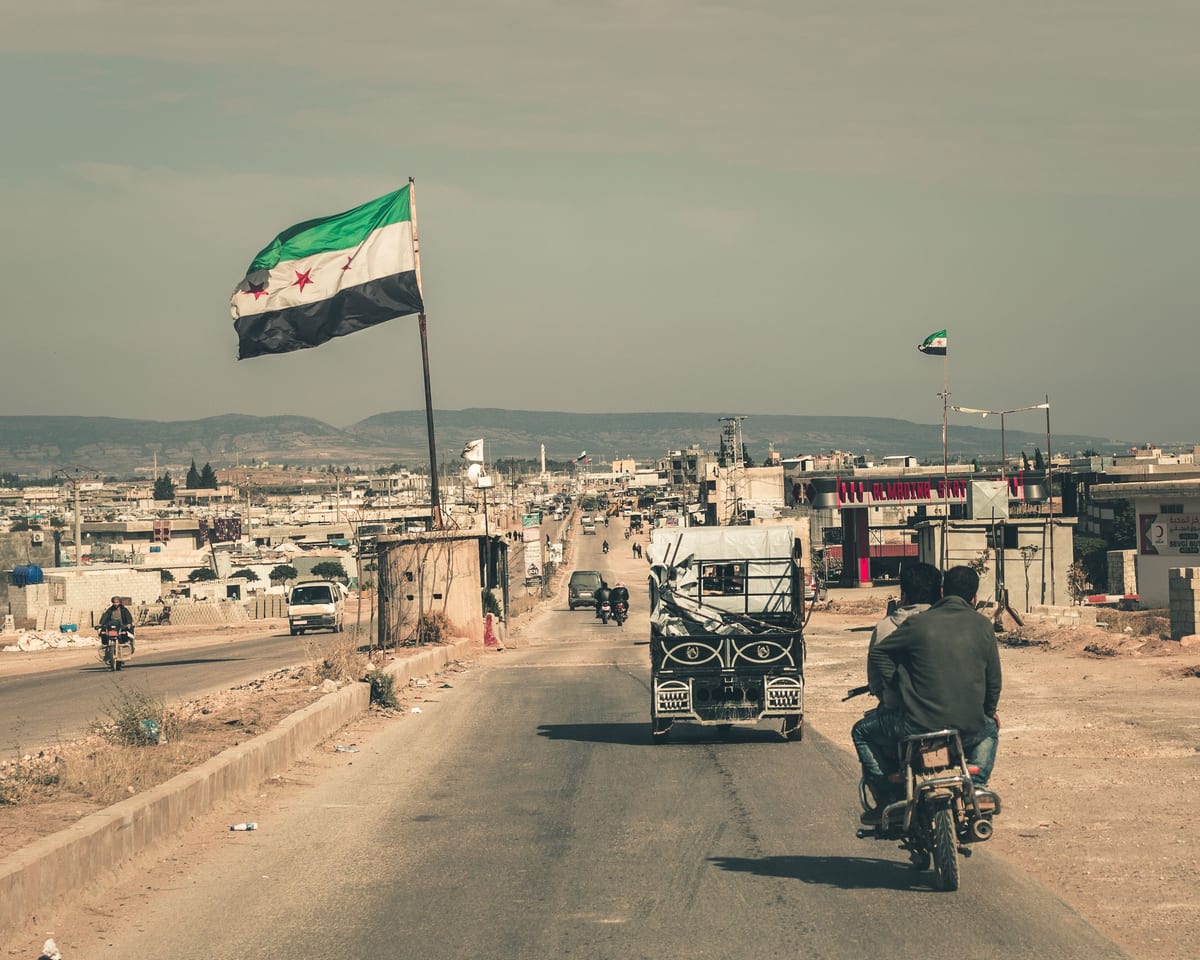
The men who run the Sahel's most dangerous armed groups no longer think of themselves primarily as insurgents. They think of themselves as administrators. According to a July 2026 UN assessment, jihadist organisations in West Africa and the Sahel — among them JNIM and ISWAP — now administer territories, tax trade routes, recruit through social media, and press their reach steadily toward the Gulf of Guinea coast. This is a different phenomenon from the old pattern, and the multilateral architecture designed to contain insurgencies is visibly struggling to meet it.
The geography matters. The Sahel corridor — running through Mali, Burkina Faso, and Niger — was the original theatre. But the UN report signals something more consequential: the southward migration of consolidated influence toward the Gulf of Guinea littoral, where Côte d'Ivoire, Ghana, Benin, Togo, and Nigeria absorb the pressure. These are not fragile post-conflict states. They are functioning economies with ports, foreign investment, and, in Nigeria's case, the continent's largest GDP. When jihadist logistics networks reach a working coastline, the strategic calculus for everyone with commercial and energy exposure to the region changes.
What Territorial Control Actually Means
The distinction between a group that attacks and a group that governs is not merely semantic. A group that controls territory controls taxation — of goods, of movement, of people. It controls information about who crosses its lines, which means it controls intelligence. It can offer protection, adjudicate disputes, and provide a rudimentary predictability that a weak state cannot. Communities do not have to endorse a group's ideology to become dependent on its administration. That dependence is itself a form of consolidation, one that military operations alone cannot reverse.
The UN assessment references new technologies. Encrypted communications, drone surveillance, and cryptocurrency-adjacent transfer mechanisms have already appeared in other insurgent theatres. The Sahel's groups are not immune to these tools, and in some cases have adopted them faster than the security forces arrayed against them. An insurgency that can manage its finances through channels resistant to conventional financial intelligence is structurally harder to defund. This is precisely the architecture that international counter-terrorism financing frameworks, built around Western banking system visibility, are poorly positioned to disrupt.
Russia's Geometry and What It Leaves Open
France's military withdrawal from Mali, Burkina Faso, and Niger — driven by anti-French sentiment that brought military governments to power in all three — created a vacuum that Russia moved to fill through Wagner Group deployments, now rebranded as Africa Corps. Moscow offers security assistance without governance conditions. It asks no questions about elections, press freedom, or judicial reform. That transactional clarity has genuine appeal for governments that experienced French intervention as a form of extended tutelage.
But Russia cannot offer what the Sahel's states actually need over the medium term: governance capacity, institutional reform, counter-insurgency doctrine that reduces civilian harm, and the kind of rules-based administrative framework that reduces the space in which jihadist groups can position themselves as more reliable administrators than the government. Wagner/Africa Corps excels at force protection for ruling governments. It has no track record in building the state functions that ultimately drain an insurgency of its population base.
China is similarly constrained. Beijing's interest in the Sahel runs through resource extraction and infrastructure financing. It too has no credible governance or rule-of-law export. The structural gap is that neither of the two great-power competitors now most active on the continent can fill the institutional dimension of what partner states require.
India's Exposed Flank
India's commercial presence across West Africa's coastal economies is not peripheral. Nigeria is India's most significant African trade partner, and Indian firms in pharmaceuticals, information technology, and infrastructure operate across Senegal, Ghana, and Côte d'Ivoire — precisely the states now absorbing spillover from the Sahelian interior. The sea lanes through the Gulf of Guinea carry crude oil that travels onward to Indian refineries; Angola and Nigeria together represent a substantial share of India's African energy sourcing. A coastline destabilised by groups that have learned to administer territory reprices risk for every cargo insurer, every project financier, every firm calculating a decade-long infrastructure return.
Analysts at the Observer Research Foundation have argued that India's Africa strategy remains under-resourced on the security dimension — that New Delhi has built a credible development partnership narrative while leaving the security track thin. That critique has sharper edges now than when it was first made. A development partnership that cannot speak to the security environment in which Indian-financed infrastructure operates has a structural vulnerability.
India's counter-terrorism posture at the UN Security Council is consistent and principled: oppose terrorism in all forms, disrupt financing, deny safe havens. Those positions appear in BRICS declarations and bilateral joint statements across two decades. They are not wrong. But they are positions, not programmes. A position articulated in New York does not translate automatically into intelligence-sharing protocols with Accra, or capacity-building arrangements with Abuja's counter-terrorism units, or early-warning frameworks that give Indian firms in Lagos notice before a security environment deteriorates.
The Architecture India Has and the Architecture It Needs
The India-Africa Forum Summit provides a framework. It has generated goodwill, financing pledges, and a development cooperation vocabulary that the continent's governments genuinely value. What it has not generated is a security dialogue track — a structured channel through which India's counter-insurgency expertise, its cyber-security capabilities, and its intelligence-sharing capacity can be offered to Gulf of Guinea states before they need them urgently rather than after.
India has relevant experience. Counter-insurgency campaigns in the northeast and in Jammu and Kashmir have generated institutional learning about managing armed groups in complex terrain, about the role of development investment in recruitment, about the relationship between governance and security outcomes. That experience is not perfectly transferable — the Sahel's topology and political economy differ significantly — but the underlying doctrine carries genuine value for partner governments facing a similar challenge of groups that govern, not merely attack.
The BRICS framework offers a second avenue. South Africa sits inside BRICS; Nigeria has been admitted as a partner state. BRICS declarations have included counter-terrorism language consistently since the Ufa Summit. Using that platform to advocate for an Africa-led counter-terrorism financing framework — one less dependent on the Western banking system visibility that the Sahel's groups have learned to circumvent — would advance India's Global South credibility while addressing a real gap in the current international architecture. It would also be something neither Russia nor China is positioned to lead, for reasons that are structural rather than political.
The transformation of West Africa's jihadist groups from mobile attackers into territorial administrators is not a problem India can observe from a comfortable distance. The Gulf of Guinea's stability is entangled with Indian energy supply, Indian commercial exposure, and the credibility of India's claim to speak meaningfully for the Global South on security, not only on development. New Delhi has the institutional tools, the diplomatic standing, and the counter-insurgency knowledge base to build something more durable than a position. Whether it chooses to deploy those assets before the coastline absorbs what the Sahel is pushing southward is the question that the next India-Africa Forum Summit will answer.