The timing of a monsoon warning matters as much as its content. When the UN World Meteorological Organization announced on July 31 that El Niño will intensify beginning in August, the agricultural calendar had already advanced well past the point where farmers could change their plans. Kharif sowing was underway across the Indo-Gangetic Plain, reservoirs were filling — or not filling — according to whatever the June and July rains had delivered, and district-level decisions about which crop to plant, how much water to release, and which inputs to purchase had largely been made. The WMO's warning lands not in a planning window but in the middle of an already committed season.
El Niño, the periodic warming of surface waters in the central and eastern tropical Pacific, does not directly suppress the Indian monsoon. The relationship is probabilistic and mediated by atmospheric dynamics: a weakened Walker Circulation, altered pressure gradients over the Arabian Sea, reduced moisture transport toward the subcontinent. But the probability is significant enough that IMD Director General Mrutyunjay Mohapatra has previously noted that roughly 60 percent of strong El Niño years since 1950 have produced below-normal rainfall over India. That is not a certainty; it is a structural risk that demands institutional action well before the season's accounts are settled.
What the Historical Record Says
India's memory of El Niño is written in reservoir levels and food prices. The 2015–16 event — one of the strongest on instrumental record — produced deficient monsoon rainfall, drove reservoir levels across peninsular river basins to critically low levels, and pushed food inflation above 8 percent. Maharashtra and Karnataka declared droughts. Groundwater tables in rain-fed districts fell faster than bore-well rigs could follow them down. The Central government expanded its buffer grain operations and food subsidy commitments simultaneously, creating a fiscal squeeze that analysts at institutions like the Takshashila Institution have since used as a reference case for the compounding cost of El Niño years: food subsidies and fertiliser support expand together precisely when revenue from agricultural states softens.
The 2009 El Niño was milder but still produced a 22 percent deficit in all-India rainfall — the worst since 1972. Kharif output that year contracted sharply. Pulses, which are grown predominantly in rain-fed tracts with limited irrigation backup, took the hardest hit. Pulse prices spiked and remained elevated through 2010. The pattern is consistent enough that it has become its own category in India's disaster-management planning: a distinct drought protocol triggered not by declared emergency but by WMO seasonal outlooks and IMD ensemble model outputs.
The Hydropower Dimension
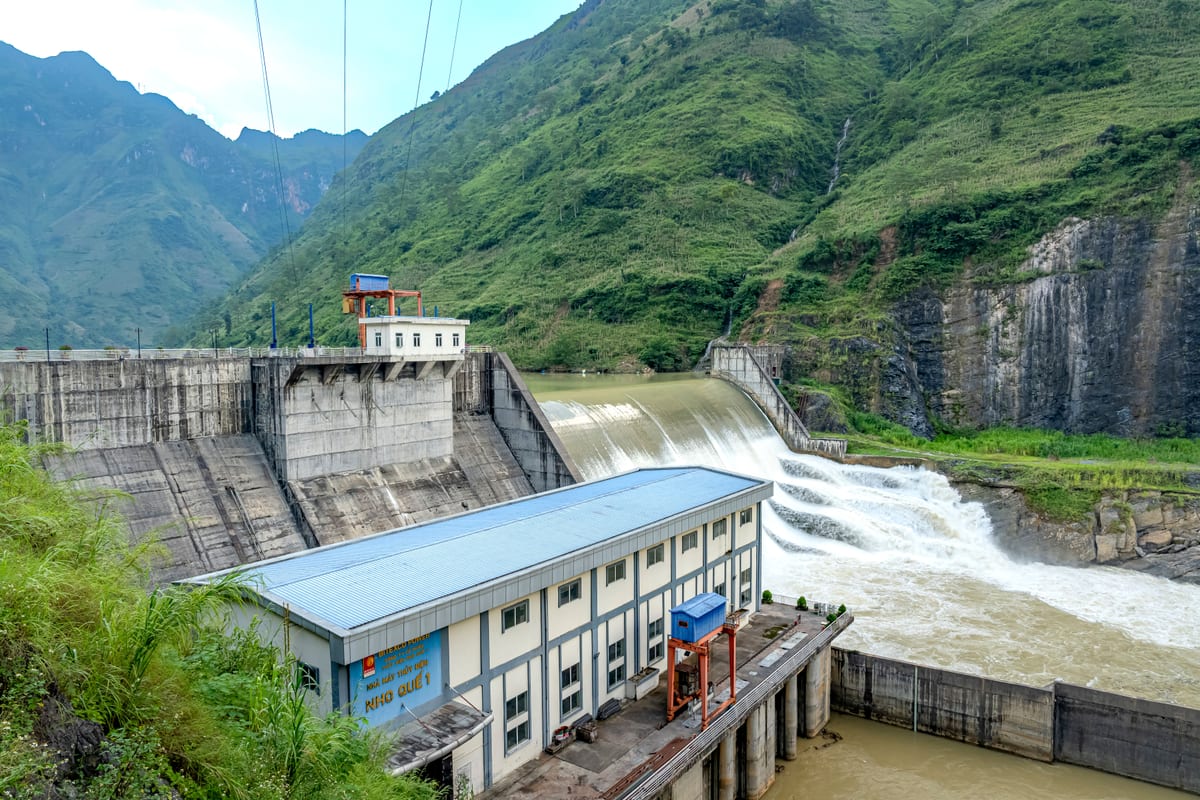
Food security dominates the public conversation about monsoon failures. The electricity dimension is quieter but comparably consequential. Hydropower accounts for roughly 10 percent of India's installed electricity generation capacity — a share that becomes disproportionately important during peak summer and early-monsoon demand periods when river flows are highest and thermal plants face coal logistics pressure. A below-normal monsoon reduces reservoir inflows, constraining hydro dispatch precisely when grid operators need every available unit of generation to manage air-conditioning load and industrial demand.
The grid management implications compound: if hydro generation falls, the gap must be filled by coal-fired plants or, increasingly, by drawing down battery storage that the system's renewable buildout has begun to accumulate. Neither is free. Coal dispatch at elevated levels tightens the domestic supply chain and pushes up variable costs. Storage drawdowns reduce the buffer available for evening peaks when solar generation falls to zero. State electricity distribution companies, many of which operate on thin liquidity margins, absorb these cost pressures through payment delays to generators — a familiar cycle that El Niño years have historically accelerated.
India's Institutional Machinery — And Its Limits
India has several tools at hand. The India Meteorological Department runs its own operational ensemble models and coordinates with the WMO's Global Producing Centres, meaning the July 31 warning is not new information for Pune's forecast teams — it is confirmation of signals they have been tracking through the season. The National Disaster Management Authority maintains standing drought contingency protocols. The Ministry of Agriculture has district-level crop substitution advisories ready for activation, steering farmers toward drought-tolerant varieties of sorghum, millets, and short-duration pulses when kharif prospects deteriorate mid-season.
The institutional architecture exists. The question ORF Senior Fellow Lydia Powell and others working on India's climate vulnerability have raised is whether that architecture reaches the right people at the right time. Rain-fed agriculture districts — concentrated in Marathwada, Vidarbha, Bundelkhand, interior Karnataka, and large stretches of Rajasthan and Odisha — have limited adaptive capacity despite years of crop insurance expansion and income-support programmes. A farmer in Latur or Chitradurga who receives an advisory in late August that his kharif crop faces moisture stress cannot unsow what was planted in June. The institutional response that matters most is the one that arrives before the season commits, not during it.
This is the structural argument that makes the WMO's July 31 warning more than a technical bulletin. If India's contingency playbook is to mean anything — pre-positioning buffer grain stocks above quarterly norms, issuing reservoir water management advisories to state governments, coordinating with state agriculture departments on input support — the activation needs to happen now, in the first days of August, not after September's crop assessment surveys confirm what the models already suggest.
The Food Export Arithmetic
There is a third dimension that rarely enters the domestic monsoon conversation but has acquired strategic weight since 2023: India's credibility as a reliable food exporter. The rice export restrictions imposed three years ago, in response to domestic supply concerns, disrupted food supply chains across South and Southeast Asia and drew pointed criticism from importing nations that had built procurement calendars around Indian availability. The episode registered in trade ministries from Nairobi to Manila.
A strong El Niño that compresses kharif rice and pulse output would reproduce exactly the conditions under which those restrictions were imposed. India's sovereign prerogative to manage domestic food security is not in question — no major agricultural exporter surrenders that option. But the manner in which supply-shock decisions are communicated, the advance notice given to trading partners, and the willingness to coordinate through multilateral frameworks rather than announce unilaterally all shape whether India is perceived as a reliable long-run supplier or an opportunistic one. India's standing in WMO technical bodies and in G20 agricultural working groups gives it the institutional surface to pursue the coordination route — advance signalling to importing nations, data-sharing on crop assessments, and engagement on buffer-stock release mechanisms. The choice between reactive restriction and proactive communication is a diplomatic one as much as a food-security one.
The Recurrence Problem
El Niño is not an anomaly. It recurs on a two-to-seven year cycle, and its interaction with the Indian monsoon is one of the most studied relationships in tropical climatology. India has known for decades that some fraction of its monsoon years will be El Niño-suppressed. What has not kept pace with that knowledge is the structural reduction of India's exposure to rain-fed agriculture risk. Irrigation coverage has expanded, but the districts most vulnerable to monsoon deficits — Marathwada, Bundelkhand, the rain-shadow belts of the Western Ghats — remain heavily dependent on rainfall that El Niño periodically withholds. The policy gap IDSA researchers have flagged is real: recurring El Niño events increase internal migration pressures from agrarian states into urban centres, and those secondary stresses — on urban housing, informal labour markets, municipal services — accumulate across cycles in ways that no single drought protocol addresses.
The WMO's August warning will produce the usual sequence: met department bulletins, state agriculture advisories, reservoir management circulars. All of that is necessary. What it does not do is close the longer-run structural fault: India's food system remains more exposed to the Pacific Ocean's temperature than a country of its ambitions and institutional depth should be. El Niño's recurrence is predictable. The window to reduce India's exposure — through irrigation, drought-resistant crop development, and rural income diversification — reopens with every La Niña interlude and narrows again when the warm phase returns. The question worth holding past August is whether this cycle, too, passes without moving that structural needle.