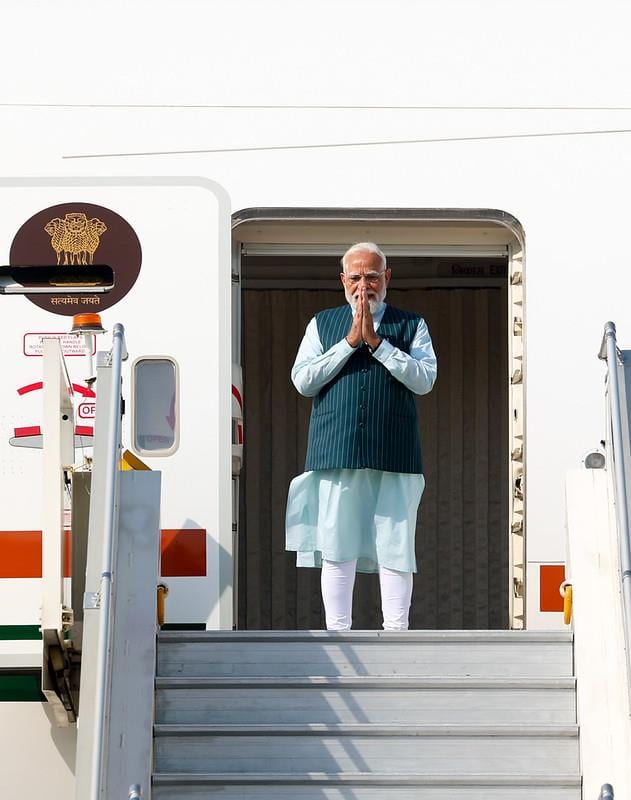
Prime Minister Narendra Modi elevated India-Norway relations to a Green Strategic Partnership during his Oslo visit, marking a step in what he described as a "new golden era" between India and Europe. Speaking at a joint press conference on May 18, Modi outlined cooperation across clean energy, climate resilience, and green shipping sectors that will combine India's scale and talent with Norwegian technology and capital.
The strategic partnership comes as implementation of the historic Trade and Economic Partnership Agreement between India and the European Free Trade Association gains momentum. This agreement, which Modi described as "a blueprint for ensuring shared progress and prosperity," targets $100 billion of investment into India and one million jobs over fifteen years. Norway's elevation to strategic partner status signals the economic transformation both sides anticipate.
Technology Transfer Architecture
The partnership reflects India's industrial requirements. Norwegian expertise in offshore wind technology, maritime engineering, and carbon capture systems addresses gaps in India's renewable energy infrastructure. The collaboration extends beyond buyer-seller arrangements to encompass joint research, technology transfer, and co-development of solutions.
Norway's sovereign wealth fund, the world's largest, manages over $1.7 trillion in assets with significant exposure to renewable energy investments globally. The fund's potential participation in India's green transition could provide capital for large-scale infrastructure projects. Norwegian companies like Equinor and Aker Solutions have expertise in offshore wind development that could accelerate India's coastal renewable energy plans.
India's renewable energy sector requires significant foreign investment to meet capacity addition targets, while Norwegian companies seek emerging market opportunities as their domestic energy transition matures. The partnership creates complementarity where Indian manufacturing scale can reduce costs for Norwegian green technologies while Norway provides technical sophistication India needs.
Research and Innovation Ecosystem
Modi announced expanded research cooperation in sustainability, ocean energy, geology, and health sectors. The commitment to connect universities and startup ecosystems in engineering, artificial intelligence, cyber, and digital technologies suggests a long-term vision for technological convergence.
Norwegian institutions like the Norwegian University of Science and Technology and SINTEF research organisation have developed capabilities in marine technology, battery systems, and hydrogen production. Linking these with Indian Institutes of Technology and emerging research universities could create innovation corridors spanning both nations. The partnership's emphasis on talent mobility ensures that human capital development accompanies technology transfer.
The strategic partnership framework addresses skill development, recognising that technology absorption requires capable human resources. Norway's experience in managing energy transitions while maintaining high employment offers lessons for India's industrial transformation.
Diplomatic Architecture in Transition
Modi referenced the terrorist attack in Pahalgam that postponed his 2025 visit, and Norway's solidarity during that period, which reveals how security cooperation underpins economic partnerships. Norway's stance against terrorism demonstrates the shared values foundation that enables deeper strategic cooperation.
The visit occurred against Norway's Constitution Day celebrations, allowing Modi to position India as supporting democratic institutions globally. His greeting "on behalf of the world's largest democracy to the people of the strong and vibrant democracy of Norway" reinforces India's identity as a democratic major power engaging peer nations.
This positioning matters as India navigates complex global relationships. The partnership with Norway, a NATO member and Arctic Council participant, demonstrates India's ability to build strategic relationships across different alliance structures while maintaining its independent foreign policy. Norway's traditional neutrality in global conflicts and its humanitarian leadership create space for cooperation without compromising India's non-alignment doctrine.
Blue Economy and Maritime Convergence
The partnership's focus on blue economy and green shipping aligns with India's maritime interests. India's extensive coastline and growing shipping industry require green technology solutions as international maritime regulations tighten. Norwegian companies lead in developing alternative marine fuels, electric vessels, and port electrification systems.
Green shipping represents a strategic area. As global supply chains face pressure to decarbonise, early adoption of green maritime technologies could give Indian shipping companies competitive advantages. The partnership could position Indian ports as preferred destinations for environmentally conscious global trade.
Norway's Arctic expertise becomes relevant as climate change opens new shipping routes. Indian shipping companies could benefit from Norwegian knowledge of ice-class vessels and polar navigation as Arctic trade routes become commercially viable.
Strategic Investment Framework
The Green Strategic Partnership creates institutional mechanisms for sustained economic cooperation. Unlike traditional trade agreements focused on tariff reduction, this framework emphasises joint innovation, shared technology development, and coordinated investment strategies.
Norwegian companies gain access to India's manufacturing ecosystem while Indian firms access Norwegian R&D capabilities and European markets. The partnership structure enables both sides to leverage their comparative advantages rather than simply exchanging commodities for capital.
For India, the partnership validates its approach of using climate cooperation as a pathway to advanced technology access. Rather than accepting dependent relationships, India positions itself as an equal partner bringing scale, talent, and market access to collaborative arrangements. This model could inform similar partnerships with other developed economies facing their own energy transition challenges.
India's Green Strategic Partnership with Norway demonstrates how emerging and developed economies can create mutually beneficial frameworks. The partnership advances India's technological capabilities while providing Norwegian companies with the scale needed for global competitiveness.