The credibility of multilateralism hangs in the balance, and India knows it. External Affairs Minister S. Jaishankar's remarks at the BRICS session on global governance reforms addressed a system under strain. "The structures that underpin global governance have not kept pace with these changes," he told the assembled delegations. What many emerging economies have long felt, few have stated with such precision.
As BRICS nations face a world that has grown "more interconnected, complex, and multipolar" since current institutions were designed, India positions itself as offering solutions rather than merely criticizing problems. Jaishankar's four-point agenda rebalances power in a system that still reflects the victors of 1945.
The Security Council Bottleneck
At the center of India's reform agenda sits the United Nations Security Council, where permanent membership remains frozen in time. "Without meaningful reform, including expansion in both permanent and non-permanent categories, the effectiveness and credibility of the UN will remain constrained," Jaishankar declared. The Security Council's permanent membership has remained locked at five while UN membership has expanded dramatically.
Asia, Africa, and Latin America—regions that house most of humanity—remain systematically underrepresented in the body that claims to speak for global peace and security. India's insistence on "representation of Asia, Africa, and Latin America" directly challenges the Euro-Atlantic dominance that has defined international relations since Westphalia.
India's approach combines patience with precision. Rather than demanding immediate transformation, Jaishankar acknowledged "some progress in the actual deliberations" of the Inter-Governmental Negotiations process, noting that "working methods" have improved and various groupings have presented their positions. This measured tone reflects India's broader diplomatic strategy: push for change while preserving the institutional framework that change must work within.
The Multipolar Reality
India's reform advocacy rests on demonstrated multipolarity. As the world's most populous democracy, fifth-largest economy, and a nuclear power that maintains strategic autonomy across multiple partnerships, India operates from civilisational confidence rather than revolutionary grievance.
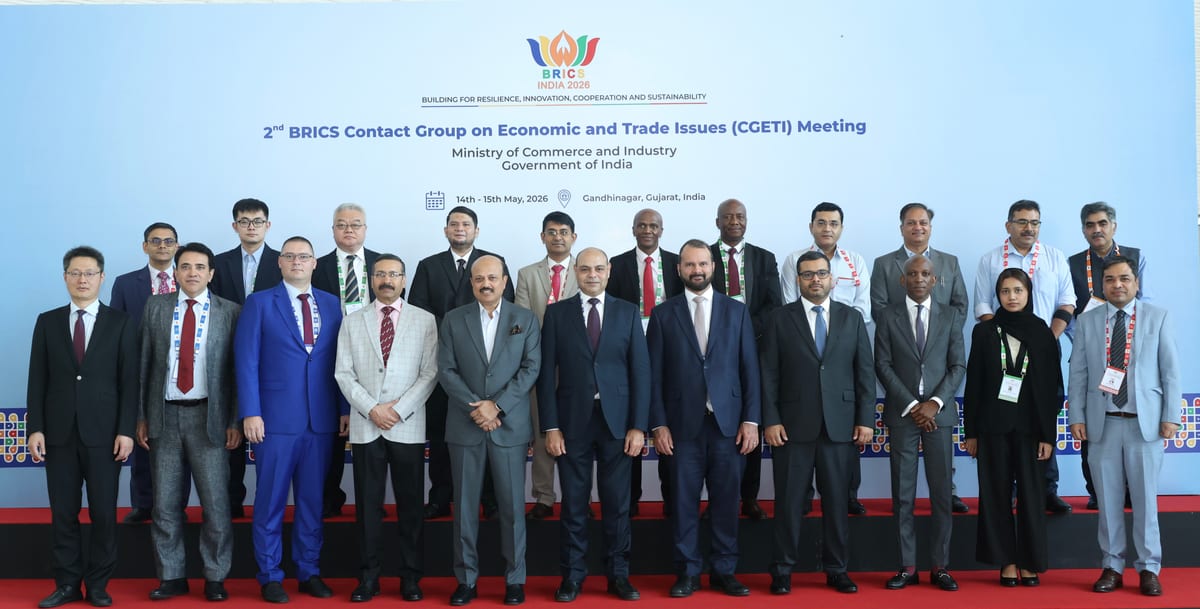
The BRICS platform amplifies this voice. Unlike forums where India must navigate between Western expectations and developing world solidarity, BRICS allows New Delhi to lead conversations about alternative institutional architectures. The group represents roughly forty percent of global population and a growing share of economic output. These statistics lend weight to reform demands that might otherwise sound like complaints from the periphery.
India's approach recognizes that effective reform requires consensus among those who benefit from current arrangements as well as those excluded by them. Jaishankar's emphasis on multilateralism that "reflects current realities and responds to the aspirations of emerging markets and developing countries" treats Western powers as partners to be persuaded rather than adversaries to be defeated.
Strategic Autonomy in Action
The global governance reform agenda serves multiple purposes in India's broader strategic framework. Domestically, it demonstrates to Indian voters that their government commands respect on the world stage. Internationally, it positions India as the voice of reasonable reform rather than revolutionary disruption.
This positioning proves valuable as India navigates relationships with traditional Western partners invested in current institutional arrangements. By framing reforms as necessary for institutional effectiveness rather than anti-Western grievance, India maintains strategic autonomy while building coalitions for change. New Delhi can work with Washington on specific issues while advocating for systemic changes that would reduce American dominance in international institutions.
The BRICS context also provides India with alternatives that strengthen its negotiating position elsewhere. As the grouping develops parallel institutions like the New Development Bank and explores alternative payment mechanisms, it creates practical options that make reform of existing institutions more urgent for those who currently control them. India benefits from these alternatives without appearing to abandon multilateral frameworks entirely.
The Institutional Reform Imperative
Beyond the mechanics of Security Council expansion lies a question about democratic legitimacy in global governance. India's advocacy for reformed multilateralism reflects the understanding that institutions derive authority from perceived fairness rather than inherited power. As emerging economies grow stronger, unreformed institutions risk becoming obstacles to cooperation rather than vehicles for it.
The decline in multilateral effectiveness that Jaishankar referenced represents more than technical inefficiency—it reflects a crisis of relevance. Institutions that cannot adapt to changing power distributions eventually face challenges from alternative arrangements or simple neglect. India's reform advocacy forces the adaptation that preserves institutional relevance.
The approach also demonstrates India's confidence in its ability to contribute constructively to global governance once barriers to participation are removed. Rather than seeking to destroy existing institutions, India advocates for reforms that would allow it greater responsibility for global outcomes. This constructive stance enhances India's reputation as a responsible stakeholder while advancing specific national interests.
The Road Ahead
As India continues its rise toward developed-nation status, its stake in effective global governance grows. The reforms Jaishankar outlined at the BRICS session represent practical necessities for a country that increasingly operates as a global power while remaining formally excluded from the institutions where global power is exercised.
The convergence of India's national interests with broader Global South aspirations for institutional reform creates opportunities for building coalitions necessary for meaningful change. As other emerging economies recognize that current arrangements limit their own influence, India's leadership in articulating alternative visions becomes increasingly valuable. The question is no longer whether global governance institutions will reform, but whether they will reform quickly enough to remain relevant in a multipolar world.