
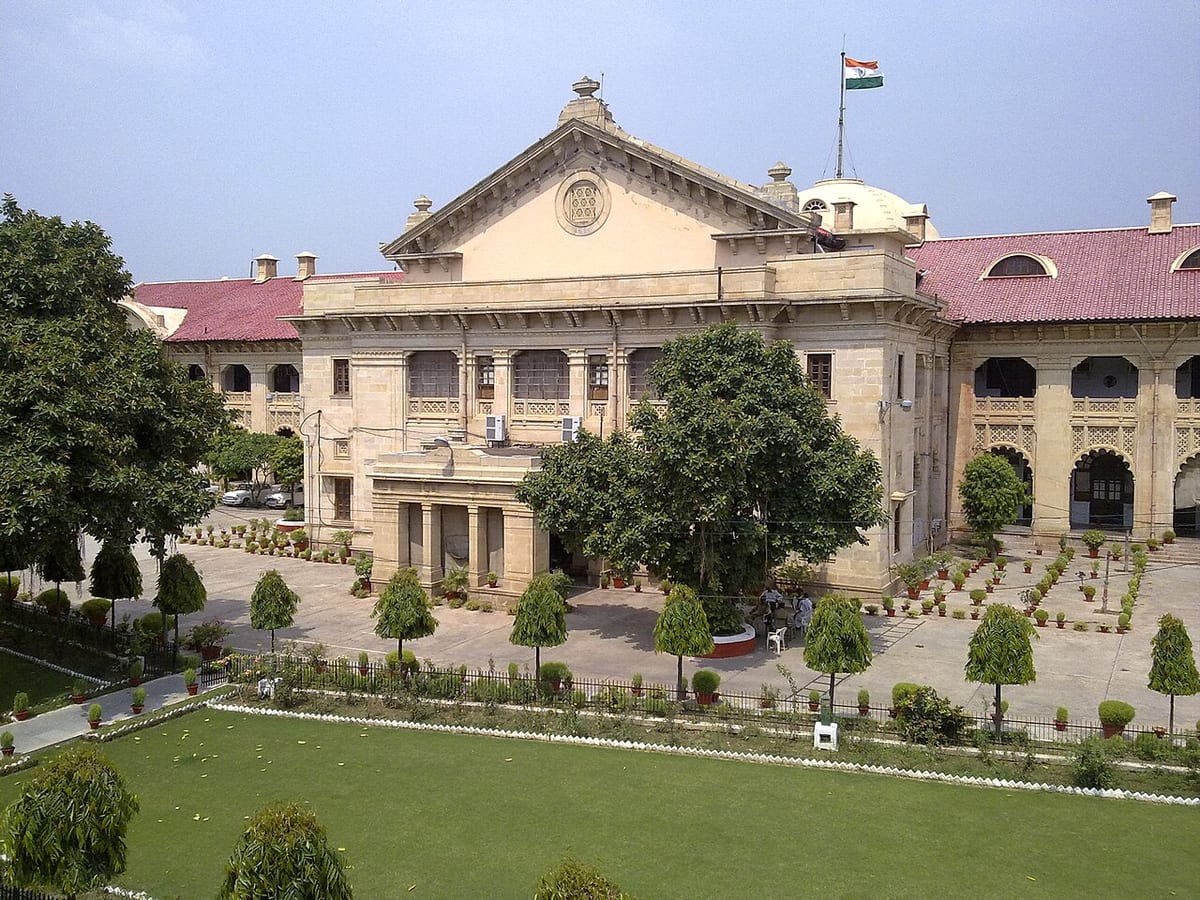
The Allahabad High Court has cancelled the preliminary examination result for the Uttar Pradesh Public Service Commission's 2025 state civil services recruitment and directed the commission to prepare a fresh merit list and result, according to NDTV. The order also requires the commission to conduct the mains examination and the personality tests afresh. The preliminary result had determined which candidates would move to the next stage; that determination is now vacated.
The direction to redo the mains was reported separately by India Today, which noted that the cancellation follows challenges to the preliminary result. The same court, in a parallel order on the Assistant Prosecution Officer examination, held that the commission lacked the legislative competence to issue a particular policy directive, NDTV reported. The two rulings suggest a bench prepared to examine both individual answer key disputes and the rule-making authority of the commission.
What the order means for the selection cycle
For candidates who cleared the preliminary round in the cancelled result, the order revives uncertainty about when they will sit for the mains. For those who fell short, it opens a second opportunity. Neither group can proceed until the commission issues the fresh merit list. The source reporting does not indicate a revised schedule from the commission or the state government.
Uttar Pradesh, India's most populous state, relies on a predictable pipeline of state civil service officers for district administration, revenue management, and law-and-order coordination. A selection cycle stalled at the preliminary stage delays the induction of officers into a system already stretched by vacancies. The high court's order compresses the remaining stages of a process designed to run over several months.
Judicial review and examination integrity
Examinations at this scale regularly produce answer-key disputes and normalisation complaints; courts usually defer to expert bodies on academic evaluation. A high court cancels a result outright only when it concludes that the commission's process has lost internal legitimacy. The remedy here is more radical than a re-evaluation of disputed questions. A fresh merit list sets aside the original ranking of every candidate. Mains and interviews follow, which means the selection outcome will be determined by a process that the court has judged to fall short of legal standards.
This is not the first time an Indian court has intervened in a public service examination. The Assistant Prosecution Officer case from the same court shows a willingness to test the commission's statutory competence. Public service commissions across states will read these rulings closely. The Union Public Service Commission operates under its own constitutional framework and is not bound by the Allahabad High Court's order, but state commissions cannot ignore the signal that internal quality control must be strong enough to survive judicial scrutiny.
The reported APO reasoning focused on legislative competence rather than the merits of individual answers. That distinction matters. If a commission lacks the authority to frame a rule, no amount of transparent evaluation can cure the illegality. The PCS cancellation directs a fresh merit list and result. Judicial oversight strengthens recruitment integrity by forcing the commission to explain not just what it decided but on what authority it acted.
The reform question after the litigation
The deeper institutional failure is the recurrence of judicial correction when examination bodies fail internal quality control. A transparent re-evaluation committee with published terms of reference, public answer keys, and disclosed cut-off logic would reduce the need for litigation. The Uttar Pradesh government, as the constitutional authority over the state civil services, could require such publication without waiting for another court order. The commission's compliance with the high court's directive can be a narrow exercise or a redesign of its quality-control architecture.
In a state where the civil services are the principal interface between the citizen and the administration, the selection process carries significant weight. District magistrates and sub-divisional officers who begin their careers through examinations like these determine land records, law enforcement priorities, and development schemes. An examination body that cannot defend its answer key before a court introduces doubt into every subsequent decision made by officers selected through that process. The court's order is a corrective designed to protect the longer-term legitimacy of the state's administrative cadre.
Candidates who have spent months preparing for this examination will measure the system not by the legal doctrine that justified the cancellation but by whether the fresh cycle is administered with clarity. The commission must communicate a revised schedule, publish the criteria by which it will prepare the fresh merit list, and decide whether affected candidates will be reimbursed for additional fees or travel. The source reporting does not indicate any such commitment.
The Allahabad High Court's order is a reminder that the integrity of state civil services is not a technical matter for the examining body alone. It is a question of whether citizens can trust the officers who will administer their districts. When a court restarts a recruitment process, it corrects an answer key and reasserts that administrative legitimacy rests on transparent, lawful process. The commission now has an opportunity to demonstrate that it can rebuild the process without another judicial order. If it treats the fresh cycle as a compliance exercise rather than a redesign of its quality-control systems, the next litigation is already in motion.