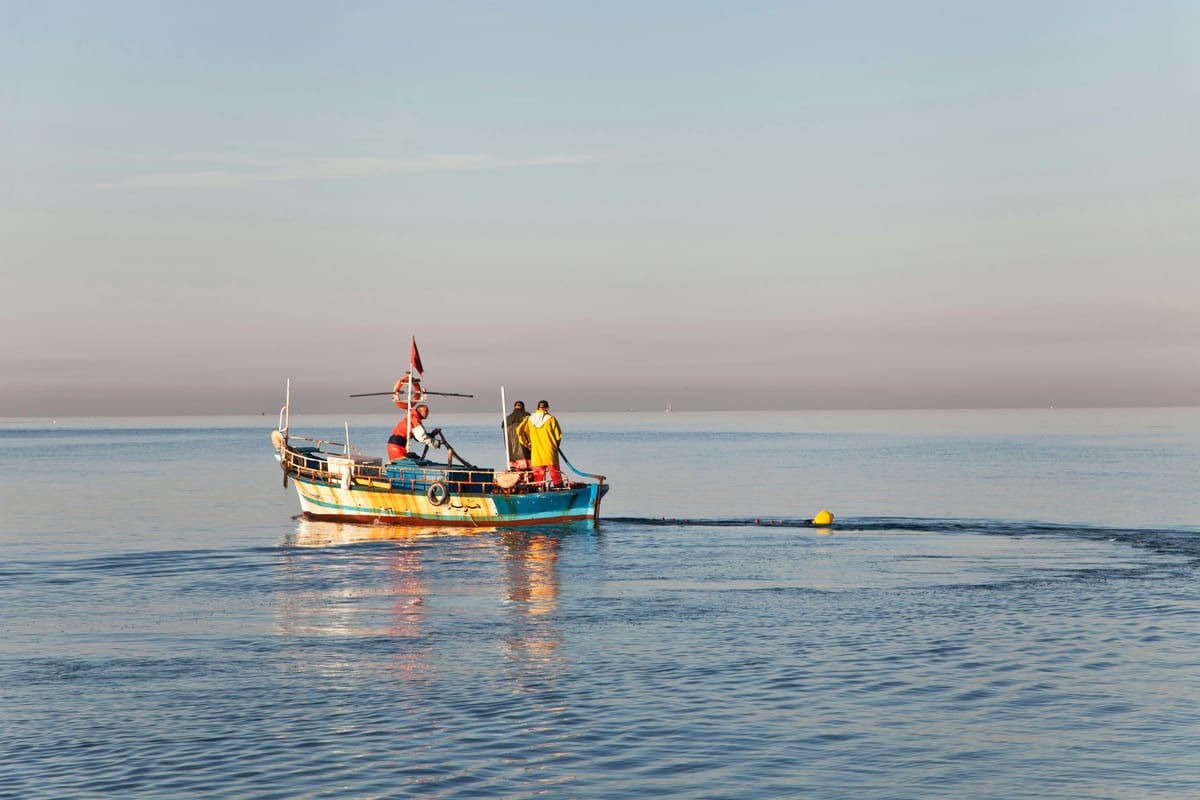
Two boats. More than 500 people. The sea off Myanmar's coast, and then — most likely — silence. Independent UN experts issued an urgent call on Wednesday for international action to support Rohingya refugees in Bangladesh after reports surfaced that both vessels, which departed in mid-July, may have capsized. The details remain unconfirmed, the bodies largely unaccounted for, and the Myanmar military junta — which presided over the ethnic cleansing that produced this exodus — has offered nothing. This is not an isolated tragedy. It is a signal.
The signal reaches New Delhi too, though India's government has not acknowledged it as such. The boats were headed toward Bangladesh, not India. But displacement geography does not respect that distinction for long. Bangladesh hosts well over a million Rohingya in conditions that were already past breaking point before this latest reported catastrophe. Every additional pressure on that system — a mass drowning event that discredits sea routes without eliminating the underlying reasons people take them — increases the probability that displacement flows reroute overland, through the porous hills of Mizoram and Manipur, or across the Bay of Bengal toward the Andaman Islands.
The Corridor at Stake
India has a concrete stake in Rakhine State that is usually absent from discussions of the Rohingya crisis. The Kaladan Multi-Modal Transit Transport Project — a connectivity corridor linking Kolkata to Mizoram through Myanmar's Sittwe port and the Kaladan river — runs directly through territory that the Arakan Army now contests with the junta. The Arakan Army represents the Rakhine Buddhist population rather than the Rohingya and has made significant territorial advances in recent years. The same conflict that displaces Rohingya civilians also disrupts the project's operational environment. India's analysts at institutions tracking Southeast Asia have flagged this vulnerability explicitly: the humanitarian crisis and the infrastructure exposure are not separate files.
This matters because India's instinct has been to treat engagement with Myanmar's military government as a prerequisite for protecting the Kaladan investment — a logic that has meant staying quiet when the junta's conduct generates mass displacement. Former Foreign Secretary Shyam Saran has observed that this posture trades long-term regional stability for short-term access, and the mid-July boat capsizings reveal the cost of that trade. A corridor that cannot be operationalised because Rakhine is in continuous conflict is not a strategic asset; it is an expensive liability — and the political conditions that keep it in conflict are ones India's silence helps sustain.
The Multilateral Opening India Isn't Taking
India is not a signatory to the 1951 Refugee Convention. The Supreme Court has upheld the government's position that undocumented Rohingya arrivals are illegal migrants subject to deportation. These are sovereign policy choices, and engaging with the UN's call for action on the boat capsizings does not require India to revise any of them. The relevant question is whether India has diplomatic tools available that would serve its actual interests — in border security, in infrastructure protection, in regional stability — without requiring it to adopt the Western human-rights framing that the UN system tends to project onto this crisis.
It does. India sits in a unique triangular position: it borders both Myanmar and Bangladesh, it has development investments in Rakhine, and it convenes the Voice of the Global South — a platform that gathered 173 dignitaries from 123 countries at its third summit in August 2024, organised around the idea that the Global South can generate its own solutions to shared development and displacement challenges. Framing a quiet trilateral conversation — among India, Myanmar's de facto territorial authorities including the Arakan Army, and Bangladesh — as a development-financing and border-management discussion rather than a refugee-protection negotiation would preserve India's domestic legal position while addressing the strategic exposure that the Kaladan corridor creates.
Analysts associated with the Observer Research Foundation have noted a related cost: India's refusal to engage multilaterally on Rohingya displacement weakens the credibility it claims when positioning itself as a spokesperson for the Global South on migration and development finance. The inconsistency is visible to every Global South government that watches New Delhi advocate for fairer development financing at G20 and BRICS forums while remaining silent as one of the worst state-induced displacement crises in Asia unfolds on its extended neighbourhood's doorstep.
Bangladesh, Already Stretched
The political transition in Dhaka in 2024 added a layer of sensitivity to India-Bangladesh relations that did not previously exist. The bilateral relationship is navigating a more complicated phase — and a Bangladesh government facing renewed displacement pressure, compounded by a mass-casualty event at sea, will at some point seek multilateral burden-sharing. If India has no architecture in place for that conversation, it will happen anyway, but without Indian influence over the outcome. A UN-led process that imports European refugee-convention frameworks into a region where they sit awkwardly is less useful to India than a regional conversation it helped shape.
None of this requires India to open its borders or to reclassify Rohingya arrivals as refugees. It requires a recognition that the Kaladan corridor's fate, the stability of India's northeastern states, and the credibility of the Voice of the Global South platform are all downstream of events in Rakhine State — events that two capsized boats in mid-July have just made impossible to treat as someone else's problem.
The Geometry of Displacement
The UN experts' call on Wednesday will likely produce customary diplomatic expressions of concern, a statement from Dhaka, perhaps a UNHCR appeal for additional funding. What it will not automatically produce is an Indian response — because India's government has constructed a position in which responding feels like conceding. That construction is worth examining.
Engaging on the management of displacement in Rakhine is not the same as endorsing the refugee convention. Protecting an infrastructure investment that runs through a conflict zone is not a humanitarian concession — it is a commercial and strategic imperative. Using the Voice of the Global South to reframe displacement as a development-finance issue, rather than accepting the Western rights-framework wholesale, is precisely the kind of institutional innovation that India's growing multilateral weight enables it to attempt. The geometry of this crisis points toward India not because New Delhi bears responsibility for what the Myanmar junta has done, but because India is one of the few actors in the region whose engagement could change the operating environment — for the Kaladan project, for Bangladesh's hosting capacity, and for the people still getting into boats off a coast that has already taken more than 500 of them.