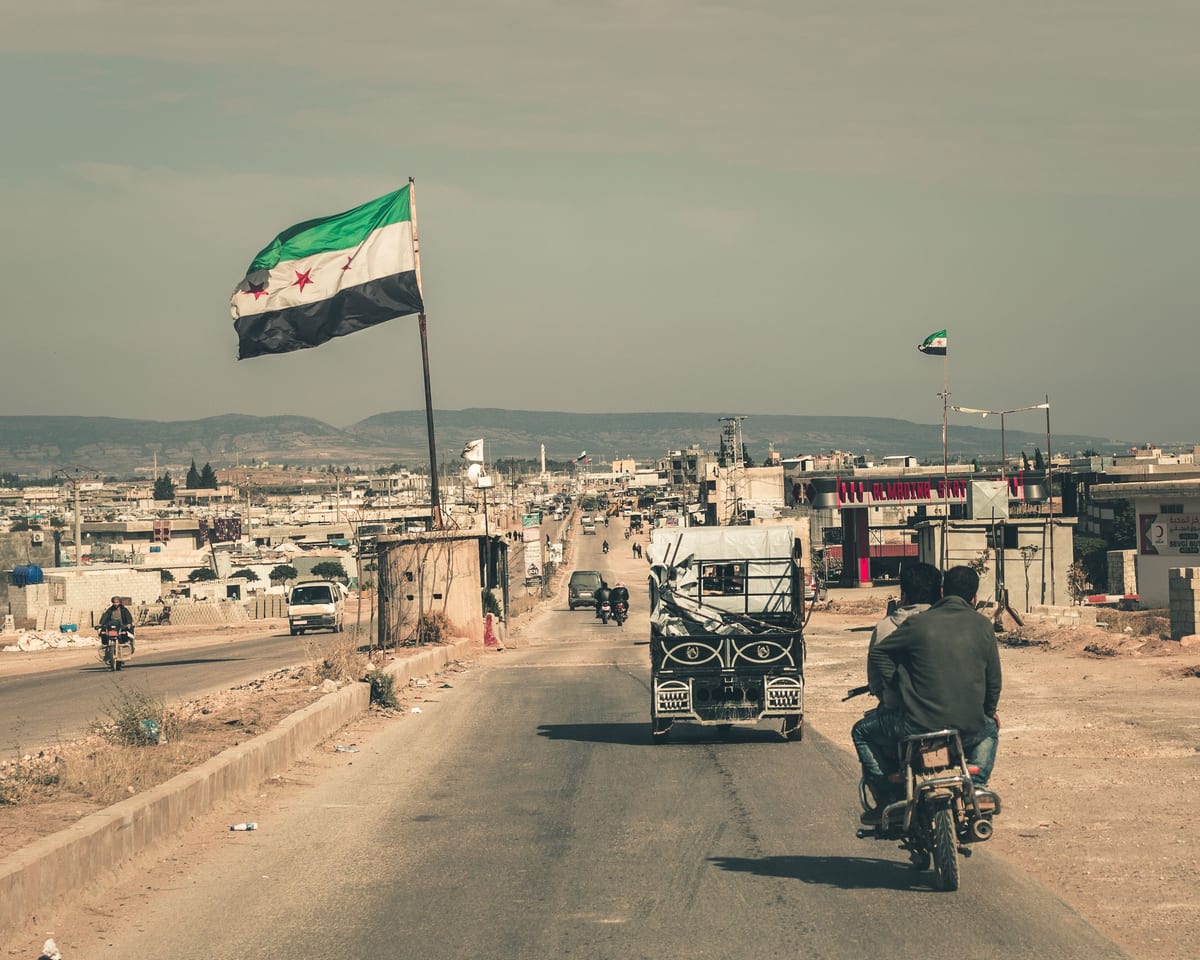
The United Nations Security Council convened on 17 September 2026 to hear briefings on Syria's political transition, now complicated by two immediate challenges: reported deadly armed clashes between government-aligned forces and an ISIS-affiliate in the country's south, and street protests driven by rising fuel prices. The session's live coverage focused on whether Syria can consolidate its post-conflict political order while maintaining control of its southern periphery.
"While Syria is making progress in its political transition, the Security Council is meeting to hear briefings and discuss the situation on the ground, including recent reports of deadly armed clashes with an ISIS-affiliate terrorist group in the south and protests over rising fuel prices."
UN News framed the session that way. The dual agenda reflects a transition that remains uneven: political progress in parts of the country, security erosion in others.
A transition not yet consolidated
Syria has moved further along a post-conflict political road than many outside observers expected, but the Security Council's attention to the south signals that control remains patchy. The ISIS-affiliate, identified in the UN News dispatch only as an affiliate, has been involved in deadly clashes. That the fighting is taking place in southern Syria rather than in the group's older eastern strongholds suggests an operational shift worth monitoring.
The fuel protests add economic pressure to a transition that depends on the state's ability to deliver basic services. Fuel affordability has become a test of post-conflict governance across the region. Syria's economy has little room to absorb price shocks without triggering street-level anger that security forces must then manage. The Security Council's discussion is therefore about arms and about the political durability that comes from functioning fuel distribution and credible economic relief.
Fuel price shocks in Syria do not stay contained. Lebanon and Jordan have already absorbed Syrian refugee flows, and rising transport costs inside Syria can push more movement across borders, including toward Gulf-linked economies that host Indian workers. That regional spillover widens the agenda beyond the immediate question of who controls which town in the south.
The ISIS shadow over India's security
For New Delhi, the southern Syria clash carries a specific legacy. Indian counterterrorism agencies have repeatedly traced Islamic State-inspired recruitment to modules that used Syrian territory for coordination and ideological grooming. If the affiliate consolidates a safe zone in the south, the network effect can travel beyond the Levant: encrypted recruitment pipelines, diaspora-handler relationships, and radicalisation content tailored for South Asian audiences have moved along such routes before.
The Security Council's concern about an ISIS-affiliate group is not a distant matter of Middle East stability alone. Kabir Taneja of the Observer Research Foundation has argued that a resurgence of the group in Syria would strengthen its South Asia franchise and online radicalisation networks aimed at Indian youth. That assessment matches the pattern Indian agencies have documented since the group's earlier territorial peak.
The link to South Asia is not abstract. Islamic State's regional franchises have shown an ability to use Syrian contacts for attack planning. Indian agencies have at various points disrupted modules that communicated with handlers in Syria before attempting operations. That history turns the southern Syria affiliate into a priority for intelligence-sharing, not a secondary concern.
India's diplomatic line: ownership, not intervention
India has held a consistent position since the 2024 regime change: the transition must be Syrian-led and Syrian-owned, consistent with UN Security Council Resolution 2254, and must preserve Syria's sovereignty, unity, and territorial integrity. New Delhi has not endorsed any faction, has supported humanitarian assistance, and has opposed any return of ISIS or affiliated groups to Syrian territory. The position allows India to work with regional powers without being drawn into their intra-Syrian rivalries.
The fuel protests matter to that stance because they test whether the Syrian state can govern rather than merely hold ground. A transition that cannot deliver economic relief invites the kind of security vacuum that jihadist groups exploit. For India, whose diplomatic capital in West Asia rests on reliability and non-interference, a collapsing Syrian transition would erode the predictability New Delhi has quietly cultivated across the Gulf and the Eastern Mediterranean.
India's humanitarian record in Syria has been quiet but not insignificant. The challenge now is to link future reconstruction assistance to guarantees for minority communities and the safety of Indian nationals. That is not conditionality in the punitive sense; it is an operational requirement for any credible Indian footprint in Syrian recovery.
Energy, diaspora, and ungoverned space
West Asia remains the source of a large share of India's crude imports, and more than nine million Indian nationals live and work across the region. The fuel protests inside Syria are one symptom of broader instability that can bleed into Gulf shipping lanes and price benchmarks. A deeper Syrian security breakdown would not only complicate the small Indian community still in Damascus; it would force Indian consular and energy planners to account for a more volatile corridor connecting Mediterranean terminals to Red Sea routes.
The southern front also raises the question of ungoverned space. When state authority cannot project into border areas, cells can operate, train, and communicate with near impunity. Indian security planning has learned to track such spaces elsewhere. Syria's south could become another node if the transition stalls.
India's energy planners watch Syrian instability for a specific reason: any military escalation near the eastern Mediterranean or Jordanian border can alter risk premia on tanker routes serving Indian refineries. Even short-lived spikes in shipping insurance costs feed into the landed price of crude at Indian ports.
What the Security Council can and cannot do
The Security Council can endorse transition benchmarks, call for restraint in the south, and urge the protection of civilians. It cannot easily alter the military balance on the ground, nor can it quickly restore fuel affordability. The value of the session lies in making clear that the international community is watching the southern front before it becomes a second front for ISIS offshoots.
For India, the productive response is not rhetorical alignment with any Syrian faction but operational coordination with Gulf and Levantine partners on counterterrorism intelligence. The capitals with the best visibility into ISIS-affiliate movements are also the ones that host Indian security liaison officers and share a mutual interest in preventing Syrian territory from again becoming a recruitment hub for South Asian networks. New Delhi's Voice of the Global South format offers a ready channel for that message: Syrian ownership, not external imposition.
The southern Syria clashes may recede from headlines within days, but the structural question will persist: can a post-conflict Syrian state deny ISIS affiliates the one commodity they need most, ungoverned space? India's stake is not in which Syrian leader governs; it is in ensuring that the answer to that question is yes, and that the recruitment routes that once reached Indian cities remain closed.