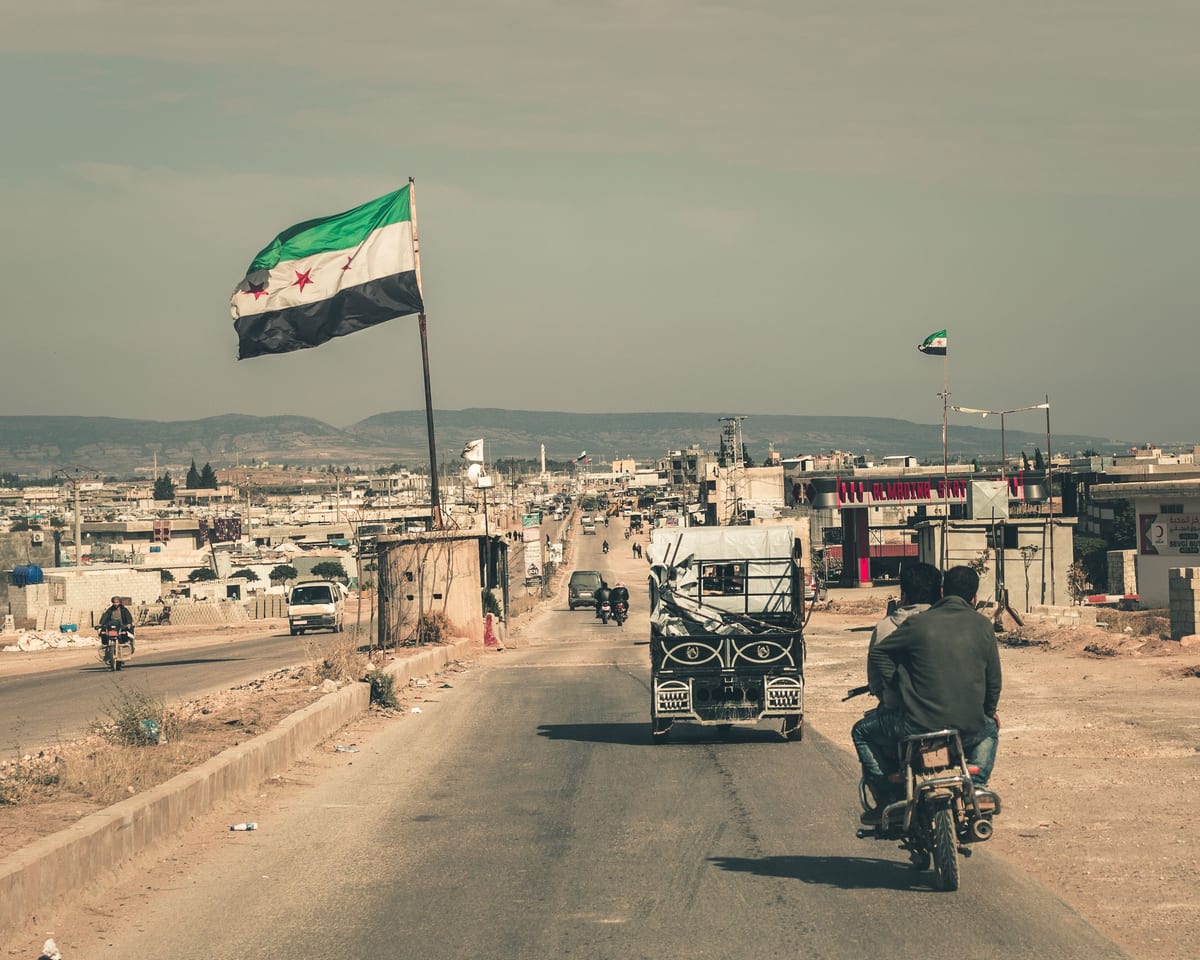

On 9 September 2026, the United Kingdom told the International Atomic Energy Agency Board of Governors that Syria has taken "significant steps" to resolve nuclear safeguards issues "outstanding for fifteen years." The statement, delivered by Sonia Farrey for the Foreign, Commonwealth & Development Office, opened a Vienna debate that will test the board's cohesion and, for India, the limits of its non-aligned nuclear diplomacy. The full transcript is here.
The UK laid out three points. First, it congratulated Damascus for constructive engagement with the Agency, including the Director General's visits, after years in which cooperation was absent. London recognised "extensive efforts" during national recovery and transition, and encouraged Syria to sign and bring into force an Additional Protocol. Second, the statement credited the IAEA's "professional approach" and said verified evidence now shows the Assad regime "built an undeclared nuclear reactor at Diar Al Zour." It urged the Agency to continue safeguards and verification activities and Syria to maintain "full, timely and transparent cooperation." Third, the Board was right to keep the item on its agenda; the published transcript ends before that thought concludes.
A Fifteen-Year File Reopens
The safeguards file has remained open since the reactor's discovery. The IAEA's inability to resolve it owed to a decade and a half of Syrian refusal, not to a lack of investigative rigour. The UK statement now offers a narrative shift: Syria, no longer the Assad family's instrument, has begun to cooperate. That shift matters less for what it reveals about Damascus and more for how the Board treats states that move from obstruction to cooperation.
The change is real. The Director General's report, as the UK described it, documents a Syria that has taken steps to address the Assad legacy. The visits to Damascus mark a break from the obstruction that defined the file for fifteen years. Verification is a slow and patient trade.
The Politics of Praise
London's language is not neutral. It speaks of "the legacy of the Assad regime," a phrase that frames the nuclear file inside a political transition the UK supports. It also calls on member states to assist Syria "where appropriate" and positions the Additional Protocol as the next benchmark. That is a push for a particular kind of compliance: not just answering old questions, but adopting the stronger inspection tools that most Western states consider standard for a state emerging from isolation. Other board members will hear the same words differently.
For India, that difference is the point. New Delhi sits on the Board and has consistently argued that IAEA verification should stay technical, not become a lever for regime judgment. The UK statement praises Syria's cooperation; it does not demand punishment for the past. But its framing of the Assad regime's reactor as a crime of the previous government edges toward a verdict the IAEA's safeguards mandate does not require.
New Delhi's Board Calculus
India has not issued a public response to the UK statement. Its record is established. In BRICS declarations and earlier IAEA interventions, India has backed Syria's full cooperation with the Agency while opposing politicization and external pressure. India's broader Syria policy has consistently stressed territorial integrity and a Syrian-led political process. That gives Indian officials a second reason to avoid the UK's framing: it links nuclear compliance to the legitimacy of a particular transition, a link that can be turned against any state whose government the West dislikes.
The stakes for New Delhi are practical. Its vote, along with Russia and Brazil, can shift whether the Board keeps the Syria file in technical language or drifts toward a political referral. India's own nuclear status outside the Nuclear Non-Proliferation Treaty makes it wary of any Board action that treats non-NPT states as suspects by default. The same principle that protects India's strategic autonomy also argues for giving Syria time to comply.
That does not mean India will block the UK's approach. Delhi compartmentalises its bilateral ties with London from its multilateral positions, and it will likely welcome the IAEA's continued verification access. But India will not endorse a narrative that links Syria's past reactor to the legitimacy of the current government in Damascus, because that link is not the IAEA's to draw.
A Calibrated Path
What should India do? The most defensible move is a short board statement that welcomes Syria's cooperation, urges the Agency to maintain safeguards verification, and cautions against unilateral measures. That would align Delhi with the technical consensus while leaving London's political framing to London. It would also give India a record of having supported verification without endorsing a regime-change narrative.
Coordinating with Russia and Brazil would strengthen that line, but India does not need their permission. Indian diplomats have learned to separate verification from political judgement. The Syria file is a chance to apply that distinction in a forum where the West often blurs it.
The Board's Next Move
The United Kingdom has said Syria should sign an Additional Protocol and let the IAEA's inspections become permanent. That is the natural endpoint of a file that began with a hidden reactor and fifteen years of denial. If Damascus follows through, the Board will have a success story few expected. If not, the old arguments will return, and the next UK statement will sound less generous.
India's role in that sequence is not to choose between London and Damascus, but to hold the line where IAEA authority is strongest: verification of facts, not validation of governments. That line has kept the Board functional through crises elsewhere. It can hold for Syria too.
Indian readers should watch how the Board's Syria resolution is worded, because that wording will reveal whether the IAEA remains a technical agency or becomes another arena for political contests. New Delhi's board seat is one of the few places where a state that sits outside the NPT can still argue for non-politicized verification. The UK statement, however well intentioned, invites exactly the kind of slippage India has long resisted. Holding the line against that slippage is not obstruction; it is the quiet defence of a verification system that developing states, including India, have reason to protect.