There is a moment, somewhere between the bus dropping you at the dusty edge of Bodh Gaya's main road and your first glimpse of the soaring spire of the Mahabodhi Temple, when time does something unusual. It folds. The Bihar sun beats down as it always has, the crows argue in the pipul trees, monks in saffron and burgundy move quietly along the paths, and you understand, suddenly and without ceremony, that you are standing inside one of the longest unbroken stories in human history.
The Ground Beneath the Tree
Bodh Gaya sits on the banks of the Phalgu River in the Gaya district of Bihar, approximately 13 kilometres from the city of Gaya. It is here, according to Buddhist tradition, that the young ascetic Siddhartha Gautama, after years of wandering and self-mortification, sat beneath a sacred fig tree, resolved not to rise until he had found the answers he sought, and attained Bodhi: awakening, enlightenment. From that single night of clarity emerged a philosophy that would reshape the moral and spiritual imagination of half the world.
The descendant of that very tree, the Bodhi Tree, still stands at the heart of the Mahabodhi Temple Complex, a UNESCO World Heritage Site. The temple itself, soaring nearly 55 metres into the Bihar sky, was originally built by Emperor Ashoka in the 3rd century BCE and later elaborated over centuries of devotion. It is one of the oldest brick structures in the Indian subcontinent. Monks prostrate before it. Lamps are lit. Prayers rise into the heat. The temple does not feel like a museum. It feels like a living organ of a civilisation that has not stopped beating.
A Place That Belongs to the World, Rooted in India
What strikes every visitor to Bodh Gaya is its extraordinary internationalism, worn lightly over a deeply Indian foundation. Walk the streets around the Mahabodhi Complex and you will find monasteries built by Japan, Thailand, Bhutan, China, Sri Lanka, Tibet, Myanmar, and South Korea. Tibetan monks chant their morning prayers beside Japanese stone lanterns. Thai pilgrims circumambulate the temple alongside farmers from Maharashtra and students from Sikkim.
And yet, at the centre of it all, is India. The Mahabodhi Temple's architecture, its soaring shikhara, its stone carvings, its ancient votive stupas, is distinctly, unmistakably of this land. The story of the Buddha is an Indian story: of a prince born in what is now Nepal, who walked the plains of the Gangetic heartland, who found his answer here in Bihar, who first taught in Sarnath in Uttar Pradesh. Buddhism did not emerge despite India's philosophical tradition. It emerged from within it, in conversation with the Upanishads, with the Jain thinkers, with the wandering shramana movements of the Gangetic plain. Bodh Gaya is where that conversation reached its most luminous conclusion.
What Visitors Experience
The Mahabodhi Temple Complex is the spiritual and physical heart of any visit. The Vajrasana, the diamond throne, marks the exact spot where the Buddha is believed to have sat during his enlightenment. The Bodhi Tree spreads its great branches overhead, its leaves catching the light. Around the complex, the Animesh Lochana Chaitya, the Ratnachankrama, and the Lotus Pond each mark different sites of the Buddha's post-enlightenment weeks. Pilgrims move through these in reverent circuits, some in silence, some murmuring mantras, some simply sitting with their eyes closed in private practice.
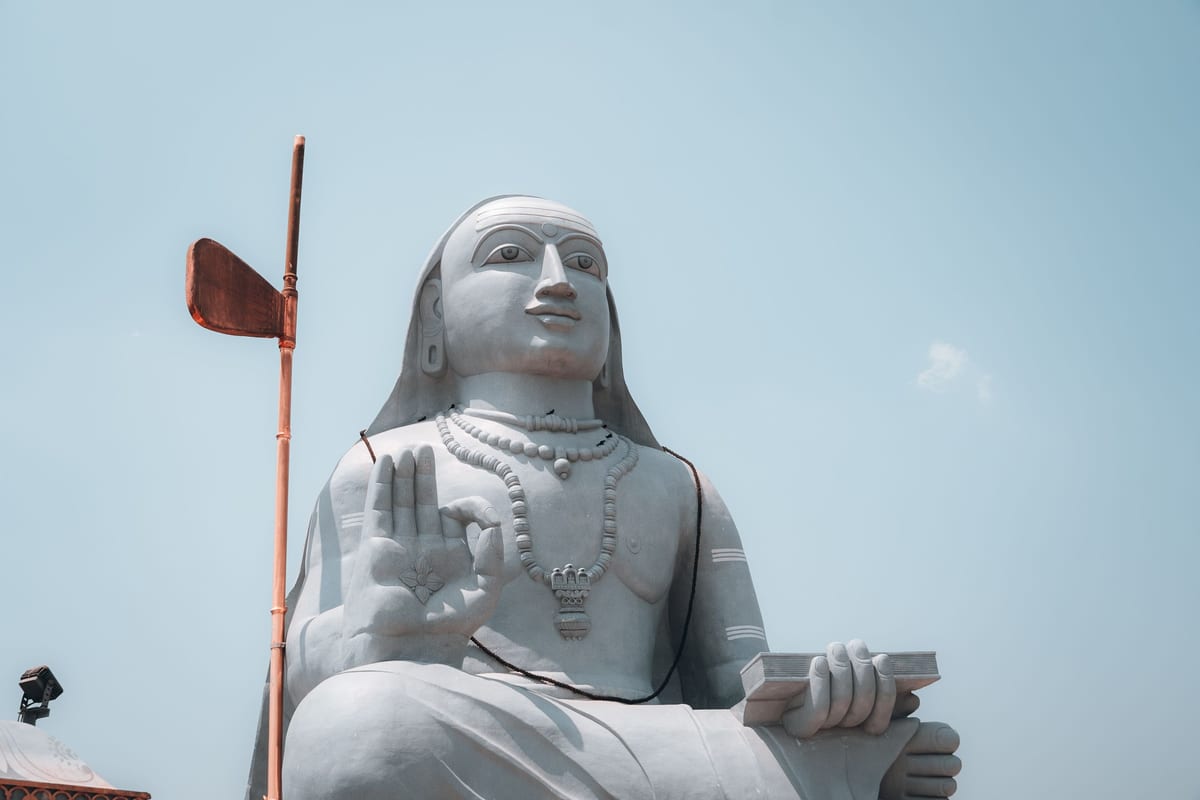
Beyond the main complex, Bodh Gaya rewards the curious wanderer. The 25-metre-tall Great Buddha Statue, installed in 1989, is a serene landmark. The Archaeological Museum houses a collection of sculptures and antiquities from the region. The international monasteries, open to respectful visitors, offer windows into living Buddhist traditions from across Asia, their architecture, their rituals, their artwork each subtly different and equally sincere.
Nearby Attractions
Bodh Gaya sits within a remarkable cluster of sacred geography. Gaya city, just 13 kilometres away, is a major Hindu pilgrimage site where families perform the Pind Daan rituals for their ancestors. Rajgir, about 78 kilometres from Bodh Gaya, was the capital of the Magadha kingdom and a place where both the Buddha and Mahavira spent significant time; its hills and hot springs carry centuries of memory. Nalanda, another hour's drive, was once the greatest university in the ancient world. Its ruins, now a UNESCO World Heritage Site, continue to astonish visitors with the scale of what was lost and what was preserved in the cultures it shaped.
Best Time to Visit and How to Reach
The ideal time to visit Bodh Gaya is between October and March, when the weather is cool and pleasant. The winter months coincide with major Buddhist festivals and international gatherings that bring the town's spiritual energy to a vivid pitch. The Tibetan New Year celebrations and the Kalachakra festivals, when held here, draw tens of thousands of devotees. Summers in Bihar are intensely hot and best avoided.
Gaya Airport, just a few kilometres from the temple complex, receives flights connecting to major Indian cities. Gaya Junction is a well-connected railway station on the Grand Chord line, with trains arriving from Delhi, Kolkata, Mumbai, and beyond. From Gaya, Bodh Gaya is easily reached by auto-rickshaw, taxi, or shared tempo. For those driving, the town is accessible via National Highway 83.
Why Bodh Gaya Matters
India has many ancient places. It has deserts and coasts, hill temples and river ghats, fort cities and forest shrines. What makes Bodh Gaya singular is the fact that here, on this specific patch of earth beside this specific river, something happened that changed the way millions of human beings understood suffering, consciousness, and the possibility of liberation. That understanding is still being worked out, still being lived, still being carried forward by communities on every continent.
That is what India's civilisational heritage means at its deepest. Not monuments frozen in amber. Not a glorious past to be displayed behind glass. But ideas that were born here, that went out into the world, and that came back transformed, only to find the tree still standing, the lamps still burning, the prayers still rising from the ancient stone. Bodh Gaya is India at its most quietly confident: not announcing its importance, simply continuing to be it.