There is a moment, just before you see it, when the cedar forest closes around you like a secret. The air cools. The light turns amber-green. The noise of Manali's bazaar falls away. And then, rising from the dark deodar canopy, you catch the first glimpse of a four-tiered pagoda roof crowned with a brass finial, and something in you goes very still.
This is the Hidimba Devi Temple, one of the most beloved and distinctive shrines in Himachal Pradesh. It does not announce itself with grandeur. It earns your reverence slowly, the way all truly great things do.
A Goddess from the Epic Age
To understand Hidimba Temple, you must first understand who Hidimba was, and why her story endures. In the Mahabharata, Hidimba is a rakshasi, a forest-dwelling demoness, who falls in love with the Pandava hero Bhima. She marries him, bears his son Ghatotkacha, and is remembered not as a villain but as a devoted mother, a protector of her people, and a figure of formidable grace. In the Kullu valley, she is not a character in a text. She is a goddess, a kuldevi, a clan deity, revered by the people of this region as a living presence.
That continuity spans thousands of years. Long before the temple structure was built, the people of this Himalayan valley worshipped this forest queen. The temple we see today was constructed in 1553 CE by Raja Bahadur Singh, the ruler of Kullu, but the sanctity of the site is far older. The deity's footprints, believed to be Hidimba's own, are enshrined within the inner sanctum, a detail that merges myth and geography in the most direct way.
Architecture That Belongs to Its Forest
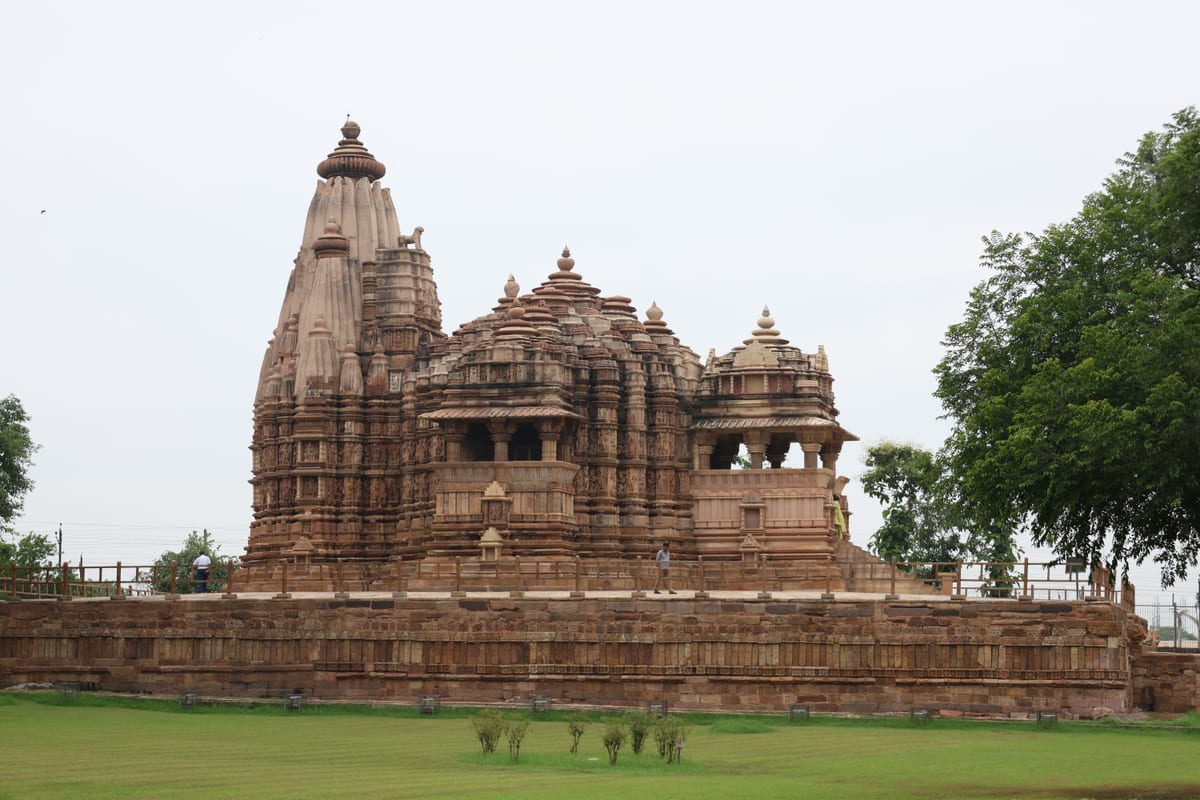
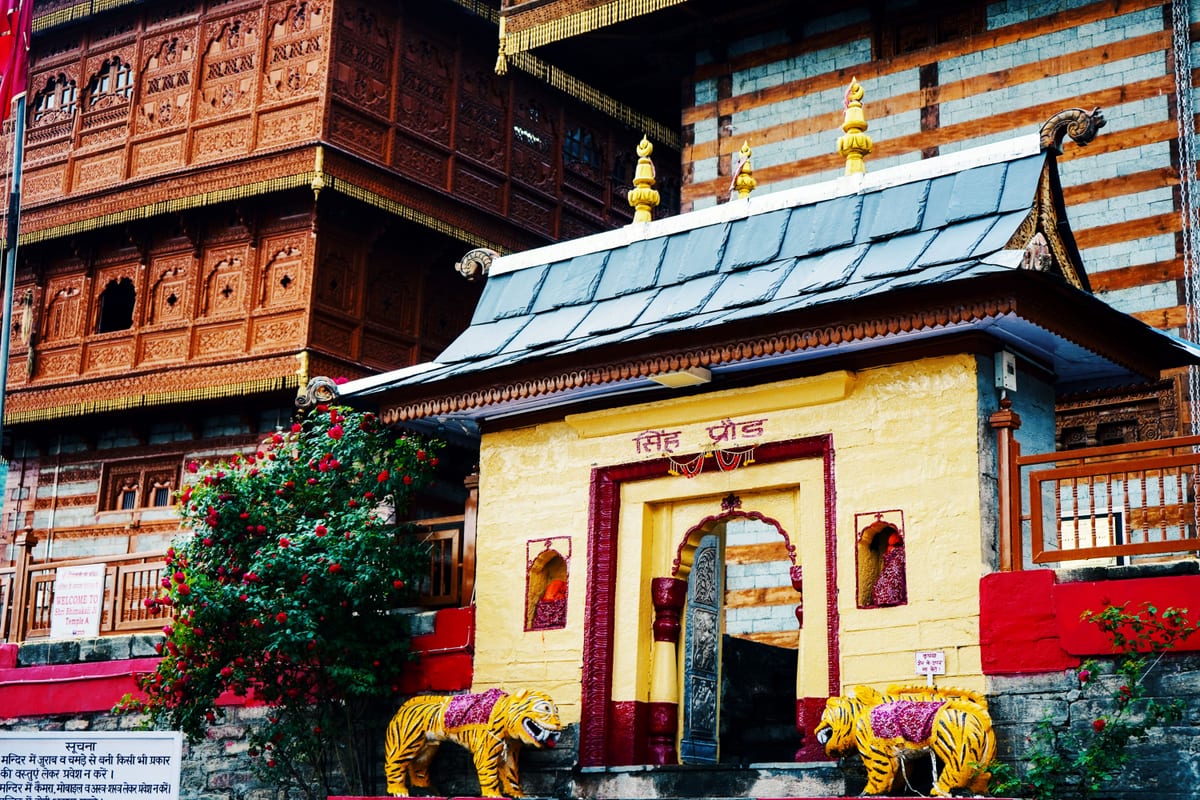
The temple's architecture is a conversation between human craft and natural material. Built entirely of wood and stone in the shikhara style, though with a distinctly Himalayan character, it rises in four storeys, each tier slightly smaller than the one below, topped by a conical roof covered in wooden shingles and brass work. The entrance doorway is an exercise in devotional artistry: carved panels depicting deities, animals, and figures from Hindu mythology crowd every inch of the frame, drawing the eye upward and inward simultaneously.
Unlike the gleaming marble temples of the plains, Hidimba Temple is dark-timbered, mossy at the edges, and entirely at home in its forest setting. It does not impose on the landscape. It grows from it. Himalayan sacred architecture here is built to shelter devotion, not to perform power.
The Living Ritual of Dhalpur and Dussehra
What makes Hidimba Temple a living civilisational document is the Kullu Dussehra festival, one of India's most spectacular regional celebrations. Each October, Hidimba Devi's palanquin leads the grand procession of deities from across the valley to the Dhalpur maidan in Kullu town, a tradition that makes the goddess not a statue in a shrine but an active participant in community life. She is consulted, carried, celebrated, and returned. This is not ritual preserved for tourists. It is a living social contract between a people and their sacred world.
Even on ordinary days, the temple pulses with quiet devotion. Locals arrive to seek blessings, tie sacred threads to the trees outside, and leave offerings. The rhythm of puja, the smell of incense threading through cold mountain air, the bells, these are not performances of heritage. They are heritage, unbroken.
What Visitors Experience
Walking through the deodar forest to reach the temple is itself an act of arrival. The Dhungri Van Vihar, the forest reserve surrounding the temple, is a protected cedar grove that feels ancient and unhurried. Many visitors find that simply sitting in this forest, watching light fall through the branches, is as nourishing as the temple visit itself.
Inside the sanctum, the idol of Hidimba Devi is small and simply adorned, a reminder that in Indian temple culture, presence outweighs spectacle. Outside, a smaller shrine dedicated to Ghatotkacha, Hidimba's son, stands nearby, completing the family narrative in stone and wood.
The temple complex also sits close to Old Manali village, where you can explore traditional Himachali architecture, local weaving, and the kind of unhurried café culture that has made this stretch of the Beas valley beloved by travellers for decades.
Practical Travel Guide
Best Time to Visit: The temple is accessible year-round, but the most rewarding seasons are March to June, when the valley blooms with wildflowers and the deodar forest is a vivid, living green, and September to November, which captures the golden post-monsoon light and, if timed right, the grandeur of Kullu Dussehra. Winter visits (December to February) offer a snow-dusted temple of rare beauty, though Manali's higher roads may be closed.
How to Reach: Manali is well connected by road from Delhi (approximately 540 km, best covered overnight by Volvo bus), Chandigarh (310 km), and Shimla (260 km). The nearest airport is Bhuntar (Kullu-Manali Airport), roughly 50 km from Manali. From the town centre, the temple is an easy walk of about 2 km, or a short taxi or auto-rickshaw ride to the forest entrance.
Nearby Attractions: Combine your visit with the Manu Temple in Old Manali, the Vashisht hot springs and temple complex, Solang Valley for high-altitude views, and, for the more adventurous, the Rohtang Pass (subject to seasonal permits). The Mall Road in Manali offers local handicrafts, Himachali woollens, and market-fresh apricots and walnuts in season.
Why This Temple Matters
India's heritage story is too often told through monuments, things built, things conquered, things endured. Hidimba Temple offers a different narrative: the deepest layer of Indian civilisation is relational. It is the ongoing relationship between a people and their sacred landscape, between a community and the stories it has chosen to live inside.
Hidimba was a forest woman, a figure on the margins of the Mahabharata's martial world. And yet here, in this cedar grove in the Kullu valley, she reigns. Her footprints are worshipped. Her palanquin leads festivals. Her temple stands not because a king commanded it but because generations of ordinary people kept returning, kept believing, kept renewing the covenant.
That is what civilisational continuity looks like when it is healthy. Not a museum. Not a monument. A conversation, still ongoing, still warm, still alive under the deodar trees.