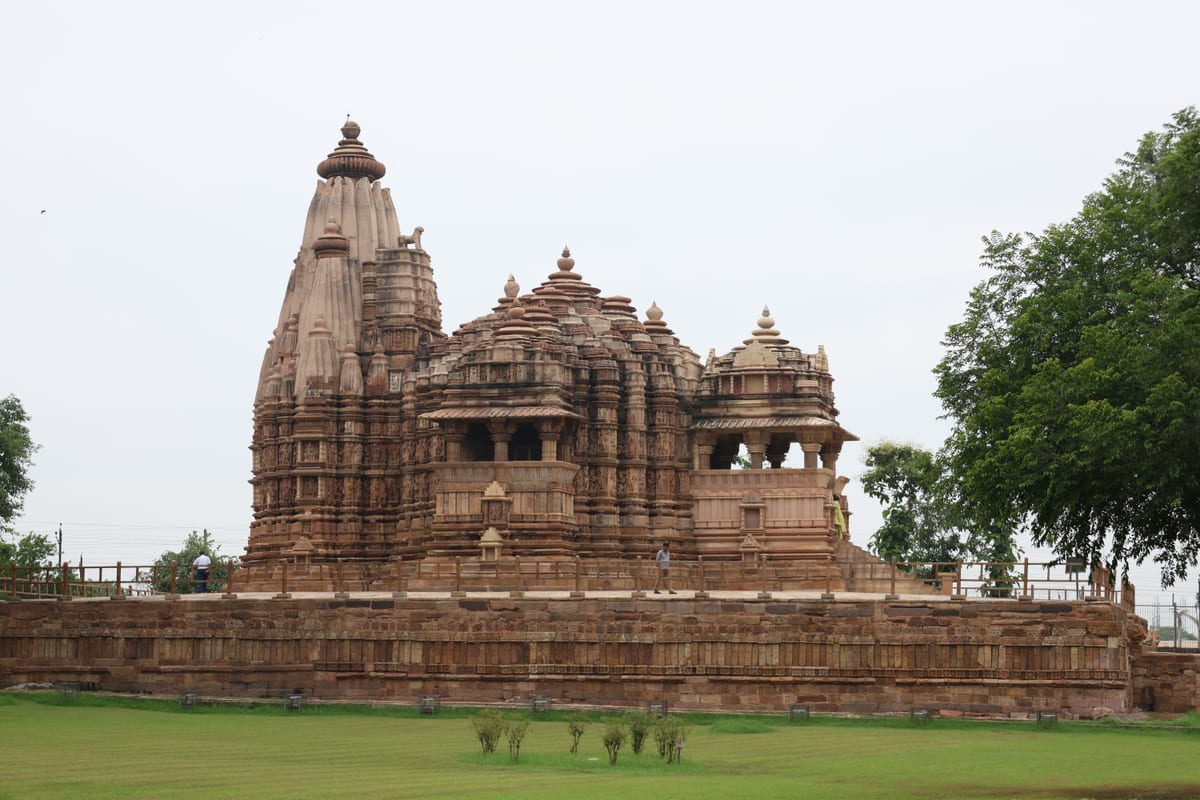
There is a moment, somewhere between the first glimpse of a temple spire rising above the flat Madhya Pradesh plains and the instant you stand close enough to trace a sculptor's chisel mark with your eye, when Khajuraho stops being a destination and becomes a revelation. This is a place where stone was not merely shaped, it was inhabited. Medieval artisans working under the patronage of the Chandela Rajputs left behind something so alive that a thousand years of wind, rain, and history have failed to silence it.
Welcome to Khajuraho, a small town in the Chhatarpur district of Madhya Pradesh, and home to one of India's most extraordinary UNESCO World Heritage Sites, the Khajuraho Group of Monuments, widely celebrated as one of India's seven wonders. If you have come looking for history, you will find it. If you have come looking for art, you will be overwhelmed. If you have come looking for India's civilisational soul, that thread of continuity stretching from antiquity into the present, Khajuraho will not disappoint.
A Dynasty's Gift to Eternity
From the 9th to the 12th century AD, Khajuraho was the capital of the powerful Chandela dynasty, whose rule extended across a vast expanse of central India. At the height of their reign, local legends speak of an astonishing 85 temples built here, consecrated to both Hindu and Jain deities. Time, conquest, and the slow reclamation of jungle have reduced that number, but 20 of these architectural marvels survive today, spread across six square kilometres of landscape that feels both ancient and arrestingly immediate.
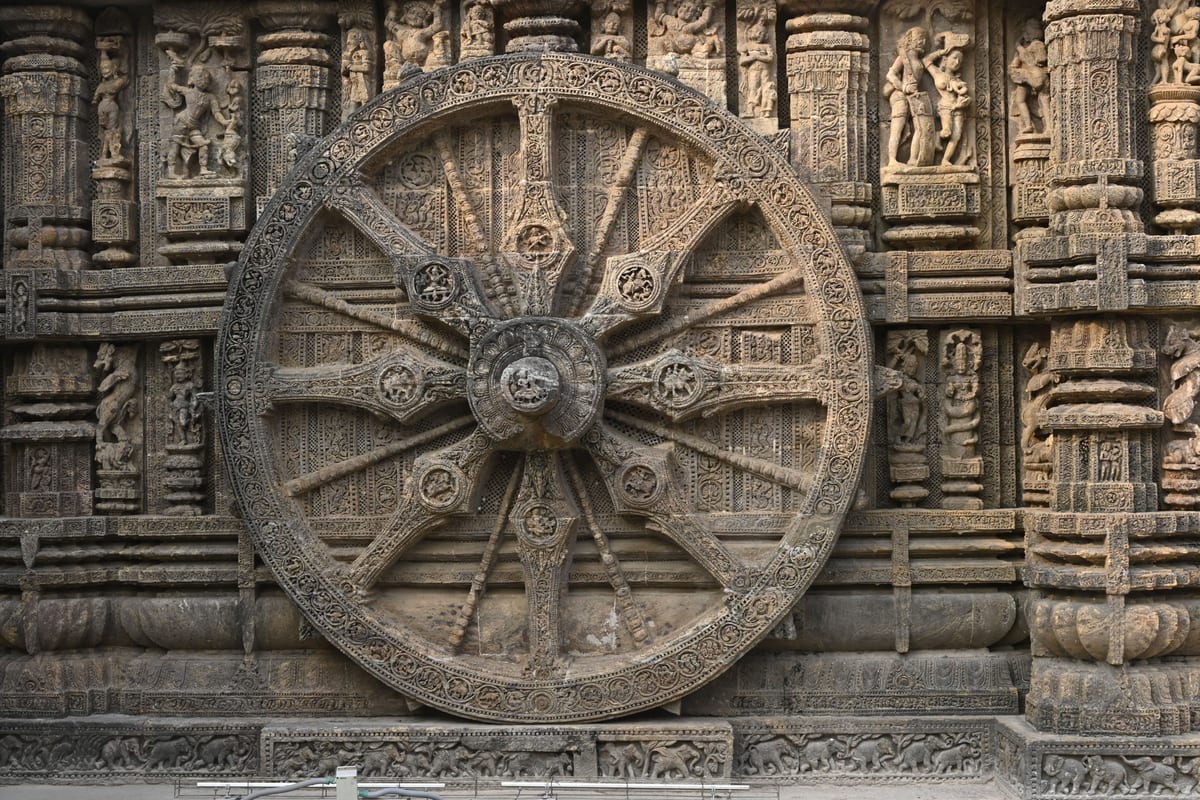
The temples were not built as monuments to power alone. They were built as a philosophy made visible. Every carved surface, and there are thousands of figures across these structures, participates in a theological argument: that the full range of human experience, from the celestial to the carnal, from warriors to lovers to celestial beings, is not separate from the sacred but woven into it. The famous erotic sculptures that adorn these temples, and which have made Khajuraho internationally notorious, are only one thread in the visual program. To reduce Khajuraho to its erotic carvings is like reading a single stanza of the Mahabharata and declaring you understand the epic.
The Curious Mystery of the Name
Even the name of this place carries a story. The earliest textual reference to Khajuraho appears in an inscription at the celebrated Visvanatha temple, attributed to King Dhanga Dev, where the site is called Kharjur Vahak. When British scholars encountered this term, they interpreted it as Kharjur Vatika, a garden of date palms, and a romantic legend was born. But the distinguished art historian Dr Devangana Desai, in her authoritative work The Religious Imagery of Khajuraho, offers a different reading: that Kharjurvahika more accurately means 'carrier of the scorpion', derived from the term Kharjur. The name, like the place itself, resists easy definition.
Walking Through the Temples: What You Will Experience
The surviving temples are typically grouped into three clusters, the Western, Eastern, and Southern groups, with the Western Group being the largest and most visited. The Lakshmana Temple, with its intricate shikhara and richly carved exterior friezes, is among the finest examples of Nagara-style temple architecture in India. The Kandariya Mahadeva Temple rises to a height that feels almost defiant against the flat horizon, its vertical thrust a visual analogy for the soul's aspiration toward the divine. The Chaturbhuja Temple in the Southern group houses a magnificent four-armed image of Vishnu that radiates a serene, timeless authority.
What strikes most thoughtful visitors is not the grandeur of individual structures but the cumulative effect of walking among them: the sense that you are inside a coherent civilisational vision, one that saw no conflict between spiritual devotion and aesthetic exuberance. India did not always build temples as solemn, austere places. At Khajuraho, it built them as celebrations.
India's Living Heritage, Not a Museum Piece
It would be easy, and lazy, to frame Khajuraho as a ruin, a beautiful remnant of a vanished world. The philosophical tradition that the Chandela temples embody, the understanding that the cosmos is not divided into sacred and profane, that life in all its forms is worthy of reverent attention, did not disappear when the dynasty faded. It runs through Indian aesthetics, literature, classical dance, and devotional practice to this day. When a Bharatanatyam dancer performs the navarasas, she draws from the same civilisational well that the Khajuraho sculptors drank from. This makes Khajuraho not merely historically significant, but culturally urgent: a mirror in which contemporary India can still recognise itself.
When to Visit and How to Get There
The best time to visit Khajuraho is between October and March, when temperatures are comfortable and the light, particularly in the early morning hours, falls across the sandstone carvings in ways that seem almost theatrical in their beauty. The town experiences intense heat between April and June, with temperatures climbing well above 40°C, and while the monsoon months from July to September bring some relief, the experience is best savoured in the cooler half of the year.
Reaching Khajuraho is straightforward. The town has its own airport, Khajuraho Airport (HJR), with connections to Delhi, Varanasi, and other major cities. For those who prefer the romance of rail travel, Khajuraho Railway Station (KURJ) is well connected to the broader Indian rail network. From either point, local transport options are readily available into the town centre and the temple complexes.
Beyond the Temples: The Wider Region
Khajuraho sits within reach of several other remarkable destinations in Madhya Pradesh. Panna National Park, just a short drive away, is one of India's celebrated tiger reserves and offers a dramatic counterpoint to the temples, raw wilderness against ancient stone. The town of Orchha, with its own extraordinary cluster of Bundela-era cenotaphs and palaces, makes for a compelling extension to any Khajuraho itinerary. Varanasi, one of the world's oldest continuously inhabited cities, is accessible from Khajuraho by air or rail, inviting travellers to deepen their engagement with the Gangetic civilisational world of which Khajuraho was always a part.
A Final Word
Khajuraho will reward every kind of traveller: the art historian, the casual tourist, the photographer chasing golden-hour light, the pilgrim in search of something harder to name. But it will reward most generously those who come with patience and curiosity, who are willing to stand before a carved panel not to decode it, but to be in conversation with it. In that conversation, across a thousand years, an entire civilisation is still speaking.