Bodh Gaya, a quiet town on the banks of the Phalgu River in Bihar, is where Siddhartha Gautama sat beneath a pipal tree on a full-moon night in the fifth century BCE and became the Buddha, the Awakened One. What happened here rippled outward across Asia, across centuries, and eventually across the entire world. The place itself endures.
The Weight of a Single Moment
Most heritage destinations ask you to imagine the past. Bodh Gaya asks you to recognise that the past never quite left. The Bodhi Tree — a direct descendant of the original tree under which the Buddha sat — still spreads its canopy over the western wall of the Mahabodhi Temple. Pilgrims still press their foreheads to its roots. Monks in saffron and maroon still circumambulate the sacred complex at hours when the rest of the world is asleep. The air carries the low murmur of sutras in Pali, Tibetan, Sinhala, Japanese, and Hindi.
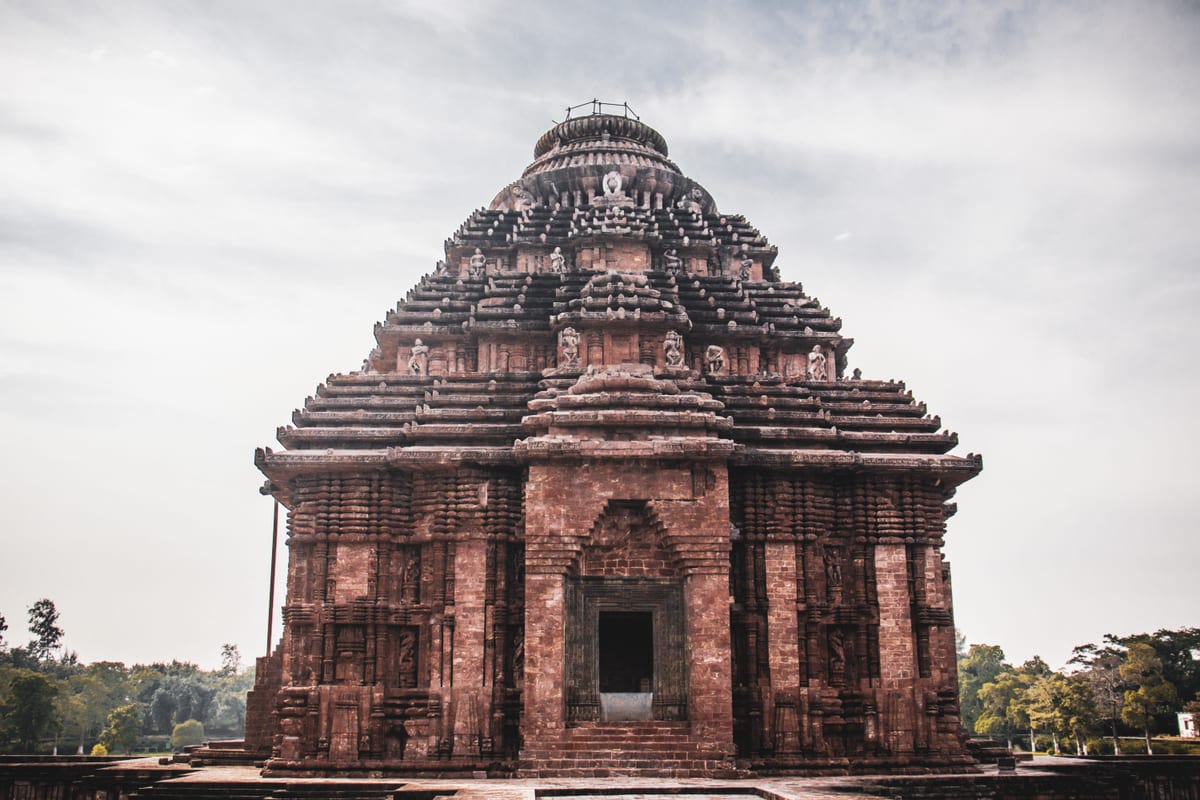
The Mahabodhi Temple is a UNESCO World Heritage Site. Its soaring spire rises nearly 55 metres above the ground and has watched empires rise and fall. Emperor Ashoka, the Mauryan ruler whose conversion to Buddhism in the third century BCE helped carry the Dharma across the known world, is credited with first constructing a shrine at this site. The temple complex as it stands today largely dates to the Gupta period, with carvings, votive stupas, and a sacred lotus pond. Standing before the Vajrasana — the diamond throne, the sandstone slab marking the exact spot of enlightenment — you feel less like a tourist and more like a witness to something unfinished by time.
A Civilisation That Never Lost the Thread
What makes Bodh Gaya extraordinary in India's heritage story is this: it is not a ruin. It is not a monument to something that was. The Buddha's teaching — on impermanence, on compassion, on the middle path — is still practiced, studied, and argued over by hundreds of millions of people. The geographical heart of that teaching remains in a modest town in one of India's least wealthy states.
This is the civilisational argument India makes through Bodh Gaya. When we speak of India's living heritage, we do not mean heritage preserved in aspic, sealed behind glass, protected from the breath of ordinary life. We mean a tradition passed from teacher to student, from mother to child, from monastery to monastery, without interruption — across invasions, famines, colonial disruptions, and the churn of modernity. The Bodhi Tree is not a symbol. It is a fact.
What Visitors Experience
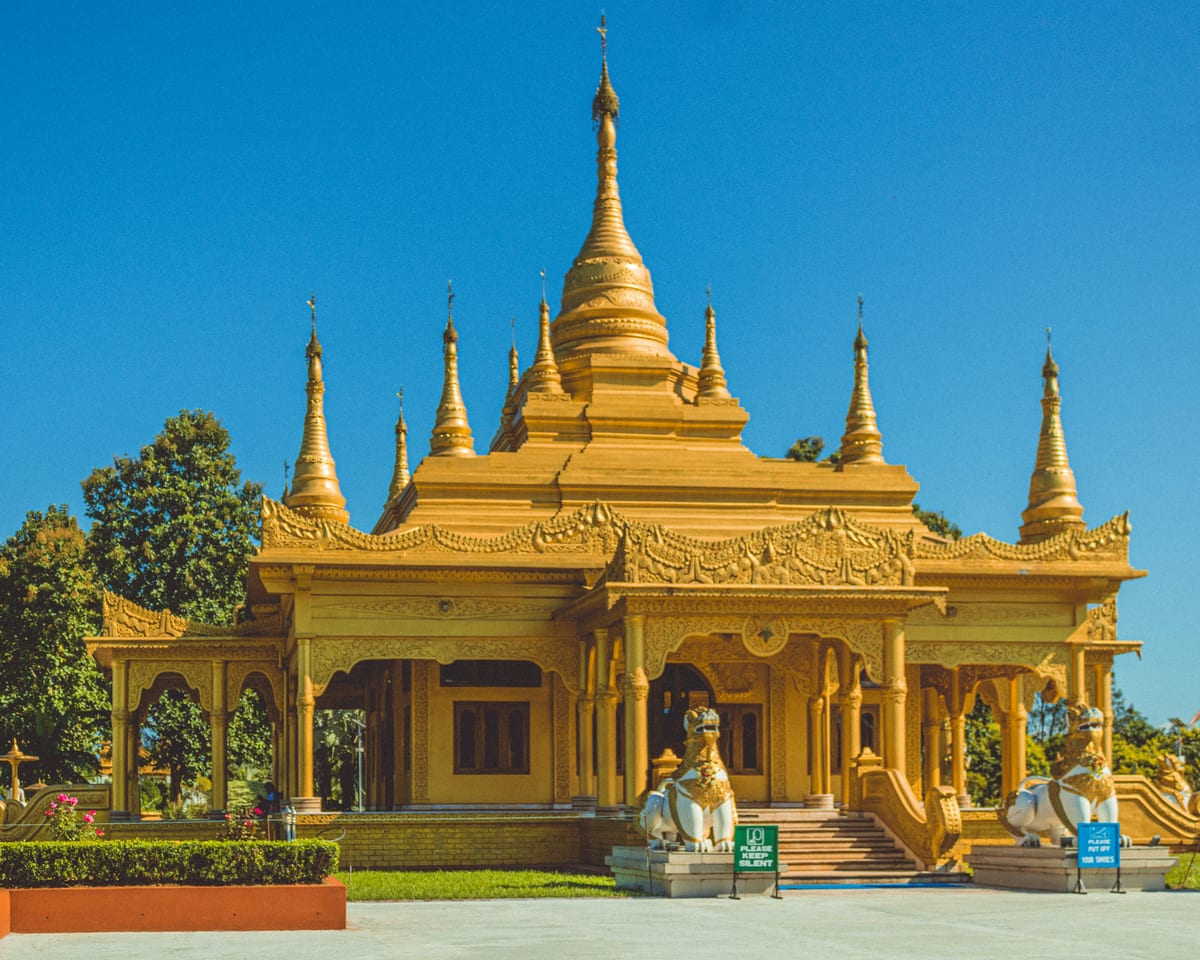
Bodh Gaya today is a remarkable mosaic. Walk through the town and you will encounter monasteries built by Sri Lanka, Japan, Thailand, Bhutan, China, Vietnam, Myanmar, and Korea. The Thai monastery gleams with golden spires. The Japanese temple offers a serene garden. The Tibetan monastery, run by the Dalai Lama's institution, fills the mornings with the resonant drone of horns and the scent of butter lamps.
The Archaeological Museum near the Mahabodhi complex houses sculptures and artefacts spanning centuries. The Great Buddha Statue — a 25-metre stone figure inaugurated in 1989 by the Dalai Lama — presides over a garden park for quiet reflection and photography. At the Sujata Stupa, across the river, you can stand where a young woman is said to have offered the starving Siddhartha a bowl of rice porridge, an act of simple kindness that helped him choose the middle path over asceticism.
Best Time to Visit
The ideal window to visit Bodh Gaya is between October and March, when Bihar's fierce summer heat has passed and the weather is cool and clear. The winter months — particularly November through February — see the largest gatherings of pilgrims and practitioners, including major prayer festivals and the annual Kalachakra ceremony when it is held here. If you visit in December, you may find thousands of monks seated in open-air meditation as the mist rises from the Phalgu.
Avoid the monsoon months of June through September if you can, though even then, the damp greenness of the landscape has its own moody beauty.
How to Reach Bodh Gaya
Bodh Gaya is accessible by air via Gaya Airport, which receives direct flights from several Indian cities and international Buddhist pilgrimage circuits. Gaya is also a major railway junction on the Grand Chord line, well connected to Delhi, Kolkata, Varanasi, and Mumbai. From Gaya town, Bodh Gaya is just 13 kilometres away and easily reached by auto-rickshaw, cab, or cycle-rickshaw. The nearest large city is Patna, Bihar's capital, approximately 110 kilometres north, connected by a fast highway.
Nearby Attractions
Rajgir, about 70 kilometres away, was the capital of the Magadha kingdom and a favourite retreat of the Buddha. Nalanda, once the greatest university the ancient world had ever seen, lies nearby — its ruins a reminder of the intellectual civilisation that flourished in this soil. Gaya city itself, just 13 kilometres away, is a major Hindu pilgrimage site where Hindus perform pind daan, last rites for the departed, on the ghats of the Phalgu. One of Buddhism's holiest sites sits near one of Hinduism's most sacred rituals — faiths coexisting alongside each other, sharing the same river and the same earth.
Why Bodh Gaya Matters
India sometimes struggles to articulate its own depth. In the noise of the contemporary moment, the extraordinary continuity of this civilisation can be easy to overlook. Bodh Gaya does not let you overlook it. Here, the thread from the ancient to the present is not metaphorical — it is botanical, architectural, devotional, and daily. The tree grows. The monks chant. The pilgrims arrive. The stone throne endures.
To visit Bodh Gaya is to understand that India is not merely a country with a long history. It is a civilisation still in conversation with its own greatest questions — about consciousness, about compassion, about what it means to be fully awake. That conversation began here, under a pipal tree, on a full-moon night more than two thousand years ago. It has not stopped since.
For more information on planning your visit, explore the official Bodh Gaya destination guide on Incredible India, the Ministry of Tourism's authoritative resource for travellers.