
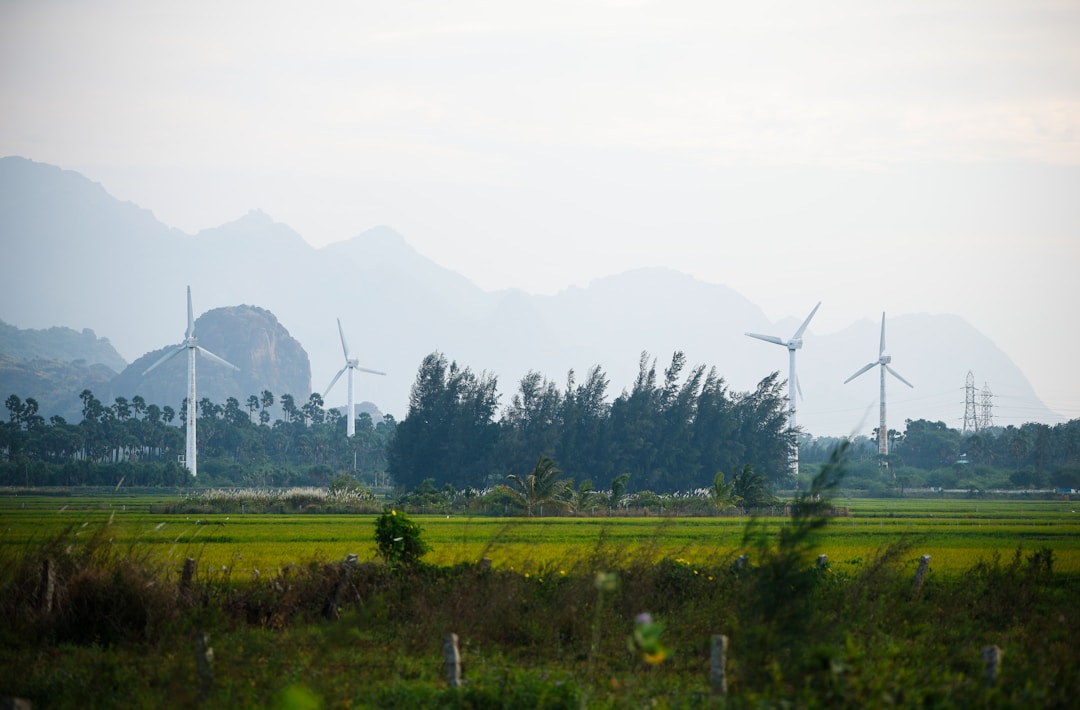
India ranks fourth globally in renewable energy capacity with approximately 190 GW installed, targeting 500 GW by 2030. Yet this ranking conceals a significant performance gap: India has built the infrastructure but struggles to convert that capacity into actual clean electricity generation at rates matching world leaders.
The numbers reveal the challenge. India's renewable energy contributes only 22-23% of actual electricity generation, far below Germany's 60% or Spain's 57%, despite comparable installed capacity ratios. This gap exposes fundamental weaknesses in grid integration, energy storage, and system optimization that additional capacity alone cannot address without institutional reform.
The Storage and Integration Crisis
India's most glaring weakness lies in energy storage deployment. The country has installed merely 3 GW of battery storage capacity compared to the United States' 16 GW and China's 60+ GW. This creates massive curtailment losses estimated at 5-8% of potential renewable output—clean energy generated but wasted because the grid cannot absorb or store it effectively.
Grid integration failures compound the storage problem. India's renewable installations often operate in isolation from demand centers, requiring transmission infrastructure that remains inadequate. Installed solar and wind farms cannot deliver their full potential to consumers, undermining the entire investment in clean energy capacity.
The institutional dimension becomes clear when examining administrative postings in renewable energy departments across states. Officers like Manu Srivastava in Madhya Pradesh's New & Renewable Energy Department face the challenge of translating central government targets into state-level execution. The gap between policy ambition and ground reality often reflects administrative capacity constraints rather than technological limitations.
The Offshore Wind Vacuum
India's offshore wind sector represents the starkest performance gap with global leaders. With only 1 MW installed capacity along a 7,500 km coastline, India lags far behind the United Kingdom's 14+ GW and China's 37+ GW in offshore wind deployment.
This represents more than missed opportunity; it reveals institutional inability to execute complex maritime energy projects. Offshore wind requires coordination across multiple ministries, regulatory clarity for maritime zones, and technical expertise in marine engineering. The virtual absence of offshore capacity suggests Indian institutions struggle with multi-stakeholder project execution in challenging environments.
The comparison with European leaders is instructive. Germany and Denmark built offshore wind industries through sustained institutional focus, regulatory predictability, and technical standard-setting. India possesses superior wind resources along its western and southern coasts but lacks the institutional framework to convert geographic advantage into energy output.
Green Hydrogen: The Next Frontier Challenge
Green hydrogen production costs in India remain at $4-6 per kilogram, significantly above the global target of $1-2 per kilogram needed for commercial viability. While Germany and Spain operate pilot-scale green hydrogen hubs, India lacks operational facilities at comparable scale despite announcing ambitious hydrogen mission targets.
The cost differential reflects multiple institutional failures: inadequate research and development coordination between academic institutions and industry, regulatory uncertainty for hydrogen projects, and limited access to low-cost renewable electricity for electrolysis. Indian institutions excel at announcing targets but struggle with the sustained technical development required to achieve cost competitiveness.
The financing dimension adds another layer of complexity. Renewable energy projects in India face capital costs of 10-12%, roughly three to four times higher than in Germany or the United States. This cost-of-capital disadvantage stems partly from perceived regulatory risk and partly from underdeveloped green finance markets—both institutional problems requiring administrative solutions.
The Administrative Execution Challenge
The renewable energy sector crystallizes a broader institutional question: can India's administrative system deliver world-class outcomes in complex technical domains? The evidence suggests mixed results. India demonstrates impressive capacity for large-scale program implementation. The solar park model and rooftop solar schemes show administrative competence at scale.
However, the performance gaps in storage, grid integration, and offshore deployment reveal limitations in managing technically complex, multi-stakeholder projects requiring sustained coordination across ministries, states, and private sector actors. These gaps cannot be closed through additional capacity targets; they require institutional reform focused on execution capability.
State-level renewable energy departments, where officers like those in Madhya Pradesh's administrative cadre operate, become crucial nodes for bridging this gap. Their effectiveness in coordinating between central policy, state implementation, and local execution often determines whether ambitious targets translate into actual performance outcomes.
International Benchmarking and Institutional Learning
Global leaders in renewable energy share certain institutional characteristics: regulatory predictability, technical standard-setting capability, sustained research and development investment, and effective coordination between government and private sector actors. Germany's Energiewende succeeded not merely through ambitious targets but through institutional mechanisms that sustained long-term implementation despite political transitions.
India's institutional approach tends toward announcement-heavy, implementation-light policy cycles. The renewable energy sector exemplifies this pattern: impressive capacity targets announced with great fanfare, followed by mixed execution that leaves performance gaps unaddressed. Breaking this cycle requires institutional reform focused on sustained technical capability rather than political theater.
The question for Indian renewable energy leadership becomes whether current institutional arrangements can evolve toward sustained technical excellence. The sector's importance for India's 2047 developed nation goals makes this an urgent institutional priority requiring administrative reform, not merely additional investment.
India's renewable energy challenge reflects the broader institutional question facing the country's development trajectory: can administrative systems designed for simpler economic structures adapt to manage technically complex, globally competitive sectors? The answer will determine whether India's impressive renewable capacity rankings translate into actual energy security and climate leadership, or remain statistical achievements masking continued dependence on imported energy and technological solutions.