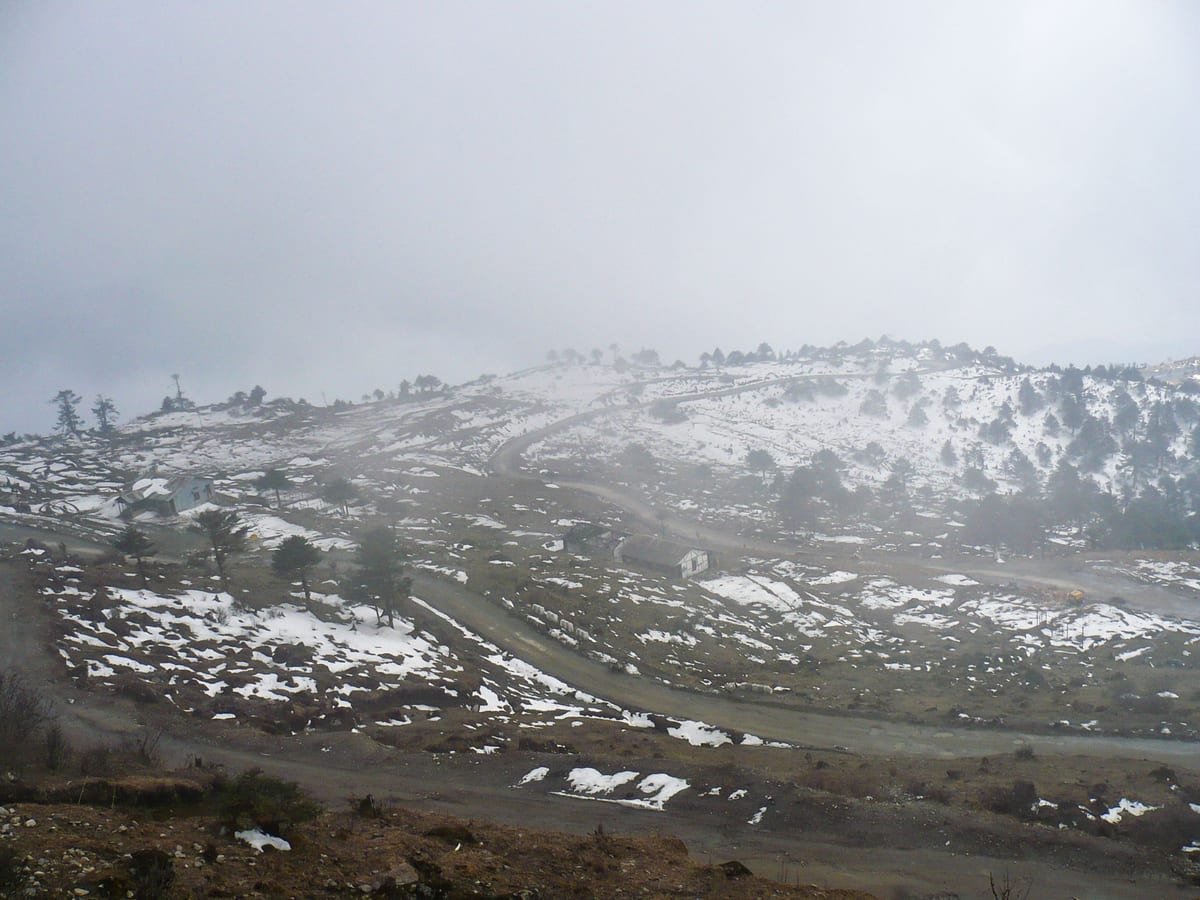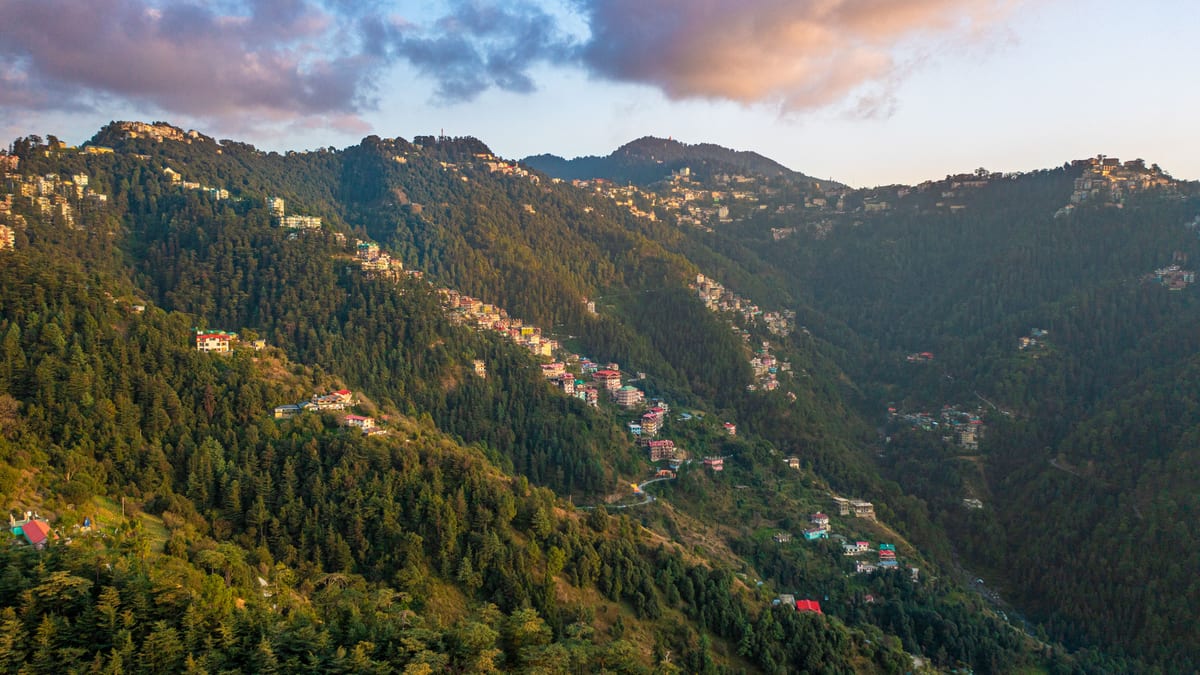
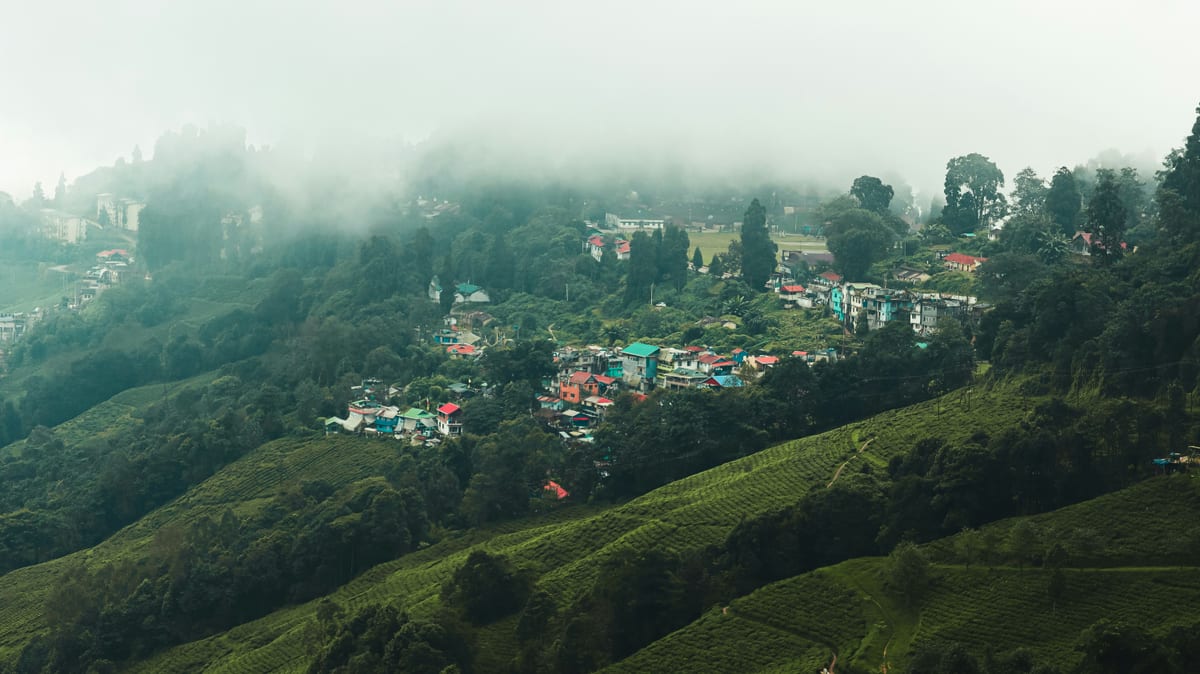
There is a moment, somewhere between New Jalpaiguri and the cloud-wrapped curves of the Himalayan foothills, when the air changes. It becomes cooler, sharper, faintly sweet — carrying the green breath of tea gardens and pine forests. You are entering Darjeeling, the Queen of the Hills, and the mountain has already begun to speak to you before you have even arrived.
For generations of Indians and travellers from across the world, Darjeeling has been a word that carries weight — the weight of a perfect cup of first-flush tea, the weight of colonial history, the weight of the Kanchenjunga at dawn, rose-gold and impossible. Darjeeling is far more than a postcard. It is one of India's most layered destinations, where civilisational stories intersect and harmonise.
A Gift That Became a Legend
Before the British arrived, Darjeeling belonged to the Kingdom of Sikkim. In 1835, when the Governor General of India expressed interest in acquiring this cool, elevated land for a sanatorium for British soldiers and administrators, the Raja of Sikkim presented Darjeeling to the East India Company as a token of friendship. In exchange, the Raja received a double-barrelled gun, a rifle, twenty yards of red broadcloth, and two shawls. It is one of the more quietly remarkable transactions in the subcontinent's colonial history: a hill gifted for cloth and a gun, which would become one of the most celebrated destinations in Asia.
Under British stewardship, Darjeeling became the summer capital of the Bengal Presidency. Roads were carved into the mountains, tea plantations were established, and a railway was built. With independence and India's own infrastructure development, Darjeeling grew into a cosmopolitan mountain town that carries its complex past and continues to evolve.
The Tibetan community adds another civilisational layer to Darjeeling's identity. Following the Tibetan uprising in 1959, thousands of Tibetans who followed the Dalai Lama into exile made their home in and around Darjeeling. Today, their monasteries, prayer flags, and cultural practices are as intrinsic to Darjeeling's identity as its tea or its trains. The town has repeatedly opened its arms to those who needed shelter.
The Toy Train and a Literary Legend
No visit to Darjeeling is complete without the Darjeeling Himalayan Railway, better known as the Toy Train — a narrow-gauge steam locomotive that has been winding its way through the mountains since 1881. Declared a UNESCO World Heritage Site, the railway is not merely a mode of transport; it is a moving theatre. Each journey reveals breathtaking vistas of valleys, forests, and sky in a slow, deliberate unfolding that no highway or helicopter ride can replicate.
Mark Twain, the great American writer, rode this very train in 1895, and was moved enough to describe it as "the most enjoyable day I have spent on earth mixed with the ecstasy of deadly fright and unimaginable joy." More than a century later, the Toy Train still earns that description. Sitting by the open window as the locomotive huffs and curves around mountain bends, with the Kanchenjunga appearing and disappearing through the mist like a shy giant, you understand why some journeys are destinations in themselves.
Tea, Time, and Happy Valley
Darjeeling tea is not simply a beverage. It is an identity, a geography, a culture. The rolling tea gardens that cascade down the hillsides are among the most photographed landscapes in India. To truly understand Darjeeling tea, one must walk among the bushes, watch the pluckers at work, and breathe in the muscatel notes that rise from freshly harvested leaves.
The Happy Valley Tea Estate, with a history dating back to 1854, is one of the finest places to begin this education. One of the oldest estates in the region, Happy Valley has been instrumental in shaping Darjeeling's global reputation for premium tea. A visit here combines agricultural tour, sensory experience, and meditation on how a plant — tended with patience and precision across generations — can come to represent an entire civilisation's relationship with the land.
Sunrise at Tiger Hill and the Kanchenjunga Vista
Darjeeling's most iconic daily ritual is also its most humbling. Long before dawn, visitors and locals alike make their way to Tiger Hill, the highest point in the region, to witness the sunrise illuminate the third-highest peak in the world — Kanchenjunga. On a clear morning, the peak catches the first light in shades of amber and rose before the rest of the world has woken up. It reorders your sense of scale and reminds you of your place in the larger story of things.
Monasteries and the Living Tibetan Thread
Wander through Darjeeling's quieter lanes and you will encounter the monasteries that anchor its Tibetan community — places of deep calm where monks chant, butter lamps flicker, and the mountain air carries the scent of incense. These monasteries are not tourist attractions frozen for display; they are living institutions, active centres of faith and culture. They also speak to India's civilisational generosity — the openness to shelter another culture and allow it to flourish within its own borders.
Planning Your Visit: When to Go and How to Reach
Darjeeling rewards visitors across most of the year, though each season offers a different character. Spring — from March to May — is perhaps the most celebrated time to visit, when the rhododendrons bloom and the air is crisp and clear, offering the best views of Kanchenjunga. Autumn, from October to November, is equally rewarding, with post-monsoon clarity making mountain vistas particularly sharp and luminous. The monsoon months of June through September bring heavy rainfall that can affect travel, though the landscape turns an extraordinary, saturated green.
The nearest major airport is Bagdogra International Airport (IXB) at Bagdogra, from where Darjeeling is approximately three hours by road. The nearest railway station is New Jalpaiguri Junction (NJP), well-connected to Kolkata, Delhi, and other major Indian cities. From NJP, you can take a shared jeep, private cab, or — for the most memorable approach — board the Toy Train for a longer but more poetic ascent into the hills.
Why Darjeeling Belongs in India's Heritage Story
India's civilisational story is not a single, unbroken thread but a vast weave of languages, faiths, landscapes, and peoples who have arrived, stayed, contributed, and belonged. Darjeeling embodies this story with particular eloquence. Here, a Sikkimese gift became a British summer capital, which became an Indian hill town, which became a home for Tibetan refugees, which became a UNESCO World Heritage corridor defined by a steam train and a tea garden and the silence of a mountain at dawn.
It is not a museum. It is not a theme park. It is a living community, still writing its own story — one cup of tea, one train journey, one sunrise at a time.
For more information on planning your visit, explore the official destination page on Incredible India — Darjeeling, West Bengal.