On 24 October, in Dubai's Gold District, Joyalukkas Jewellery unveiled a handcrafted pair of gold earrings that now hold two Guinness World Records titles. LiveMint reported that the 22-carat Mayura Sahasra pair won recognition as the heaviest and largest pair of gold earrings ever recorded.
The dimensions explain the certificate. They weigh 16.514 kg, measure 1.215 metres in length and 0.682 metres in diameter. A team of 55 artisans spent 5,840 hours across several months, according to India Today. UAE Minister of Economy and Tourism Abdulla bin Touq Al Marri unveiled the creation at the Jewel of Joy showroom; a Guinness World Records adjudicator handed certificates to Al Marri, Joyalukkas Group chairman Joy Alukkas, and CEO John Paul Alukkas.
A peacock in the city of gold
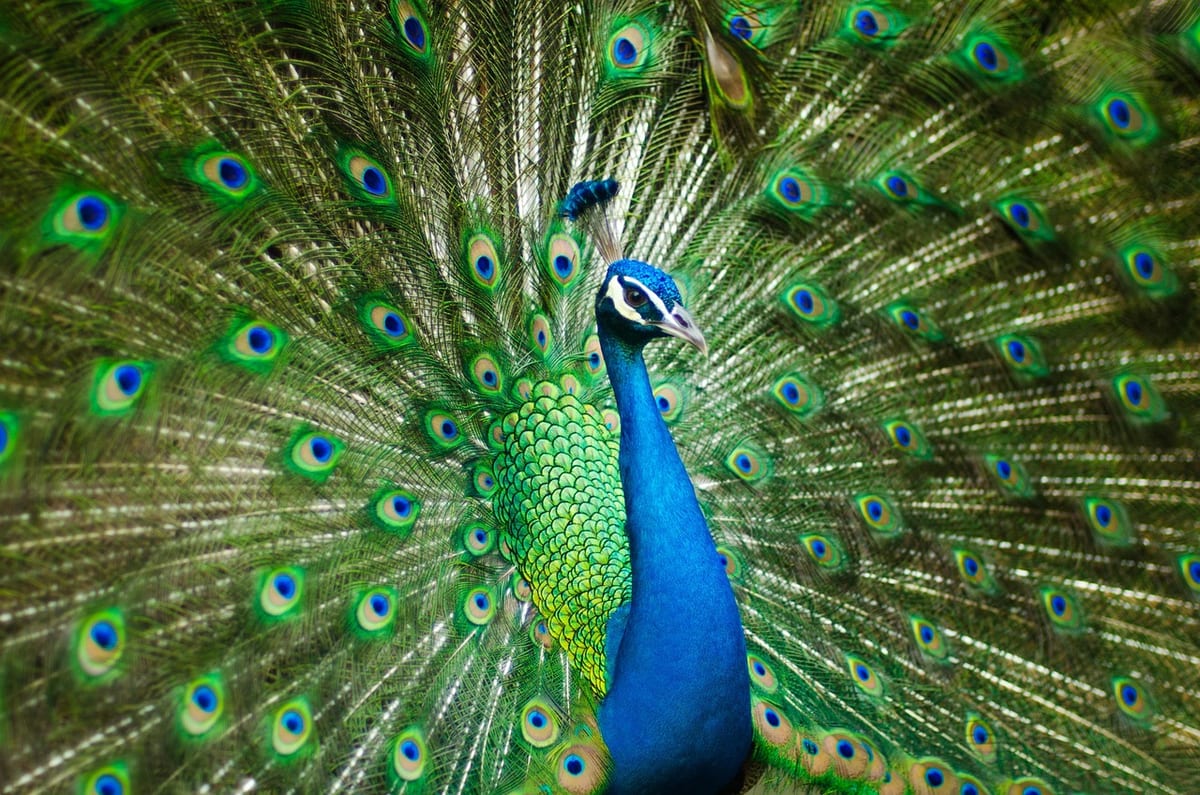
The name Mayura Sahasra translates as "A Thousand Peacocks." The choice is deliberate. It places an Indian motif at the centre of a Gulf luxury display. The peacock appears in Indian miniature painting, temple stonework, and silk weaving; now it has been cast into 22-carat gold at a scale meant to be photographed from across a showroom. Joyalukkas could have named the piece after a Dubai landmark. It reached for Indian symbolic vocabulary instead.
Joyalukkas is an Indian-origin jewellery house with four decades in the UAE. John Paul Alukkas, a third-generation entrepreneur, framed the record as a repayment to the city.
"We've been in the UAE for the last 40 years, and we've seen how the UAE and Dubai has grown. We've seen a lot of records which Dubai has broken, and we thought we should do something which we can give back to Dubai," he said, as cited by LiveMint.The object is a gift; the cultural signature remains Indian.
The peacock is a familiar figure in Indian visual export. It has decorated temple gopurams and Mughal miniatures, and it appears on textiles sold from Jaipur to Dubai. What is new is the Guinness certificate. World records turn a motif into a measurable claim: the heaviest, the largest, the most photographed. That measurement language fits Dubai's appetite for verified superlatives and gives Indian craft a metric the global market can read.
What 55 artisans and 5,840 hours mean
The labour tells the sharper story. Fifty-five artisans worked across several months to produce a pair of earrings that no one can wear. The diameter, 0.682 metres, makes them display pieces. Their function is not personal adornment but industrial demonstration: a jeweller proving it can execute a design larger than any competitor has logged. Dubai sells gold by weight; this record sells gold by hand skill.
Guinness World Records titles in the Gulf have become a category. Tallest, largest, heaviest, most expensive. Dubai's government and private firms have used the certificates to draw visitors. This pair belongs to that pattern. A showroom in the Gold District now has an object that will circulate on social media long after the certificates are framed.
The demand shift behind the spectacle
John Paul Alukkas also discussed changing tastes. Since his grandfather started the business, jewellery demand has shifted toward lighter pieces. The company now offers lightweight designs alongside its 22-carat and 18-carat inventory and plans to introduce 14-carat lines. The Mayura Sahasra sits at the opposite end: maximalist, heavy, unwearable. One end of the business sells what customers can put on each morning; the other sells what they come to photograph.
That split matters for Indian jewellery retail. Much of the Gulf's gold trade runs through Indian-origin firms and Indian craftsmanship. But the export story often stays at the level of volume and purity. This record shifts attention to design and brand equity. It says an Indian retail house can stage a world first in a city that has no shortage of world firsts.
What a peacock in Dubai does for India
No Indian government body has commented on the record, and none needs to. The event is corporate public relations, not diplomacy. Yet it lands in India's soft-power ledger. The peacock is India's national bird. A thousand-peacock name on a gold earring in Dubai's Gold District carries Indian cultural capital into a market at the centre of the global gold trade. There is no policy dilemma here; only a marketing opportunity that India's jewellery export institutions could amplify.
Indian businesses have long operated showrooms across the Gulf. Joyalukkas works across 13 countries. The record is a reminder that distribution is already there; what sometimes lags is the public staging of craft. A single private act, with existing assets, produced a global headline. Trade promotion bodies can build on this template without overreaching.
The record also works on the diaspora imagination. Gulf-based Indian families see an Indian-origin brand, a Sanskritic name, and an Indian bird being celebrated by a Guinness adjudicator. That is not a policy outcome, but it is a form of cultural continuity across the Arabian Sea. Business media in India picked up the story; no strategic affairs think tank needed to weigh in. The news value sits in the consumer and business domain, which is where soft power begins.
The limits of a gold record
One pair of earrings will not move India's trade numbers. It will not alter gold import duties or change consumer savings behaviour. India's households still treat gold as savings, sentiment, and hedge, but those patterns are separate from a Guinness certificate. The Mayura Sahasra matters as signal, not policy. It tells the Gulf luxury market that Indian design language can anchor spectacle at the highest registrable scale.
Joyalukkas did not wait for a trade mission. It used its own showroom, its own artisans, and a city that rewards the largest and heaviest. Indian export bodies might note the template: take existing manufacturing skill, add a record-setting stage in a global gold hub, and let the peacock carry the story.
For Indian readers, the takeaway is quiet but durable. The Gulf gold corridor already moves goods and people; it can also move recognition. When an Indian-origin house places a thousand-peacock motif in front of a Dubai audience, it extends the geography of Indian craft without needing a memoranda or a ministry. That is commerce doing the work of culture, one Guinness certificate at a time.