
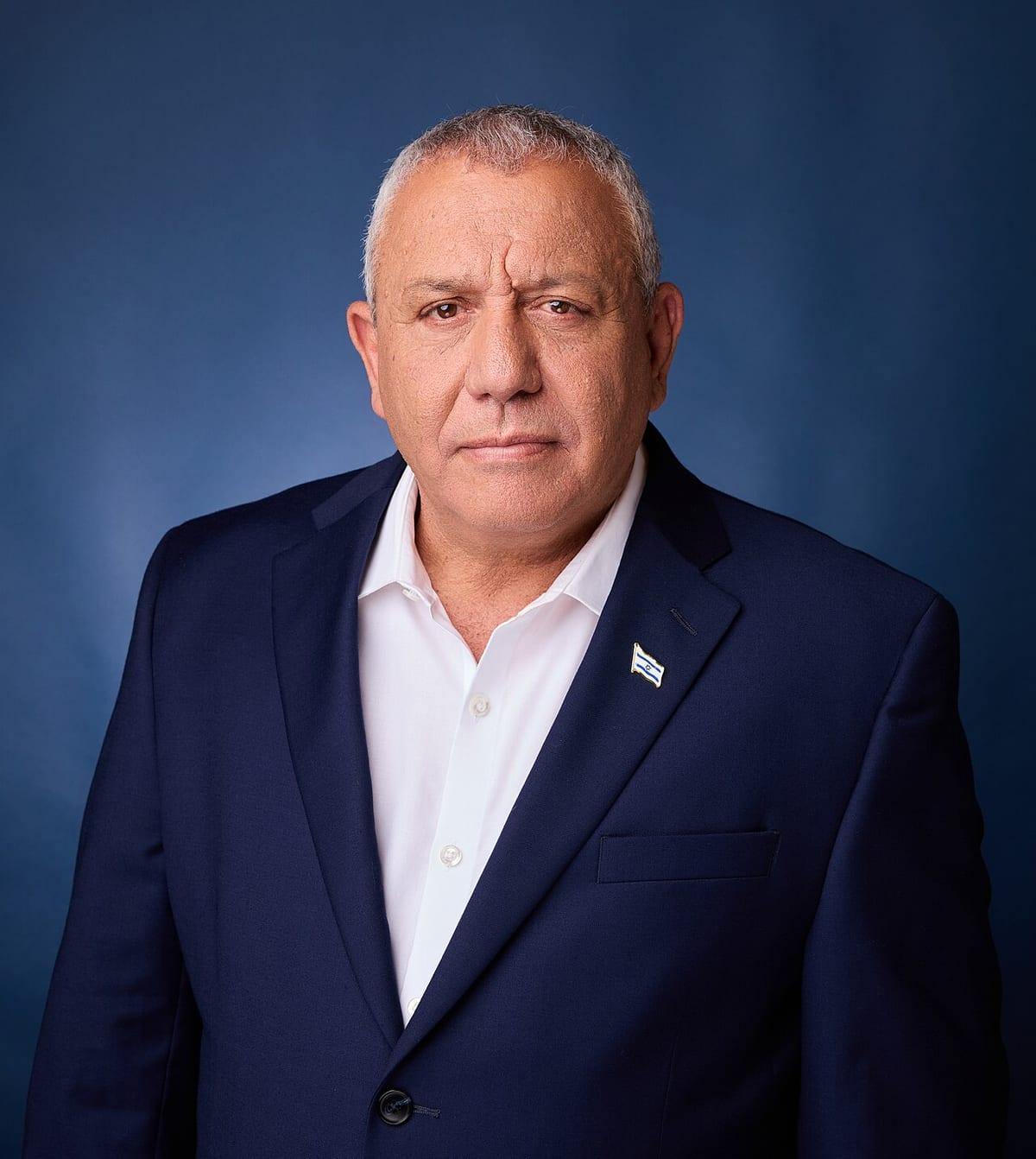
Gadi Eisenkot, the former military chief who now leads Israel's centrist Yashar party, has invited Benjamin Netanyahu's Likud to coalition talks, according to NDTV. The negotiating teams are scheduled to meet Sunday, Eisenkot's party said, describing the move as a "genuine commitment to forming the broadest possible government."
The overture follows weeks of deadlock after an election that produced no clear governing bloc. India Today reports that Eisenkot turned to Netanyahu's Likud after earlier attempts to assemble a government without the veteran leader stalled. Netanyahu has separately called for a unity government, but Eisenkot has accused him of "playing tricks" in the negotiations, according to a second NDTV report.
Former Prime Minister Naftali Bennett added a complication, publicly backing Eisenkot for prime minister and saying he "will not serve under Netanyahu," India Today reported. Netanyahu's campaign against Arab-Israeli parties, which gained a record number of seats in the last election, has made coalition arithmetic harder, the same NDTV report noted.
The arithmetic is delicate. Eisenkot's Yashar party occupies the centre of Israel's political map, but any coalition needs partners from the right or the religious blocs. Netanyahu's Likud remains the largest single party in most projections, which gives the veteran leader leverage even in a government he does not lead. The invitation to talks does not guarantee a breakthrough; it signals that Eisenkot has accepted Netanyahu as an unavoidable interlocutor. For India, the difference between a Netanyahu-led coalition and a broad unity arrangement is less about personalities than about the stability of the government's majority. A narrow coalition can fall over a single disputed clause in a state budget; a broader one can absorb policy shocks without triggering another election cycle.
India's stake in a stable Jerusalem
India's defence establishment tracks these negotiations with more than passing interest. Israel remains one of New Delhi's most significant defence suppliers, with joint technology programmes spanning several domains. Prolonged political drift in Jerusalem slows decision-making on pending acquisitions and technology-sharing roadmaps, which in turn affects the pace of India's military modernisation. Procurement cycles and joint research schedules do not pause for coalition talks.
New Delhi has not commented publicly on the coalition negotiations, consistent with its long-standing posture of non-interference in the domestic politics of friendly nations. The silence is deliberate. India's Israel policy has become institutionalised over three decades. It runs through working groups, joint development agreements and procurement cycles rather than through any single leader in either capital. Whether the next Israeli government is led by Netanyahu, Eisenkot or another figure matters less than the durability of these institutional channels.
Beyond defence, the relationship touches agricultural technology and water management, where a stable Israeli executive speeds up bilateral project clearances. India's participation in the West Asia economic corridor also depends on a functioning Israeli government able to sign off on infrastructure commitments. New Delhi's interest in these negotiations is practical: files sit in Jerusalem.
Multi-alignment, not a dilemma
India's ability to sustain deep ties with Israel while also engaging Gulf Arab states, Iran and the United States is the exercise of strategic autonomy. A stable, broad Israeli coalition reduces the political noise around that posture. India participates in a four-nation economic corridor with the US, the UAE and Israel, and has used that framework to advance infrastructure and technology cooperation. Those initiatives benefit from predictable Israeli governance.
Indian policymakers have long understood that ties with Israel do not preclude close relations with the Gulf monarchies or Iran. A fragmented Israeli coalition invites volatility across the wider region, which complicates the security of Indian expatriate workers and energy supplies. A broad government in Jerusalem tends to produce steadier regional diplomacy. That steadiness benefits the India–Middle East–Europe economic corridor and India's broader commercial stake in the eastern Mediterranean.
The institutional test
India's immediate advantage is that its Israel policy has never been hostage to a single Israeli prime minister. Even during periods of sharp disagreement over Iran or Palestinian statehood, New Delhi and Jerusalem kept defence supply lines open. The coalition talks underway are a reminder that institutional depth, not personal chemistry, is the asset Indian diplomacy should develop. The longer the uncertainty, the more valuable a multi-party liaison strategy becomes.
The challenge for Indian diplomacy is to keep defence and technology roadmaps insulated from Israel's coalition negotiations. That means maintaining liaison with all major Israeli parties, not just the incumbent bloc. India's ties with Israel have survived changes of government before: from one coalition to another, from right-leaning to centrist configurations. The defence relationship has grown through each. The same institutional resilience is what New Delhi will bank on now.
Indian readers should watch the Sunday talks for what they reveal about coalition discipline, not for a verdict on Netanyahu's political future. The defence files that matter to India's forces do not move faster because one politician outmanoeuvres another; they move when ministerial committees meet, budgets clear, and technical teams exchange test data. That is the layer of the relationship most sensitive to prolonged political uncertainty. New Delhi's job is to keep that layer moving regardless of who occupies the prime minister's office.