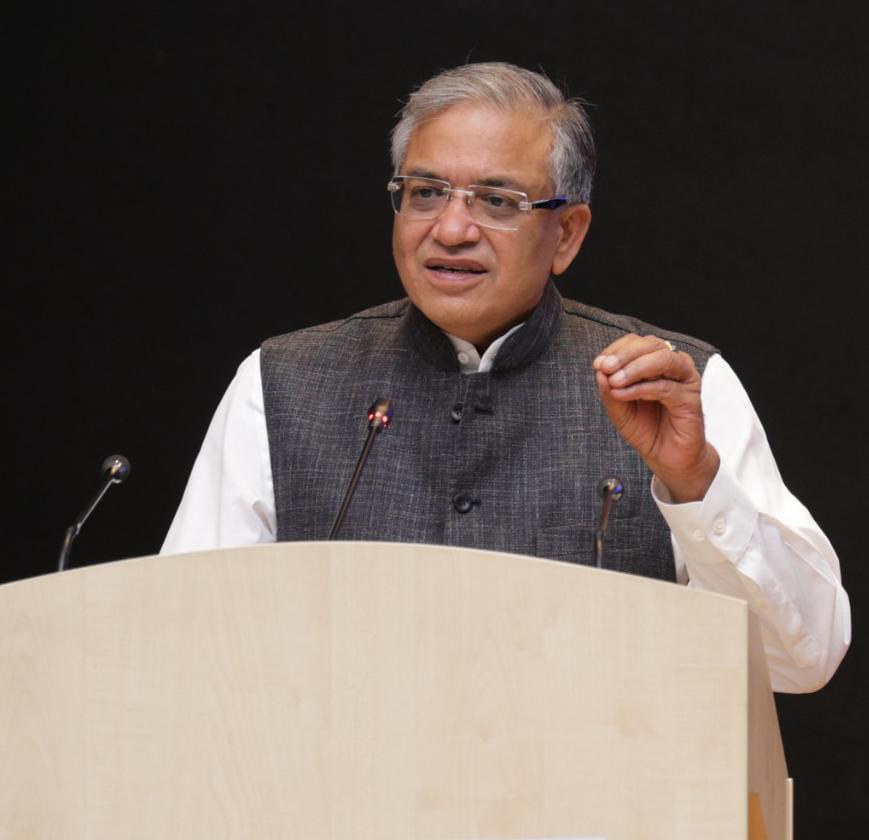
Chief Election Commissioner Gyanesh Kumar's "zero tolerance" directive against post-poll violence in West Bengal is exactly the institutional backbone India's electoral system demands. The CEC's order to the West Bengal Chief Secretary, DGP, and Central Armed Police Forces comes as TMC offices were vandalised across the state following BJP's historic 207-seat assembly election victory—violence that Bengal's ruling dispensation has historically weaponised with impunity.
TMC's Democratic Deficit Exposed
The real crisis isn't institutional—it's political. TMC chief Mamata Banerjee's refusal to accept the people's verdict, dismissing it as "not a people's mandate but a conspiracy," reveals a leader who treats democratic outcomes as legitimate only when they favour her. This is not a constitutional grey area; it is a straightforward rejection of the democratic process by a Chief Minister who has presided over three decades of political violence becoming normalised in Bengal's governance.
The pattern is unmistakable. In 2021, post-poll violence against BJP workers in Bengal was documented by the Calcutta High Court, which ordered CBI investigations. Before that, the Left Front endured similar cycles. Bengal's political culture has treated violence as a legitimate extension of electoral competition—and the TMC under Banerjee perfected this system. The EC's intervention now represents an overdue institutional correction.
EC Asserts Constitutional Mandate
The Commission's zero tolerance approach signals that India's electoral architecture will not accommodate state-level defiance. The deployment of Central Armed Police Forces bypasses a state police apparatus that has historically looked the other way during political violence in Bengal. This is institutional strength, not strain.
Union Minister Sukanta Majumdar's warning to BJP workers—"The BJP has to remain the BJP; it should not become TMC"—demonstrates the governing party's awareness that democratic legitimacy requires restraint in victory. The contrast with TMC's response to previous victories, when political violence against opponents spiked, is stark.
The violence in Asansol's Godhuli area and Howrah's Dumurjala—vandalised TMC offices, torn flags, broken furniture—while condemnable, pales against the systematic post-2021 violence that displaced thousands of BJP workers from their homes in Bengal. The EC's equal enforcement now, regardless of which side perpetrates violence, establishes the principle that no party owns the streets after elections.
Breaking Bengal's Violence Cycle
What makes this moment significant is not whether India's institutions will survive—they will—but whether Bengal's entrenched culture of political violence can finally be broken. The EC's intervention, backed by central forces, creates conditions where democratic transitions occur through constitutional mechanisms rather than street power.
Banerjee's refusal to resign despite electoral defeat will ultimately resolve itself through constitutional processes—Governor's intervention, floor tests, or judicial direction. India's federal structure has mechanisms for precisely this scenario. The EC's role is narrower but crucial: ensuring that the transition period does not become a window for retaliatory violence that Bengal's political ecosystem has normalised.
With 294 assembly seats and a decisive 207-seat BJP mandate against TMC's 80, the scale of the democratic verdict leaves no room for ambiguity. A party reduced from 215 seats to 80 cannot credibly claim the result was rigged. The EC's decisive action protects the sanctity of this overwhelming popular mandate and sets the precedent that no defeated government can hold a state hostage through violence.
Institutional Resolve, Not Institutional Crisis
India's democratic institutions are not being "tested" by Bengal—they are functioning exactly as designed. The Election Commission exists precisely to enforce constitutional discipline on political actors who reject outcomes. Central forces exist precisely to override compromised state machinery. The Governor's constitutional authority exists precisely to address situations where Chief Ministers defy democratic verdicts.
The real question Bengal poses is simpler: will a political culture built on intimidation and violence survive contact with institutional enforcement? The CEC's zero tolerance directive suggests the answer India's democratic framework demands—no, it will not.