When Neetu Yadav and Kirti Jangra graduated from IIT Delhi with civil engineering degrees, the obvious path stretched out ahead of them: a consulting firm, a technology multinational, perhaps a foreign posting. They chose, instead, to go to the cattle market.
The two roommates spent their college years nursing an ambition to build something of their own. After graduation, they watched how dairy farmers in India bought and sold animals — through local traders, word of mouth, and networks of trust built over generations. Price discovery was opaque. Buyers and sellers operated in geographic silos. A farmer in one district had no way of knowing what a comparable animal fetched fifty kilometres away. That structural gap became the founding thesis of Animall.
The Problem They Decided to Solve
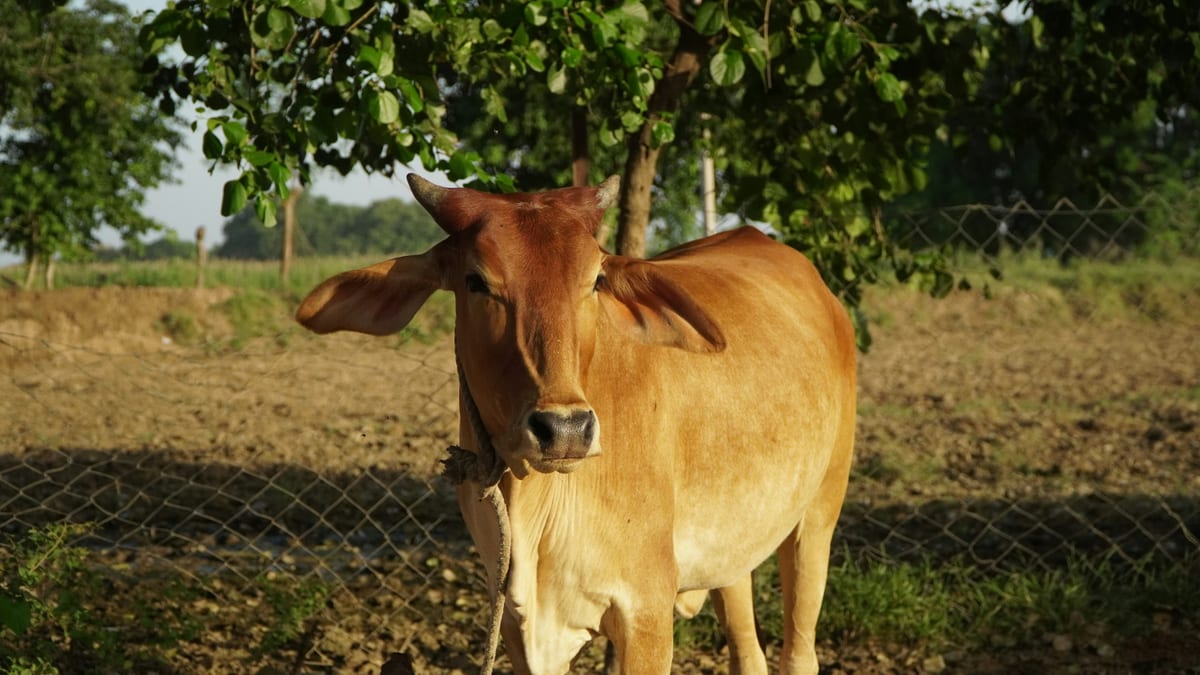
In 2019, Neetu and Kirti turned their attention to the dairy and livestock sector. India's cattle trade was one of the last large commercial markets to remain almost entirely offline. Farmers struggled to find the right buyers, get fair prices, and access reliable information about the animals they were purchasing or selling. The intermediary — the local trader who knew both parties and extracted a margin from each — was often the only connective tissue in the system.
Animall's solution was a digital marketplace where farmers could list cattle, search for animals, and transact with a broader pool of buyers and sellers than their local network allowed. A farmer who had previously relied on a single trader's word about what his buffalo was worth could now see comparable listings, compare prices, and make an informed decision.
The startup's growth to a reported Rs 565 crore valuation reflects a gap that two founders identified and filled. It also signals which markets India's venture capital ecosystem has begun to take seriously.
Why the Cattle Market Matters at Scale
India's dairy sector is the world's largest. It supports over 80 million rural households and contributes approximately 5% of GDP. The smallholder dairy farmer — typically managing two to five animals, selling milk to a local cooperative or aggregator, and periodically buying or selling cattle to manage her herd — is one of the most economically significant actors in the Indian rural economy. She has also been historically among the least served by formal institutions.
Banks found her difficult to assess for credit. Veterinary services reached her irregularly, if at all. The price she received for her animals depended almost entirely on who happened to be at the local market that week. Animall attacks that problem directly: if you put more buyers and sellers in the same digital space, you generate something closer to a fair price. For a household where a single cattle transaction may represent months of income, that is not trivial.
The agri-tech thesis — that digital platforms can compress the informational disadvantage rural producers have long suffered relative to urban traders — has been argued for years. Animall's valuation validates it with a number. Serious capital has followed founders who chose to apply IIT-grade problem-solving to Bharat rather than to urban consumer applications. That shift in where venture money flows matters beyond any single startup.
The Structural Ceiling Nobody Talks About
India's cattle trade operates under a patchwork of state-level laws governing the movement of animals across district and state lines. These laws — rooted in animal husbandry regulation, local market bye-laws, and in some states religious-political considerations — differ sharply from one jurisdiction to the next.
A digital marketplace wants to be national. A buyer in Punjab browsing listings from Karnataka is the platform's ideal use case: broad price discovery, large pool of supply. But inter-state livestock movement in India is neither simple nor uniform. A transaction that makes commercial sense on-screen can run into documentary requirements, check-post delays, and local trader resistance that no app can dissolve. The regulatory environment was designed for physical, locally-bounded cattle markets. It has not been updated for a world where a farmer in one state can browse cattle listings from five hundred kilometres away.
This is not a problem unique to Animall. It is a structural feature of Indian agri-tech: national platforms confronting thirty-six different sub-national regulatory regimes. The policy response that would unlock the sector's potential is harmonisation — a common framework for digital livestock commerce that treats the national digital market as the baseline. NITI Aayog identified cattle commerce digitisation as a high-priority intervention in its work on agricultural transformation. The Animal Husbandry Infrastructure Development Fund was launched to encourage private investment in this value chain. The policy intent exists. The regulatory architecture that would let platforms like Animall execute at genuine national scale has not yet materialised.
The Founder Profile and What It Signals
The IIT-to-rural-startup pipeline is not new, but it remains underappreciated. Neetu and Kirti's choice — to forgo the corporate route that most of their peers took, and to spend years building product for dairy farmers — carries an institutional message worth stating plainly.
India's premier technical institutions produce graduates with the analytical tools to dismantle complex systems. When those tools are pointed at urban consumer problems, they generate apps that are often excellent and sometimes globally competitive. When pointed at the structural inefficiencies in rural value chains — livestock commerce, agricultural credit, input supply, veterinary access — they can generate outcomes that are both commercially robust and measurably welfare-improving. The question is not whether the talent exists. It is whether the ecosystem — investment culture, regulatory environment, talent pipelines — makes rural problem-solving an attractive career choice for the best graduates.
Animall's Rs 565 crore valuation is an answer to that question directed at the next cohort of IIT students deciding what to build. The signal needs reinforcement. A regulatory environment that makes inter-state livestock commerce as frictionless as inter-state digital payments would accelerate rural agri-tech more than any government incubation scheme. The digital stack India has built for financial transactions — real-time, interoperable, nationally uniform — is a model worth replicating in livestock and broader agricultural commerce.
What Comes Next
For Animall specifically, the trajectory depends on whether the platform can extend beyond price discovery into adjacent services: veterinary tele-consultation, livestock insurance, animal health records, credit facilitation linked to verified transaction histories. Each represents a large, underserved, technically tractable market. Each faces its own regulatory and operational challenges. Building the cattle marketplace was the first move. Converting it into a comprehensive rural livestock services platform is a harder, longer, and potentially more impactful second act.
India's agri-tech ecosystem is producing globally competitive ideas faster than the regulatory environment is producing the frameworks those ideas need. Animall's founders found a way to grow within that constraint to Rs 565 crore. The more important question for Indian policymakers is what the sector might look like if the constraint itself were removed — if a farmer in any state could buy or sell cattle across state lines with the same ease that she transfers money on her phone. That is the policy gap Animall's success makes legible. Whether the Centre and the states choose to close it will determine how many more companies like Animall actually get built.