There are monuments you photograph and monuments that photograph you back, that strip away your modern assumptions and hold a mirror to something older, wiser, and far more intricate than anything you arrived prepared for. Hawa Mahal, the Palace of Winds rising above the pink-washed streets of Jaipur, is one of the latter.
The moment you round the corner onto Siredeori Bazaar and the façade unfolds before you, five storeys of terracotta-pink sandstone latticed with 953 carved jharokhas, or overhanging windows, you understand, in the most visceral way, why Rajasthan holds such a place in India's civilisational imagination. This is not a postcard. This is a philosophy made manifest in stone.
A Palace Born of Wind and Vision
Hawa Mahal was commissioned in 1799 by Maharaja Sawai Pratap Singh of the Kachwaha Rajput dynasty, a ruler who was as much a poet as he was a sovereign. Designed by the architect Lal Chand Ustad, the structure was conceived as an extension of the City Palace complex, a ceremonial screen from which the women of the royal household, observing the strict customs of purdah, could watch processions, festivals, and the daily theatre of Jaipur's streets without being seen.
Each of the 953 windows is fitted with a latticed screen and a small balcony, calibrated to capture the prevailing winds and funnel a natural, cooling breeze through the entire structure, a passive air-conditioning system of elegant design, centuries before the concept had a name. The palace's tapering silhouette, when viewed from the street, resembles the crown of Lord Krishna, a deliberate homage by the deeply devout Maharaja. Every detail is intentional. Every flourish carries meaning.
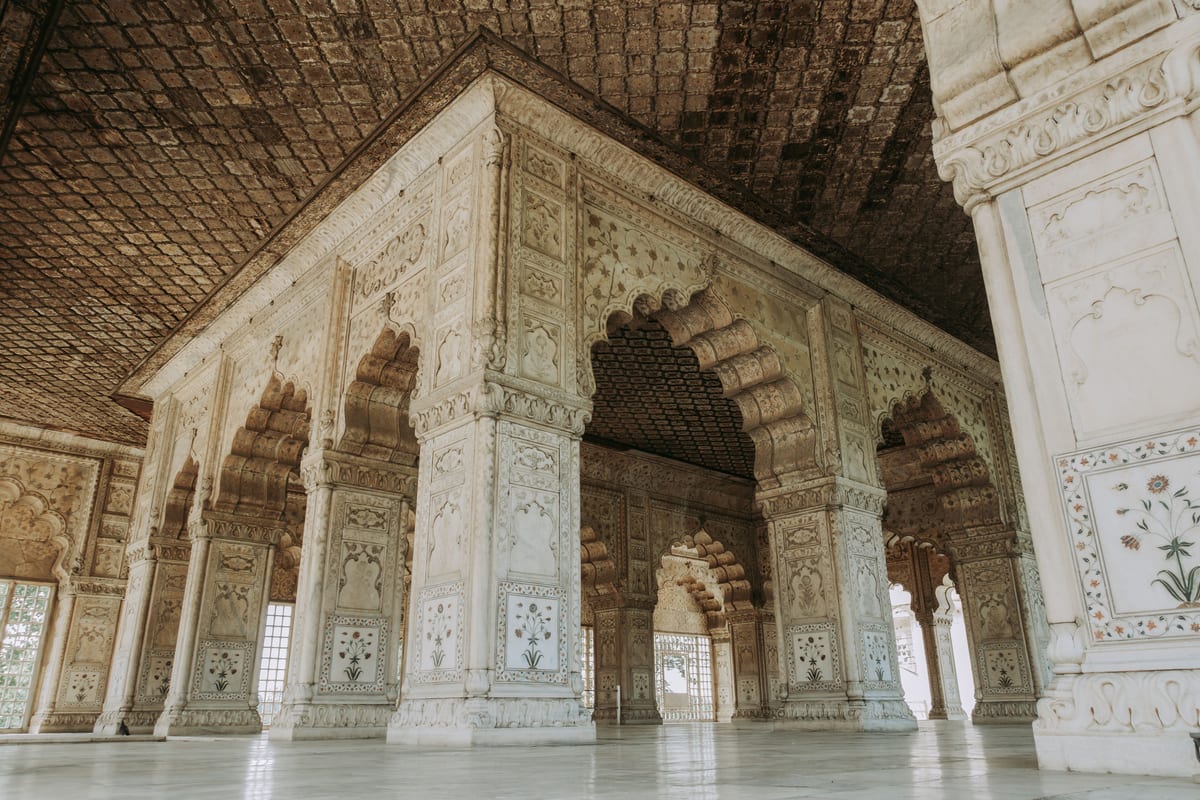
The façade draws from both Rajput and Mughal architectural vocabularies, the ornamental brackets, fluted columns, and delicate arched canopies fusing two great traditions into something wholly its own. This synthesis is not incidental. It is precisely what makes Hawa Mahal a civilisational document: a monument that held within itself the plural inheritances of its age and shaped them into beauty.
What Visitors Experience Today
Walking through Hawa Mahal is an exercise in layered discovery. The street-level view, that famous, impossibly photogenic façade, is only the beginning. Step inside, and the monument reveals itself as a warren of corridors, courtyards, and ascending chambers, each floor offering a slightly different vantage onto Jaipur's rooftops and the distant Nahargarh Fort brooding on the Aravalli hills.
The upper floors are reached by ramps rather than staircases, a concession to the royal women who would have worn elaborate dress. They open onto small balconied rooms where the latticed screens suddenly make perfect sense. You peer through the same carved stone grilles that once framed the world for women who could not step beyond them, and something shifts in your understanding. Heritage, at its most powerful, does this: it makes the past emotionally legible.
A small archaeological museum within the complex houses royal artefacts, miniature paintings, and ceremonial objects, offering context for those who wish to understand the Kachwaha court in greater depth. The courtyard at the rear of the palace, invisible from the street, is quieter and surprisingly contemplative, a reminder that Hawa Mahal is as much a place of interior life as exterior spectacle.
For the full experience, visit at sunrise. The early light turns the pink sandstone to amber and rose gold, the bazaar below stirs to life with vegetable carts and chai vendors, and for a brief window, you can see Jaipur as it has always been, a city that has never stopped living around its monuments. The Incredible India page for Hawa Mahal is an excellent starting point for planning your visit.
Why Hawa Mahal Matters in India's Heritage Story
It is tempting to treat Hawa Mahal purely as an aesthetic achievement, and the aesthetics are, indeed, extraordinary. But to stop there is to miss the deeper significance. This palace is evidence of a civilisational impulse that India has carried across millennia: the drive to make functional things beautiful, to encode meaning into structure, to build not merely for utility but for the elevation of the human spirit.
The women who once watched the world through those 953 windows were constrained by the social codes of their era, and that history deserves honest acknowledgement. Yet the monument itself, in its ingenuity and its ambition, speaks of a culture that brought extraordinary intellectual and artistic resources to bear even on the conditions it imposed. Understanding Hawa Mahal fully means holding both truths simultaneously: the limitation and the genius, the constraint and the craft.
That complexity keeps it alive. Hawa Mahal is not a ruin to be mourned or a curiosity to be gawked at. It is a continuation, still standing, still breathing wind through its ancient lattices, still drawing the eyes of millions who find in it something that resonates far beyond tourism.
Practical Travel Tips
Best time to visit: October through March offers Rajasthan at its most hospitable, with cool, clear days ideal for exploring outdoor monuments. Summer months (April to June) bring intense heat, though early mornings remain manageable. The monsoon season (July to September) lends the city a dramatic, atmospheric quality and thinner crowds.
How to reach: Jaipur is exceptionally well connected. The city is served by Jaipur International Airport with regular flights from Delhi, Mumbai, and other major cities. Jaipur Junction railway station connects the city to Delhi (approximately 4.5 hours by express train), Mumbai, and Agra. By road, Jaipur sits on National Highway 48, roughly 280 kilometres from New Delhi, a comfortable drive or bus journey.
Within Jaipur, Hawa Mahal stands on Siredeori Bazaar in the heart of the old walled city. Auto-rickshaws, cycle rickshaws, and app-based cabs are all readily available. The monument is easily walkable from the City Palace and Jantar Mantar observatory.
Nearby attractions: The City Palace, still partly inhabited by the Jaipur royal family, is a short walk away and offers a deeper dive into Kachwaha history and Rajput art. Jantar Mantar, the UNESCO-listed astronomical observatory built by Maharaja Sawai Jai Singh II, sits adjacent to the City Palace and rewards extended exploration. The Amber Fort, perched magnificently on a hillside 11 kilometres north of the city, is a half-day excursion that no first-time visitor should miss. For those drawn to craft and commerce, the lanes around Johari Bazaar and Bapu Bazaar offer some of India's finest gem work, block-printed textiles, and blue pottery.
Hawa Mahal asks nothing of you except attention. Give it that, and it will return something you will carry long after the photographs have faded from your camera roll, a sense of having stood inside a living civilisation, looking out at the world through ancient stone.