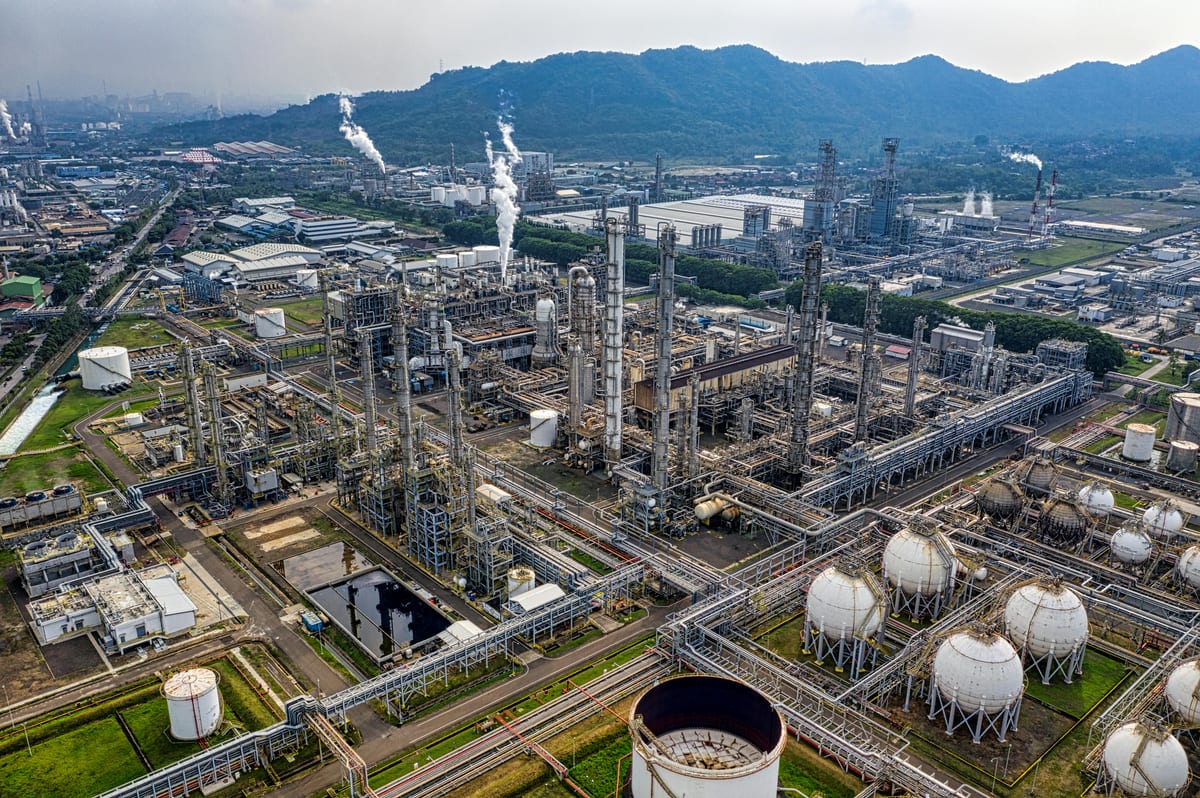
Iran's Islamic Revolutionary Guard Corps launched nearly 30 ballistic missiles at Israel on Monday, targeting a petrochemical facility in what the IRGC described as retaliation for Israeli strikes on Iranian energy infrastructure. The attack forced US Ambassador Mike Huckabee to take shelter in Jerusalem, where he reported "hearing loud booms overhead" as missile alerts echoed across Israeli cities.
The escalation widens Iran-Israel tensions into a new phase, with the IRGC explicitly targeting energy infrastructure in response to Israeli operations against similar facilities in southwestern Iran. Huckabee's account—posted on social media as sirens wailed—captured the immediate threat: "Iran fired missiles at Israel last night & early today. The missile alerts sounded at 6am in Jerusalem. They were intercepted, thank God!"
Energy Infrastructure as Strategic Battleground
The IRGC's decision to target petrochemical facilities signals a deliberate turn toward economic warfare, threatening the energy infrastructure that powers both regional economies and global markets. Iranian officials warned that Israel's actions could lead to attacks on "all energy-related targets in the region," extending far beyond bilateral hostilities to the broader energy corridor connecting the Gulf to global markets.
This escalation follows a pattern of tit-for-tat strikes expanding in scope and intensity. The targeting of industrial facilities rather than purely military assets suggests both sides are preparing for prolonged conflict that could disrupt energy production and transportation networks across West Asia.
India's Strategic Calculations in West Asia
For India, this escalation poses acute challenges to a foreign policy built on maintaining simultaneous partnerships with both Iran and Israel while securing energy supplies. India's West Asia approach has compartmentalised relationships—advancing defence cooperation with Israel while preserving historical ties with Iran and securing energy imports from across the region.
The targeting of energy infrastructure strikes at India's core strategic vulnerabilities. While India has reduced its dependence on Iranian oil following US sanctions, the broader regional energy ecosystem remains critical to Indian economic interests. Disruption to Gulf shipping lanes or attacks on petrochemical facilities could trigger supply chain shocks affecting Indian industrial sectors dependent on imported petroleum products and chemicals.
India's policy response to such crises typically emphasises de-escalation and diplomatic solutions, but the current trajectory suggests both Iran and Israel are moving beyond the threshold where external mediation works. The IRGC's explicit warning about targeting regional energy assets creates a scenario where India's economic interests become hostage to a conflict in which it has no direct stake but significant exposure.
Diaspora Vulnerabilities and Security Concerns
The escalation also heightens security concerns for Indian communities across the region. Substantial Indian populations work in Gulf countries that could become targets if the conflict expands, while smaller but significant Indian communities in Israel face direct exposure to missile attacks. The morning missile alerts that forced Ambassador Huckabee into shelter would have affected thousands of Indian nationals working and studying across Israel.
Regional instability forces India to balance immediate diaspora protection against longer-term strategic relationships. Emergency evacuation planning becomes necessary while diplomatic channels must remain open to all parties. This operational complexity mirrors India's broader challenge of maintaining strategic autonomy in a region where proxy conflicts increasingly spill across borders.
Beyond Bilateral Conflict
The Iran-Israel escalation occurs against a backdrop of shifting regional alignments that complicate traditional diplomatic frameworks. The IRGC's explicit mention of the "American-Zionist enemy" in its retaliation statement reflects Iran's view of the conflict as extending beyond bilateral hostilities to broader geopolitical competitions.
For India, this framing creates additional diplomatic challenges. India's growing partnership with the United States, combined with deepening defence ties with Israel, could be interpreted by Iran as alignment with the "American-Zionist" bloc that Tehran now targets. Simultaneously, India's historical non-alignment principles and energy security needs require maintaining working relationships with Iran despite its increasingly confrontational regional posture.
Both Iran and Israel seek to frame the conflict in absolute terms that resist the compartmentalised approach India has employed for decades. Iran's warning about targeting all regional energy infrastructure suggests a strategic shift toward total economic warfare that would make neutral positioning increasingly difficult to maintain.
Ambassador Huckabee's characterisation of Iran as a "crazed regime" and the "mothership of Satan" reflects the emotional intensity driving current US policy, while Iranian rhetoric about "agents of evil" suggests equally absolute framing from Tehran. Such polarisation leaves little space for the nuanced diplomacy that has historically served Indian interests in the region.
Strategic Autonomy Under Pressure
India's response to this escalation will test its capacity to maintain strategic autonomy in an increasingly polarised regional environment. The targeting of energy infrastructure forces immediate choices about supply chain diversification and emergency response planning, while the broader diplomatic crisis requires careful calibration of relationships with all major regional players.
The path forward likely requires India to strengthen alternative energy partnerships while preserving diplomatic flexibility with both Iran and Israel. This approach demands sophisticated crisis management capabilities and the willingness to absorb short-term economic costs in service of longer-term strategic independence. The morning's missile alerts in Jerusalem serve as a reminder that regional conflicts can escalate with little warning, making such preparedness essential rather than merely prudent.