There is a moment, somewhere between the old city gate and the first blush of pink sandstone catching the morning light, when Jaipur stops being a destination and becomes an argument. An argument, quietly but magnificently made, that India has always known how to build — not just structures of stone, but entire civilisations of intention.
A City Born of Vision
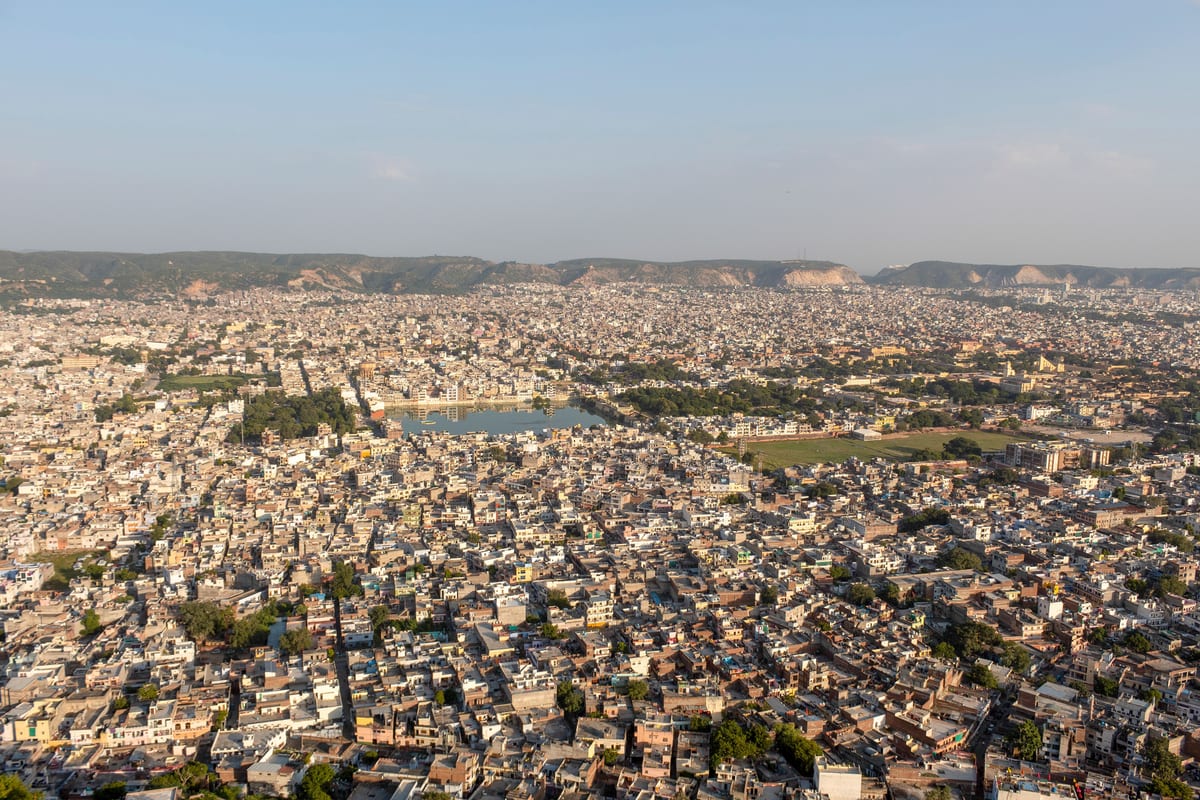
Jaipur was established in 1727 by the Kachhwaha Rajput ruler Maharaja Jai Singh II, who gave the city his own name and, more importantly, his architectural conviction. It is widely regarded as India's first planned city of the Common Era, conceived and executed by the brilliant scholar-architect Vidyadhar Bhattacharya. The city was designed according to the principles of Vastu Shastra, the ancient Indian science of spatial harmony, dividing its footprint into nine blocks — two dedicated to state buildings and palaces, and seven reserved for the public. Fortification walls and gates enclosed this order, giving the city both physical security and symbolic coherence.
Nearly three centuries later, that grid still holds. Walk through Jaipur's old city and you are, quite literally, walking through a living urban plan drawn from one of humanity's oldest architectural traditions. This is continuity, not restoration.
The Pink That Was Never Just a Colour
In 1876, Maharaja Ram Singh made a decision that would define Jaipur's identity for all time. To welcome the visiting Prince of Wales, he ordered the entire city painted pink — a colour that in Rajasthani culture symbolises hospitality and warmth extended to honoured guests. The gesture was political theatre, certainly, but it was also a profound cultural statement: a sovereign host choosing the vocabulary of his own tradition to greet a foreign dignitary.
The pink did not fade with the Prince's departure. Today, by civic regulation, all buildings within Jaipur's old city are still required to be painted pink. The Pink City is not a nickname from a tourist brochure — it is a living municipal commitment to a moment of civilisational self-expression that refuses to be forgotten. Incredible India's official page on Jaipur captures this beautifully, noting how the city blends its ancient heritage with all the dynamism of a modern metropolis.
Forts, Palaces, and the Weight of Grandeur
Jaipur sits at one corner of India's celebrated Golden Triangle — the circuit connecting Delhi, Agra, and Jaipur that draws travellers from every corner of the world. Even within that illustrious company, Jaipur holds its own with extraordinary confidence. The City Palace, a breathtaking complex of courtyards, gardens, and galleries, still houses members of the royal family — making it not a relic but a residence. The Hawa Mahal, with its five-storey honeycomb façade of 953 small windows, was built to allow royal women to observe street life while remaining unseen: a piece of social history carved in pink sandstone. The imposing forts that crown the Aravalli hills around the city speak of a martial culture that defended not just territory but way of life.
These structures are not frozen in amber. They still carry the values they were built to express and are maintained by the descendants who inherited them.
A Cuisine That Tells the Land's Story
No understanding of Jaipur is complete without sitting down to eat. The culinary heritage here reflects the cultural diversity of Rajasthan, woven tight with history and geography.
Dal Bati Churma is the city's iconic offering: a traditional platter of lentil curry, ghee-infused wheat dumplings baked in a pit fire, and a crumbled sweet dessert — food engineered for a land where water was precious and fuel was scarce. Ker Sangri, combining dried desert berries and beans, tells you everything about Rajasthan's relationship with its arid terrain: nothing was wasted, everything was made delicious. Bajra ki Roti, the pearl millet flatbread served with a fierce Lehsun Chutney, is sustenance elevated to ritual.
For those who eat meat, Laal Maas is a revelation — a mutton curry of searing red chillies, aromatic spices, and ghee that produces tender, deeply flavoured meat. On festival days, Ghevar, a latticed sweet of flour and ghee, appears in the city's sweet shops like a seasonal prayer. Mirchi Bada, the beloved street snack of tangy green chillies encased in spiced batter, is the city's way of reminding you it has a sense of humour.
When to Go and How to Arrive
Jaipur's climate moves through dramatic extremes. Summers between April and June can see temperatures climbing above 44°C — beautiful, perhaps, for the light it casts on sandstone, but punishing for the traveller on foot. The monsoon months of July and August bring relief and a lush green softness to the Aravalli landscape. The finest window for visiting is October through February, when temperatures range from a comfortable 5°C on winter nights to a pleasant 37°C at the tail end of October — ideal weather for exploring forts, wandering bazaars, and eating on the street without wilting.
Getting there is straightforward. Jaipur International Airport (JAI) connects the city to major Indian metros and select international destinations. Jaipur Junction Railway Station (JP) sits on key rail corridors and is well served from Delhi, Mumbai, and Agra — making the Golden Triangle circuit easy to complete by train. The city is also accessible by road via well-maintained national highways.
Why Jaipur Matters
India's heritage story is sometimes told as a sequence of conquests and losses, of civilisations buried and unearthed. Jaipur tells a different kind of story — one of deliberate creation, of a ruler who sat down with an architect and said: build me something worthy of what we know. The Vastu grid, the pink walls, the functioning palace, the spice routes still alive in the bazaars — these are not survivals. They are choices, made again and again by every generation that chose to keep the plaster pink and the dal fires burning.
Come to Jaipur as a tourist if you must. But stay long enough, and you will leave as something closer to a witness.