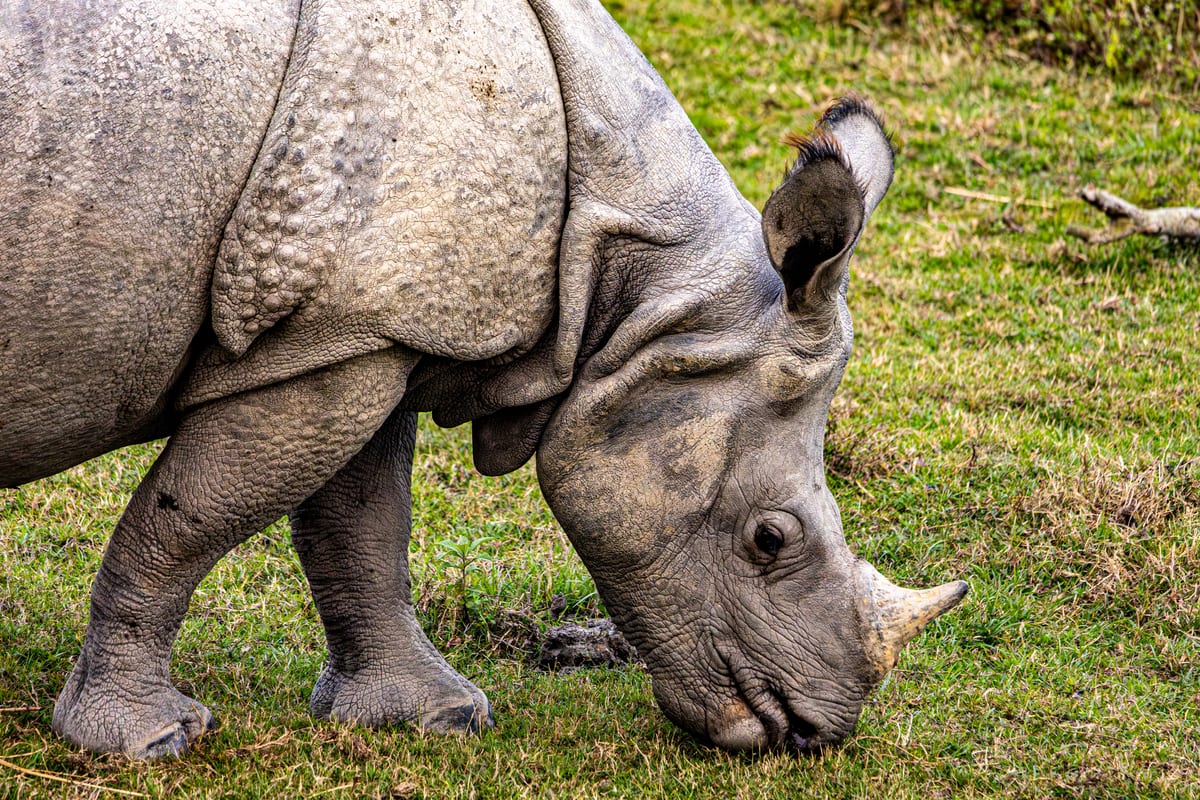
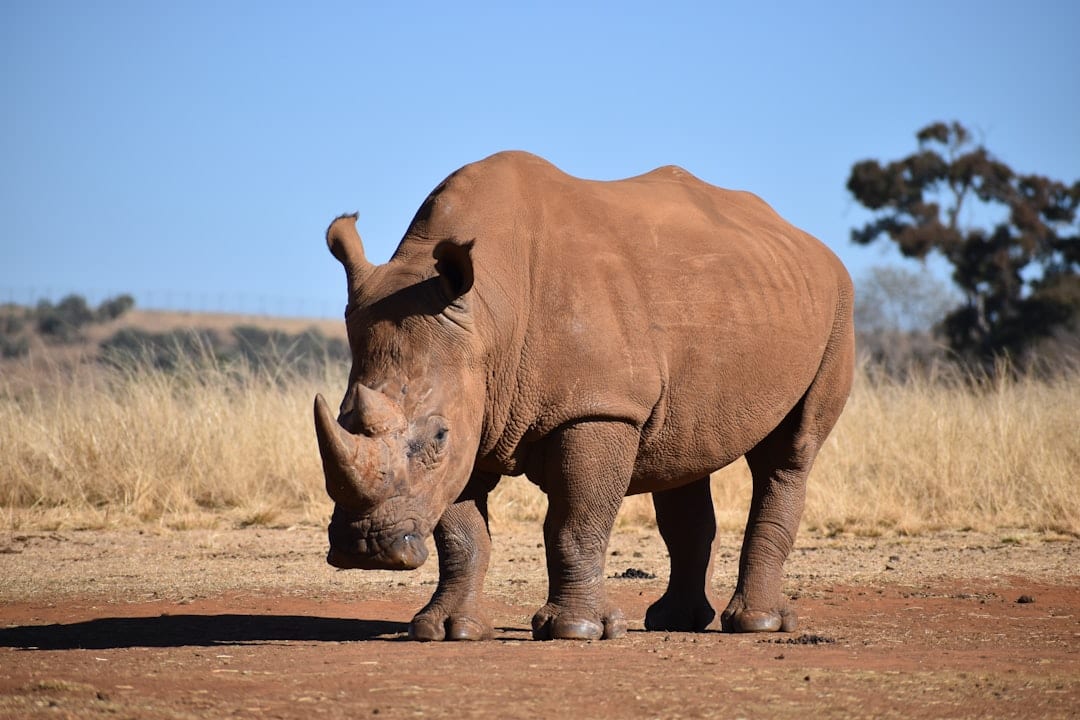
There is a moment, somewhere between the first grey light of dawn and the rising of Assam's river mist, when Kaziranga feels less like a national park and more like a memory the land has refused to surrender. The Brahmaputra moves silently to the north. Elephant grass, tall enough to swallow a jeep whole, sways in the cool air. And then, unhurried, armoured, impossibly ancient, a one-horned rhinoceros lifts its head from the waterlogged earth and regards you with the calm authority of a creature that has been here far longer than any human story.
This is Kaziranga. It is one of the most important places in India.
A Landscape Older Than Its Name
Kaziranga National Park spreads across approximately 430 square kilometres in the Golaghat and Nagaon districts of Assam, between the Brahmaputra River to the north and the Karbi Anglong hills to the south. It was designated a UNESCO World Heritage Site in 1985 for its biodiversity and outstanding universal value as a refuge for species found nowhere else on Earth in such numbers.
The name Kaziranga is steeped in local legend. One story traces it to Kazi and Ranga, a young couple from the region whose tragic love story became woven into the identity of this land. Another connects it to Karbi words meaning 'the land of the red goat.' Kaziranga's deeper history is written in the survival of the great Indian one-horned rhinoceros (Rhinoceros unicornis), a creature that has walked this earth for millions of years and came perilously close to extinction within a single human lifetime.
The Conservation Story That Belongs to All of India
By the early twentieth century, rampant poaching had reduced the rhino population in Kaziranga to fewer than a dozen individuals. Mary Curzon, wife of Viceroy Lord Curzon, visited the region in 1904 and was struck by the absence of the animals she had heard so much about. Her intervention catalysed formal protection. The area was declared a reserved forest in 1908, a game sanctuary in 1916, and eventually a national park in 1974.
Today, Kaziranga is home to the world's largest concentration of one-horned rhinoceroses, a recovery so dramatic it has become a global benchmark for conservation science. The communities of Assam, the Mising, the Karbi, and others who have lived alongside this wilderness for generations, carried an ecological knowledge and cultural reverence for these animals long before formal conservation arrived. Kaziranga's survival is not a government achievement alone. It is a civilisational one.
For more details on this destination, visit the official Incredible India page on Kaziranga, maintained by India's Ministry of Tourism.
What Visitors Experience
Kaziranga is divided into four ranges, Central (Kohora), Western (Bagori), Eastern (Agaratoli), and Burapahar, each offering a distinct texture of wilderness. Jeep safaris and elephant-back safaris are the principal ways to move through the park. On elephant-back, you enter the tall grass at a height and silence a vehicle cannot achieve. In a jeep, you cover more ground, chasing the early morning light across open wetlands where herds of wild buffalo stand knee-deep in water.
Beyond the rhinoceros, Kaziranga shelters significant populations of Bengal tigers, Asiatic elephants, wild water buffalo, and swamp deer. It is one of India's most important bird sanctuaries, with over 480 recorded species including the rare greater adjutant stork. Birdwatchers from across the world come here in pilgrimage.
Perhaps what surprises visitors most is the texture of the experience beyond the wildlife. The surrounding villages offer glimpses into Assamese life, silk weavers at their looms, mustard fields, the warmth of a homestay where your host insists you try pitha freshly made from Assam's own rice. Kaziranga does not exist in isolation. It is embedded in a living culture.
Best Time to Visit
Kaziranga National Park is typically open from November to April. The monsoon season (June to September) brings flooding so extensive that the park is largely inaccessible. This flooding, though it may seem destructive, is ecologically essential, it replenishes the wetlands and drives the annual rhythms that sustain the park's biodiversity.
The winter months of November through February offer the most comfortable temperatures and the clearest skies. March and April, as the grass dries and thins, often provide the best wildlife sightings as animals are more visible in the open landscape.
How to Reach Kaziranga
The nearest major airport is Jorhat Airport, approximately 97 kilometres from the park's central range at Kohora. Guwahati's Lokpriya Gopinath Bordoloi International Airport, about 217 kilometres away, is the region's principal hub with connections to most Indian cities and several international destinations. From Guwahati, the drive along NH27 passes through Assam's landscape, tea gardens, river crossings, and the gradual shift from city to wilderness.
Kaziranga is well connected by rail, with Furkating Junction being the nearest major railway station. Regular bus services and taxis operate between Guwahati, Jorhat, and Kohora, the gateway town for the park.
Nearby Attractions
Visitors to Kaziranga would do well to extend their Assam journey. The Majuli River Island, the world's largest river island and a centre of Vaishnavite culture and sattriya dance, lies close to Jorhat and offers a profound counterpoint to Kaziranga's wilderness. Here, civilisation and spirituality have been sustained for centuries against the same flooding Brahmaputra. The Gibbon Wildlife Sanctuary near Jorhat protects the hoolock gibbon, the only ape found in India. The town of Tezpur, known as the city of eternal romance in Assamese legend, sits along the Brahmaputra with ancient temples and a gracious, unhurried atmosphere.
Why Kaziranga Matters
India did not come to the idea of conservation through ecology textbooks. The reverence for living creatures, the cow, the elephant, the tiger, the river, is embedded in Indian thought at its most foundational level. Kaziranga is where that ancient instinct proved itself in the hardest possible circumstances: against colonial-era hunting, against habitat loss, against the persistent pressure of a growing human population. And it worked.
To visit Kaziranga is to witness not just a great wildlife sanctuary, but a great act of national self-remembering. This is what India is capable of when it honours what it has always known, that the land is not a backdrop to human civilisation. It is part of it.
Go at dawn. Watch the mist lift off the grass. Wait for the rhinoceros to emerge. And understand that what you are seeing is not simply nature. It is India, still intact.