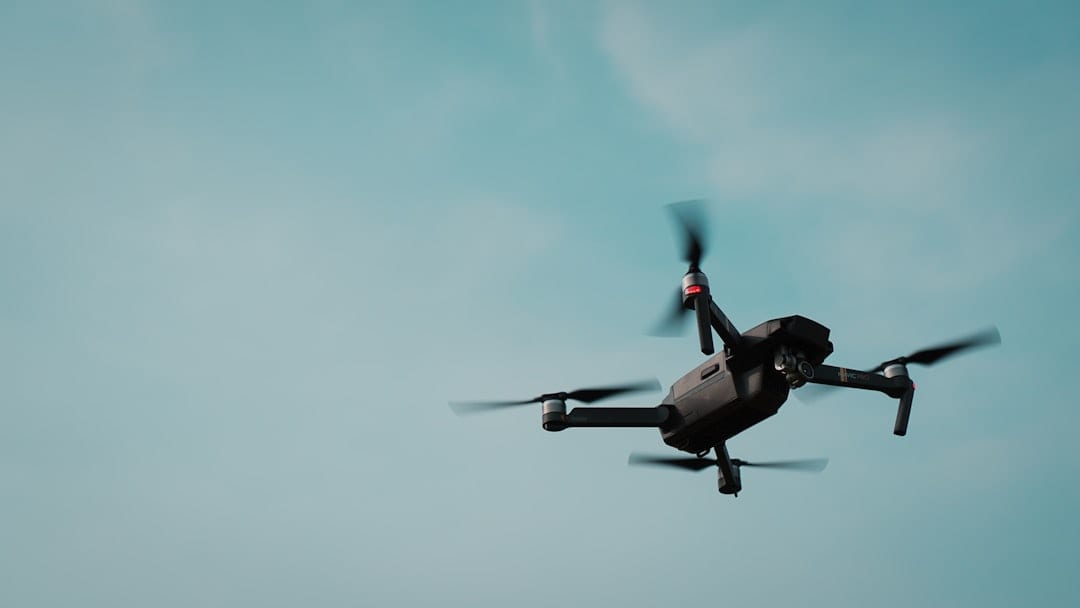

The language António Guterres used on Monday was not the measured boilerplate of UN communiqués. The Secretary-General called for far-reaching, worldwide controls on Artificial Intelligence, anchoring his appeal in a specific and alarming observation: AI chips designed for civilian data centres are migrating to the battlefield, and "killer robots" — fully autonomous lethal systems capable of selecting and engaging targets without human authorisation — are operational.
The governance gap Guterres identified is real, and it has a structural character that mere UN appeals cannot resolve. The problem is not a shortage of concern — the international community has debated Lethal Autonomous Weapons Systems (LAWS) under the Convention on Certain Conventional Weapons since 2014 — it is a shortage of agreed definitions. What precisely constitutes a "lethal autonomous weapon" will determine whether existing and emerging programmes across dozens of militaries are classified as prohibited weapons or legitimate national-defence tools. Whoever controls the definitional architecture controls the outcome. India has a significant stake in ensuring it is not a bystander to that process.
The Dual-Use Trap
The semiconductor at the heart of Guterres's warning is not a weapon in the traditional sense. It is a general-purpose compute unit — the same class of hardware that runs recommendation algorithms and protein-folding models — repurposed for battlefield guidance and targeting. This dual-use character is precisely what makes governance so technically and politically difficult. A treaty that bans "AI chips on the battlefield" would sweep up navigation aids, logistics software, and satellite imagery analysis alongside genuinely autonomous lethal systems. A treaty drawn too narrowly to avoid that outcome would permit the very weapons it nominally prohibits.
Analysts at the Takshashila Institution, who have worked through this dilemma in the Indian context, argue that the definitional gap reflects the interests of states with mature autonomous-weapons capabilities, who prefer ambiguity in international norms to clarity that might constrain their own programmes. They recommend India develop a domestic classification taxonomy for military AI before international frameworks lock in definitions shaped by others. That recommendation carries more urgency now than when it was first made.
India's Operational Reality
India's armed forces have already inducted loitering munitions — slow-flying, GPS-guided systems that circle a target area and strike autonomously once conditions are met. Research pipelines at the Defence Research and Development Organisation include swarm drone platforms, AI-assisted missile guidance, and autonomous surveillance systems deployed along the Line of Actual Control and the Line of Control. These are current or near-term operational capabilities.
India's position in the CCW Group of Governmental Experts has been consistent: any regulation must preserve meaningful human control over lethal force decisions, but must not foreclose the sovereign right to develop and deploy autonomous systems for national defence. New Delhi has resisted Western-led calls for a pre-emptive treaty ban, preferring a non-binding code-of-conduct approach that preserves strategic flexibility. That posture is defensible — and it is under pressure. If the UN Secretary-General's call gains traction and translates into a treaty negotiation rather than another round of expert-group deliberations, the code-of-conduct position may not survive.
The structural risk is not that India would be forced to sign a treaty it opposes. India has proven capable of staying outside international legal instruments it considers strategically costly. The risk is subtler: that a treaty signed by a coalition of technologically advanced states establishes definitional precedents that gradually reshape export-control regimes, defence procurement standards, and bilateral security agreements in ways that constrain Indian programmes without formally binding New Delhi. Norms migrate through arms export conditions, through technology-transfer agreements, through the fine print of defence partnerships. India's autonomous-systems development pipeline could find itself constrained by rules it never ratified.
The Norm-Entrepreneurship Opening
Rajeswari Pillai Rajagopalan at the Observer Research Foundation has argued that India must engage proactively in LAWS negotiations to avoid this outcome — to be present when definitions are written rather than arriving after the architecture is set. That argument has acquired operational force given the current moment. India holds a seat on the UN Secretary-General's AI Advisory Body. It carries the institutional memory and diplomatic capital accumulated during its 2023 G20 Presidency, when AI governance was one of the signature agenda items. It has standing in the Global Partnership on AI. These are real access points to the rooms where definitions get debated.
The strategic play is identifiable. India should use these platforms to advance a middle-ground framework that mandates human authorisation for any lethal force decision while declining to prohibit AI-assisted decision-support systems operating below that threshold. This distinction — between a system that autonomously kills and a system that assists a human who kills — is technically meaningful and politically tractable. It would protect India's loitering munitions and AI-surveillance programmes while genuinely constraining fully autonomous weapons. Building a coalition around this position, drawing in Brazil, South Africa, the UAE, and Japan — states with similar interests in preserving sovereign defence-tech trajectories — would give it weight to shape rather than merely react to whatever the Security Council's permanent members propose.
Arun Sahgal at the Institute for Defence Studies and Analyses has made the complementary argument from the threat-environment side: India operates in a two-front context that makes categorical renunciation of autonomous systems strategically untenable. Any governance framework must account for asymmetric threat contexts, not merely the threat perceptions of states whose borders have been peaceful for decades. That argument belongs in the CCW deliberations, stated plainly.
The Commercial Dimension
There is a second category of Indian interest that tends to get less attention in the security discourse but is no less consequential. India's AI industry — across large software exporters, defence-tech startups, and the compute infrastructure being built out through the Indian AI Mission — has a direct commercial stake in how international norms classify military AI applications. If a UN framework or an allied export-control coalition defines AI chips above a certain performance threshold as controlled dual-use goods requiring export licenses for defence applications, the implications for Indian hardware procurement and for Indian firms supplying AI services to defence customers could be significant. The civilian-military boundary in AI compute is already blurring globally; governance frameworks that treat it as a clean line will create compliance costs and access problems that fall disproportionately on countries that are not inside the frontier-model club.
India's interest is not simply to protect its drone programmes. It is to ensure that the governance architecture for military AI does not encode a two-tier world — one in which P5 powers and their close allies operate with mature autonomous capabilities behind national-security carve-outs, while emerging military powers face binding prohibitions that freeze existing capability gaps in place. That is the outcome a passive India drifts toward. The alternative requires showing up early, arguing precisely, and building coalitions before the text is written.
Guterres's call is an opening as much as a warning. The urgency he projects is genuine — the technology is moving faster than the governance. But urgency also compresses the window for norm-setting. States that arrive late to a treaty process inherit its definitions; states that arrive early shape them. For India, the question is not whether to engage the emerging UN governance push on autonomous weapons — it is whether to engage it as a drafter or as a signatory reviewing someone else's draft.