There is a city in Tamil Nadu that has never quite gone to sleep. Not in the time of the Pandya kings. Not during the reign of the Nayak rulers. Not at three in the morning today, when the corridors of its great temple still hum with incense and prayer. Madurai is not a destination you visit so much as one you enter, a city whose civilisational pulse you feel the moment you step onto its ancient streets.
A City Born of Divine Nectar
Legend reaches deep into Madurai's origins. It is said that the city emerged from the sacred drops of nectar that fell from Lord Shiva's matted locks, giving it the name Madhurapuri, the city of sweetness. This founding story has shaped everything from its architecture to its public life. Lord Shiva is said to have performed sixty-four divine wonders here, known as the Thiruvilaiyadals, each of which is celebrated and retold in the rituals of the city's temples to this day.
Madurai's antiquity is staggering. It finds mention in texts as ancient as the Ramayana and Kautilya's Arthashastra. Its history stretches back to the Sangam period, roughly the first few centuries of the Common Era, when it served as a seat of Tamil literary culture, hosting the legendary Sangam academies that produced some of the world's earliest and most sophisticated secular poetry. To walk through Madurai is to walk through a city that has been the subject of literature, devotion, and political imagination for over two thousand years.
The Temple at the Heart of Everything
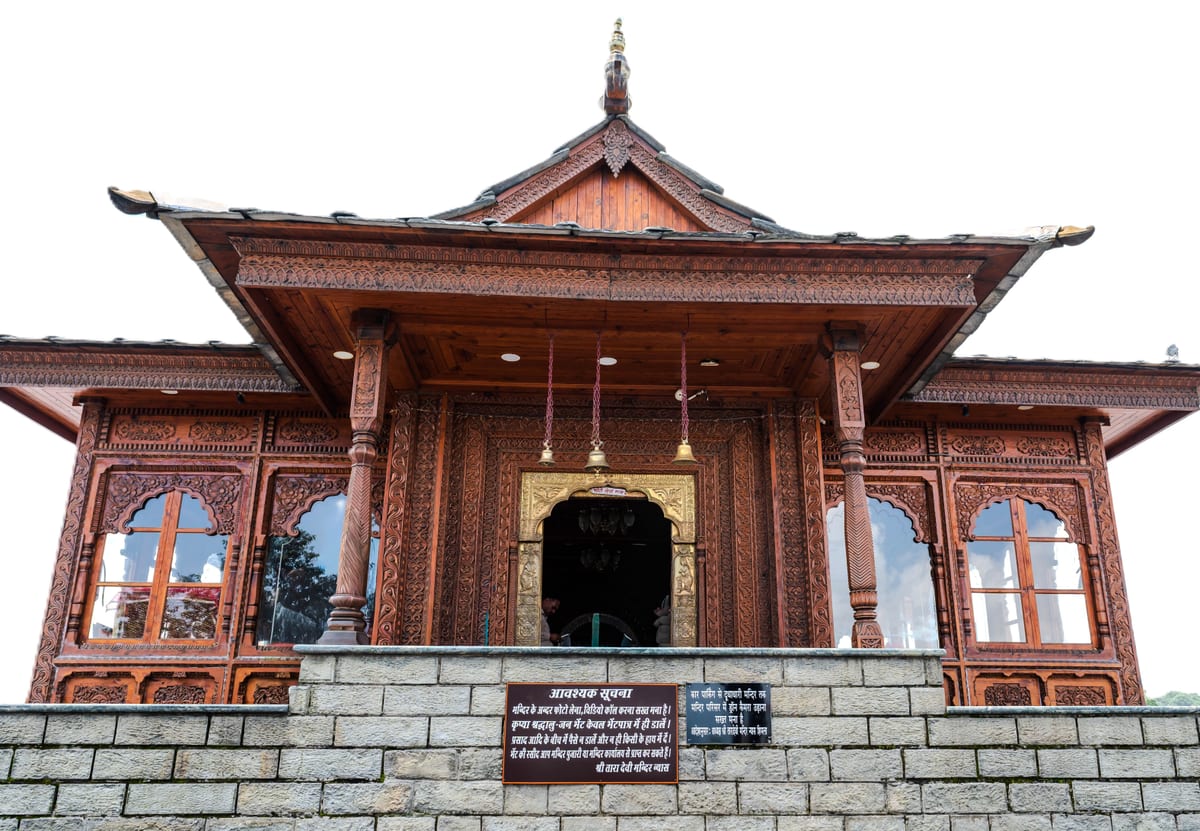
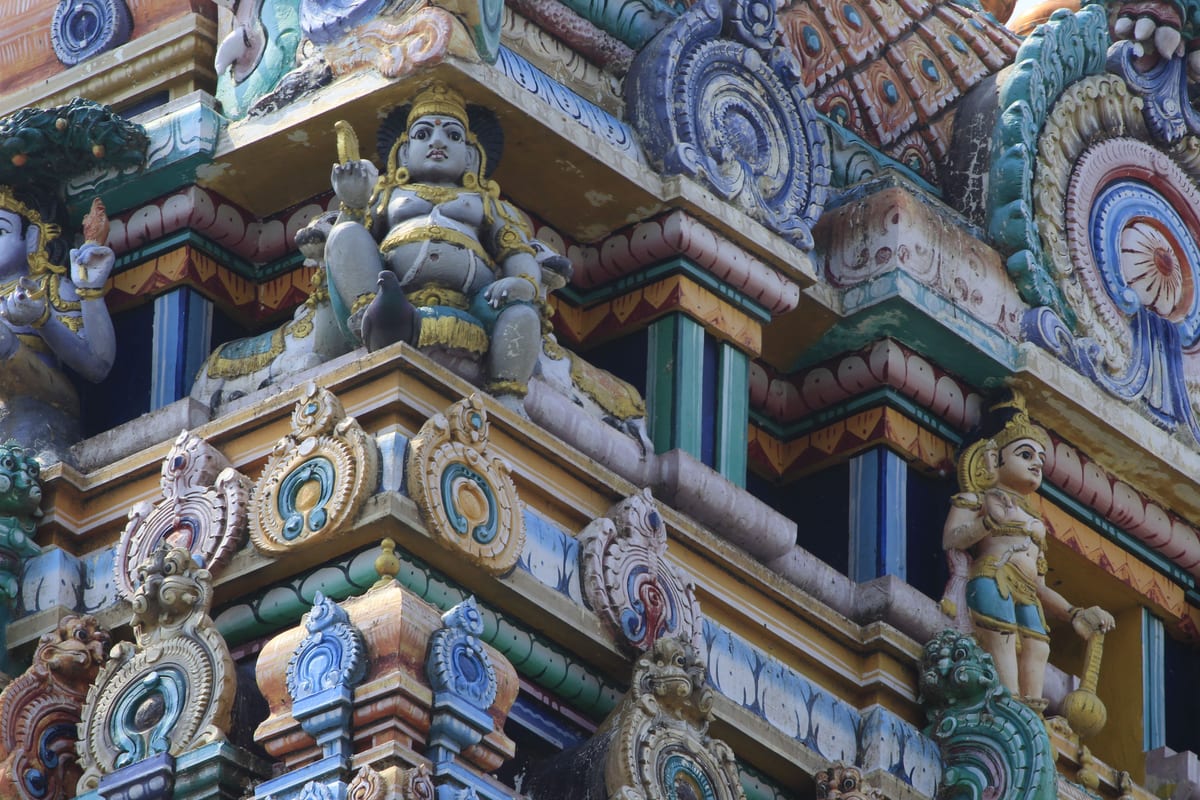
No visit to Madurai can be understood without the Sri Meenakshi-Sundareswarar Temple. This is not simply a religious site, it is the organisational principle of the entire city. Madurai was planned as a lotus-shaped city with this temple at its centre, and that logic still holds. The temple's towering gopurams, encrusted with thousands of painted stone figures, rise above the skyline as expressions of artistic ambition and spiritual permanence.
Devotees arrive from across India and the world, drawn by the presiding deities, Goddess Meenakshi, the beloved fish-eyed queen, and her consort Lord Sundareswarar, a form of Shiva. The evening ritual procession, the alankaram, fills the temple corridors with music, lamp-light, and collective devotion in a way that makes the distinction between heritage and living faith feel entirely beside the point. This is the great truth Madurai insists upon: nothing here has been frozen for your inspection. It is all still happening.
The Athens of the East
Madurai has long been called the Athens of the East, and the comparison has weight. Like Athens, it is a city where architectural grandeur, intellectual tradition, and civic identity have always been inseparable. The Incredible India page for Madurai draws particular attention to the Thirumalai Nayak Palace, built in the seventeenth century, as evidence of the city's regal and cosmopolitan heritage.
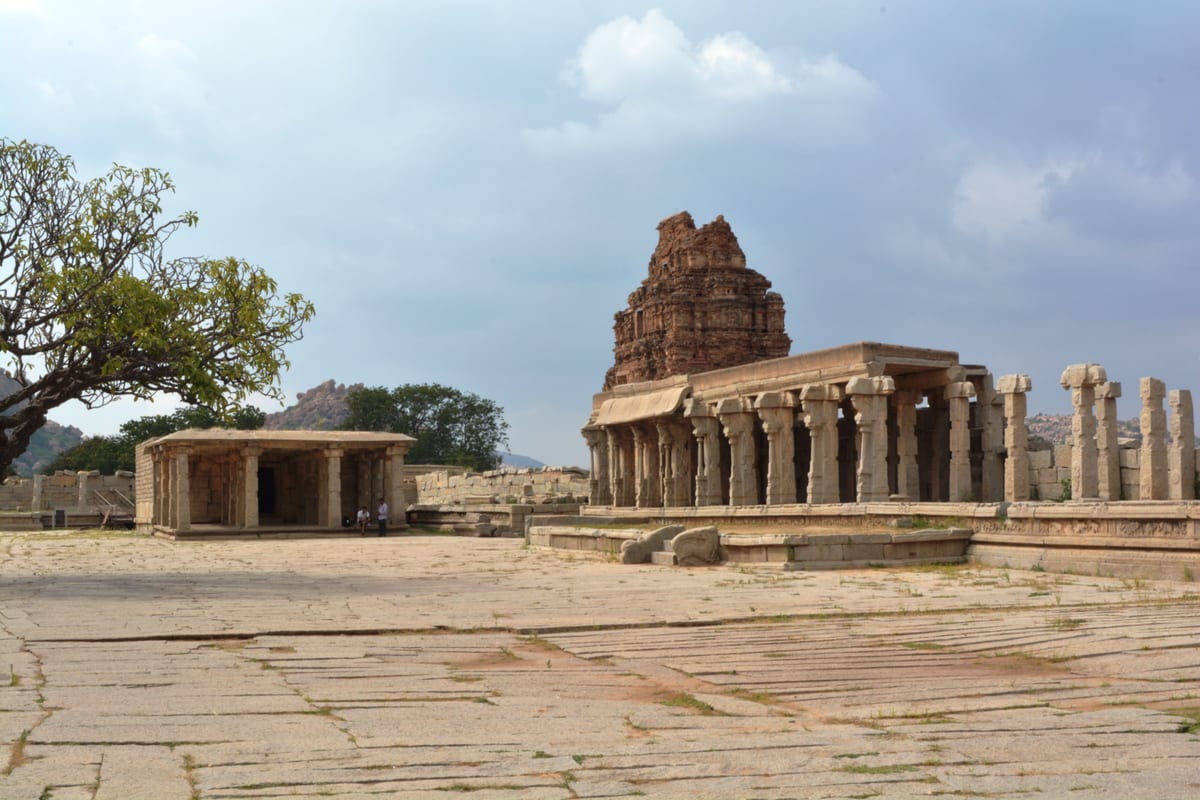
What makes the palace remarkable is not only its scale but its synthesis. Here, Dravidian and Islamic architectural styles meet with genuine fluency, stucco work, a celestial pavilion that seems to defy conventional structural logic, paintings and sculpture, and 248 majestic pillars that command the eye without overwhelming it. The Nayak rulers who commissioned this palace were not importing a foreign aesthetic; they were expanding an existing vocabulary. That instinct for generous cultural absorption is itself a deeply Indian one, and Madurai demonstrates it magnificently.
Beyond the Temple Walls
Madurai's spiritual geography extends well beyond the Meenakshi temple. Sacred shrines and pilgrimage sites dot the city and its surroundings, each offering a distinct mood and history. The St Mary's Cathedral adds another layer to the city's pluralist character, a reminder that Madurai has always been a place where different traditions found room to take root and flourish.
The city's markets deserve their own essay. The streets around the temple overflow with silk, jasmine garlands, bronze work, and the particular energy of a trading city that has been at it for centuries. The food, particularly the local mutton biryani, the filter coffee, and temple prasadam, is inseparable from the experience of place. In Madurai, eating is a form of cultural participation.
When to Visit and How to Reach
Madurai's climate runs warm through most of the year, with temperatures ranging from around 19°C in cooler months to the upper 30s in the peak of summer. The most comfortable window for visitors is typically between November and February, when temperatures are moderate and the city's festival calendar, including the spectacular Chithirai Festival celebrating the divine wedding of Meenakshi and Sundareswarar, offers extraordinary cultural immersion.
The city is well connected by air through Madurai International Airport (IXM), which receives flights from major Indian cities and select international destinations. For those preferring rail, Madurai Junction Railway Station (MDU) is a major hub on the Southern Railway network, with good connectivity to Chennai, Coimbatore, Mumbai, and beyond. Road access from across Tamil Nadu is also reliable, making Madurai a natural anchor for any southern India itinerary.
Why Madurai Matters
India has no shortage of ancient cities, but Madurai occupies a particular place in the country's civilisational story because it has never allowed its antiquity to become merely decorative. The Sangam poets wrote here. The Pandya kings ruled here. The Nayaks built here. Devotees pray here, tonight, and every night. The city does not separate the historical from the contemporary. This is a philosophy of life.
To visit Madurai is to be offered something rare in our fragmented, fast-moving world: evidence that a civilisation can be both very old and entirely alive. The nectar, it seems, has not dried up.