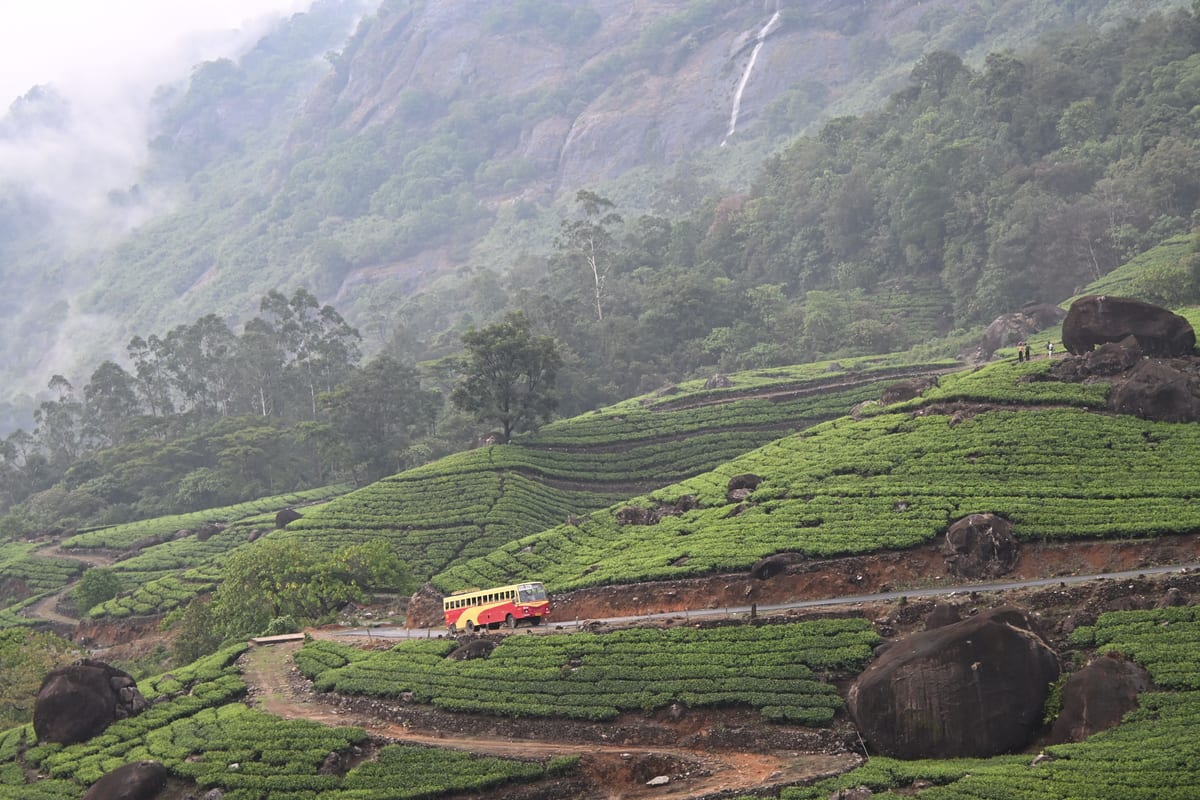
There is a particular quality to the silence in Munnar, thick, green, and unhurried. The mist arrives before you do, settling into the valleys like an old guest who knows exactly which chair to take. Standing at any vantage point across these hills in Kerala's Idukki district, you understand almost immediately why this place has drawn people across centuries: the indigenous, the colonial, and the curious traveller alike. Munnar does not announce itself loudly. It simply waits, and in waiting, it wins.
A History Written in Leaves
Long before the first tea bush was planted, these fertile valleys and misty highlands were home to indigenous communities, the Muthuvans and the Odiyas, who lived in deep harmony with the forest. Their knowledge of these hills was encyclopaedic: the medicinal plants, the migratory patterns of animals, the precise rhythm of the monsoon. This was civilisation, quiet, self-sustaining, and deeply rooted.
In the 19th century, British explorers arrived, recognising the region's potential for tea cultivation. The cool, temperate climate and generous rainfall created near-perfect conditions for Camellia sinensis to flourish. Plantations were established, infrastructure was built, and Munnar became a thriving centre of the tea industry. A colonial enterprise imposed from outside would become the very identity marker that the world now associates with this place. Yet the hills absorbed even this, folding the tea estates into their ancient contours until the two became inseparable.
The Landscape: Geography as Poetry
Munnar sits at the confluence of the Anamalai Hills and the Cardamom Hills, a position that gifts it with remarkable diversity. Rolling hills give way to misty valleys; meandering streams cut through carpets of green; waterfalls descend in silver threads down rocky faces. Temperatures range from 5°C in the coldest winter nights to 25°C in the warmer months, making the climate one of the most agreeable in peninsular India throughout the year.
Tea plantations are the defining visual of Munnar, hillsides draped in vibrant, manicured green, broken occasionally by wildflowers or the flash of a bird in flight. Popular viewpoints such as Top Station, Mattupetty, and Echo Point offer sweeping panoramas that stretch across valleys and into distant blue ranges. At these heights, on a clear morning, the horizon feels almost negotiable, as though you might simply walk into it.
What Visitors Experience: Nature, Stillness, and Living Culture
To visit Munnar is to slow down in the most productive way possible. The tea estates invite long walks through rows of carefully tended bushes, where the air carries the faint, clean scent of fresh leaves. Many estates welcome visitors, offering a window into the meticulous process of tea production, from plucking to processing, that has been refined over more than a century. This is heritage as living practice, still unfolding.
The region's biodiversity is equally compelling. Munnar is a significant part of the Western Ghats ecosystem, one of the world's eight biodiversity hotspots. The forests shelter rare species of flora and fauna, and conservation efforts have made this one of the more ecologically conscious destinations in India. For those interested in India's environmental heritage, Munnar functions as a classroom as important as any archive or library.
The local culture, shaped by tribal traditions, plantation-era history, and Kerala's own rich civilisational current, adds texture to every experience. The cuisine here carries the distinct flavours of the Western Ghats, spices grown nearby, preparations rooted in generations of local knowledge. To eat a meal in Munnar is to participate in a culinary continuity that stretches back far beyond any written record.
Best Time to Visit
Munnar is a destination for all seasons, each offering a distinct character. December to February brings cool, clear weather ideal for sightseeing and long walks through the estates. October and November see the landscape at its most lush, the waterfalls at full voice. The monsoon season, from June to September, brings heavy rainfall that transforms the hills into something otherworldly, beautiful, but requiring flexibility in travel plans. March and April offer pleasant, relatively quiet conditions for those who prefer the destination at a slower pace.
How to Reach Munnar
Munnar is well connected to the major transport hubs of South India. The nearest major airport is Cochin International Airport (COK), approximately 110 kilometres by road. Coimbatore International Airport (CJB) in Tamil Nadu is another option for travellers coming from the north or east. For rail travel, the nearest railway stations are Aluva (AWY), Ernakulam Town (ERN), and Ernakulam South Junction (ERS), all within reasonable driving distance of Munnar.
Why Munnar Belongs in India's Heritage Story
Human presence, tribal, colonial, agricultural, touristic, has layered itself across Munnar across centuries. The hills have absorbed each layer without losing their essential character. The mist still arrives on its own schedule. The cardamom still grows in the shadow of older trees. The Muthuvans still carry knowledge that no plantation manual has captured.
Munnar is significant not just as a travel destination but as a chapter in India's civilisational story. India's heritage has never been static, it is a conversation between the land and the people who live upon it, a negotiation renewed with every season and every generation. Munnar is one of the places where that conversation continues, openly and beautifully, for anyone patient enough to listen.
For full destination details, travel planning resources, and official tourism information, visit the Munnar page on Incredible India, the official tourism portal of the Ministry of Tourism, Government of India.