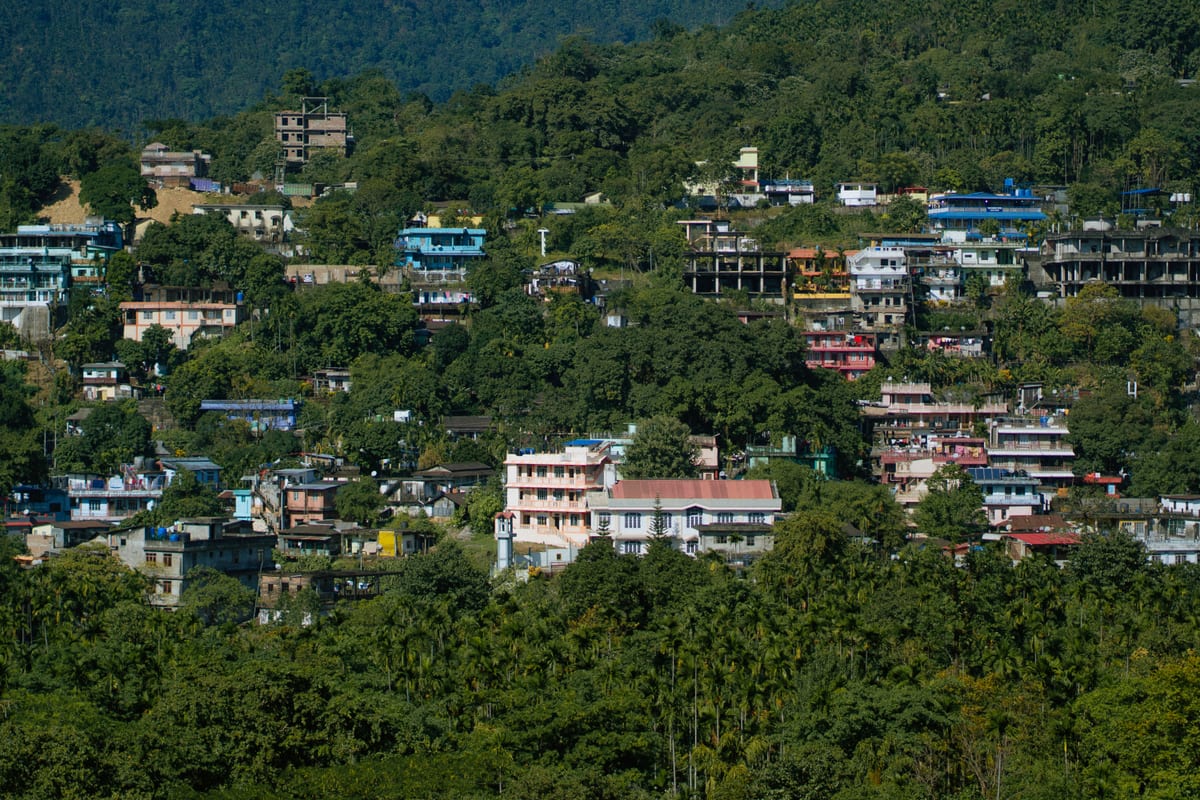
There is a moment, somewhere on the winding road up from Guwahati into the Khasi Hills, when the air changes. The heavy warmth of the Brahmaputra plains lifts, the trees press closer, the mist begins to gather in the folds of the hills, and you understand, before you have even arrived, that Shillong will demand something of you. Not effort, exactly. Attention. The kind of unhurried, wide-eyed attention that this city, this landscape, and this ancient culture require.
Dubbed the "Eastern Scotland" for its resemblance to the Scottish Highlands, Shillong is the capital of Meghalaya, a state whose name means Abode of the Clouds. Cradled by undulating hills and verdant foliage, it is, as Incredible India describes it, a city full of nature's wonders. But to visit Shillong only as a nature destination is to read only the first chapter of a much longer, richer book.
A City Written in Layers
Shillong's colonial past is architecture you can walk through. Quaint bungalows with sloping tin roofs, Gothic churches rising from green hillsides, broad avenues lined with oak and rhododendron, the British left their mark when Shillong served as the capital of the unified province of Assam. Yet the city has absorbed that history without being defined by it. The stone and timber of the colonial era now frame a city that belongs entirely to the Khasi, Jaintia, and Garo peoples, whose traditions, governance structures, and relationship with the natural world predate any colonial encounter by millennia.
In Shillong, this coexistence is visible at every turn. A Presbyterian hymn drifts from an open church door; fifty metres away, an elder in traditional Khasi dress tends a roadside garden with the ease of someone rooted in deep time. The city does not display its heritage. It lives it.
Nature as Sacred Geography
Shillong's natural beauty functions as an active participant in daily life. The Umiam Lake, a serene man-made reservoir on the city's northern edge, offers panoramic views of the surrounding hills and is a beloved spot for boating and quiet reflection. Its surface moves from silver to steel-blue to a deep and luminous green, depending on the hour and season.
The Elephant Falls, a picturesque three-tier cascade named after a now-lost elephant-shaped rock at its base, draws visitors into lush greenery and the sound of moving water. It is the kind of place that slows you down without asking permission. Sweet Falls, another natural wonder, rewards those willing to venture further from the city centre.
For the most commanding perspective, Shillong Peak, the highest point in the state, offers a full 360-degree panorama of the surrounding landscape. On clear mornings, the view stretches to distant ridges; more often, the peak is wreathed in the fog that has made Meghalaya legendary among photographers and poets. This is atmosphere, in every sense of the word.
Nature enthusiasts should not miss the Butterfly Museum, which houses an extensive collection of butterflies, moths, and other insects native to the region. It offers a window into Meghalaya's extraordinary entomological diversity.
Culture That Breathes
Shillong's cultural life is vivid and unapologetic. The city has earned a reputation as the rock music capital of India, a title that makes sense once you understand the Khasi community's engagement with music as social expression. Weekend performances, local festivals, and a thriving café culture give the city an energy that suits its size.
Underlying this is the social architecture of the Khasi people: a matrilineal society in which lineage, property, and family identity pass through the mother. It is one of the world's largest surviving matrilineal cultures, and it infuses Shillong with a social confidence visible in how women move through markets and public spaces, in the ease of intergenerational conversation, in the texture of community life. For visitors from elsewhere in India and the world, it offers a genuine alternative model of how society can organise itself, one that has endured for centuries.
When to Visit and How to Arrive
Shillong is a year-round destination, though each season offers a distinct experience. The months of October through March bring cool, clear weather, temperatures ranging from around 4°C to 25°C, making this the most comfortable period for sightseeing and outdoor exploration. April and May warm slightly and the landscape blooms with colour before the monsoon arrives. The monsoon months of June through September transform Meghalaya into the wettest place on earth by some measures. The falls thunder, the hills turn an impossible green, and the mist is near-constant. It is dramatic and beautiful for travellers who do not mind the rain.
The nearest airport is Shillong Airport (SHL), with connections to major Indian cities. For those travelling by rail, the nearest major railhead is Guwahati Railway Station (GHY), approximately two to three hours by road through some of the most scenic mountain terrain in the subcontinent. The drive is considered by many to be part of the experience.
Why Shillong Belongs in India's Larger Story
India's civilisational narrative is often told through the temples of Rajasthan, the ghats of Varanasi, the courts of the Mughals. These are essential chapters. But Shillong insists on a wider telling: the sacred forests of the Khasis, the living matrilineal kinship networks of the northeast, the biodiversity of the cloud forests, and the quiet dignity of peoples who have maintained their own relationship with land, language, and community across Indian history.
To visit Shillong is to discover how much larger India's heritage story truly is.